LOGIN/Sign up

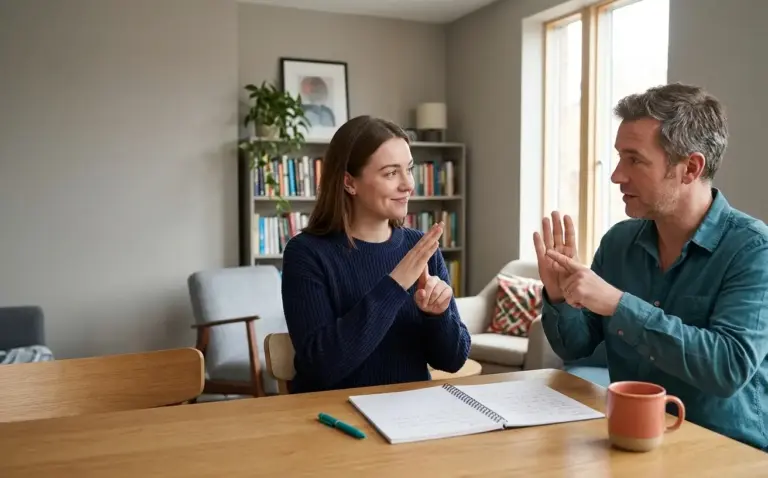
BSL Level 1 introduces beginners to British Sign Language, covering fingerspelling, everyday vocabulary and simple conversations. It is a starting point for anyone interested in communicating with Deaf people, although course duration, assessments and certification can vary significantly.
Perhaps you want to communicate with a Deaf family member, develop a new language skill or feel more confident in an inclusive workplace. Whatever your reason, knowing what BSL Level 1 involves can help you choose a suitable learning route.
This guide explains what you will learn, how long training takes, what the exams involve and whether online learning is right for you.
Ready to learn British Sign Language?
Learn fingerspelling, greetings and everyday signing with Janets’ BSL Level 1 online course. Study at your own pace through video lessons.
Explore BSL Level 1 →What Is BSL Level 1?
BSL Level 1 is an introductory stage of learning British Sign Language. It focuses on understanding and communicating basic information through signs, facial expressions,s and body movements.
British Sign Language is a complete language with its own grammar and structure. Unlike English, it uses visual communication rather than spoken or written words.
The British Sign Language Act 2022 formally recognises BSL as a language of England, Wales and Scotland.
In the UK, Signature offers a regulated Level 1 Award in British Sign Language. This qualification has defined learning outcomes, guided study requirements and practical assessments.
However, not every course carrying the BSL Level 1 label leads to this regulated award. Some online programmes introduce basic signs and provide a course completion certificate.
Understanding these differences is important, particularly if you need formal evidence of your learning.
Who Is BSL Level 1 Suitable For?
BSL Level 1 is generally suitable for complete beginners, including people without previous signing experience.
You might consider learning BSL if you want to communicate with Deaf friends or relatives, develop communication awareness or explore a new language.
It may also interest teaching assistants, childcare professionals, support workers and people in customer-facing roles.
Previous BSL knowledge is not usually required. However, patience, regular practice and opportunities to communicate with other signers can make a meaningful difference.
What Will You Learn in BSL Level 1?
BSL Level 1 focuses on practical communication rather than memorising individual signs without understanding their meaning.
Lessons generally introduce familiar vocabulary before moving towards simple signed exchanges.
Fingerspelling and Everyday Signs
Fingerspelling involves representing letters through handshapes. It is particularly useful when communicating names and unfamiliar words.
Beginners also learn vocabulary related to everyday situations.
| Learning topic | What you might practise |
|---|---|
| Fingerspelling | Names and unfamiliar words |
| Greetings | Introducing yourself and others |
| Numbers | Ages, dates and quantities |
| Family | Relatives and relationships |
| Weather | Everyday weather conditions |
| Travel | Transport and directions |
| Daily activities | Hobbies and daily routines |
For example, you might practise introducing yourself, asking someone's name or explaining where you live. These situations help learners connect vocabulary with everyday communication.
Basic Conversations, Grammar and Facial Expressions
As your vocabulary develops, you begin practising simple exchanges involving familiar subjects.
This includes asking questions, describing people, discussing daily activities and responding to common expressions.
Two important skills develop throughout BSL learning:
Receptive skills: Understanding signs produced by another person.
Productive skills: Expressing your own messages through signing.
Facial expressions also contribute to meaning. They can communicate questions, emphasis, and grammatical information.
This is why learning BSL involves more than remembering hand movements. Understanding how signs work together is equally important.
How Long Does BSL Level 1 Take?
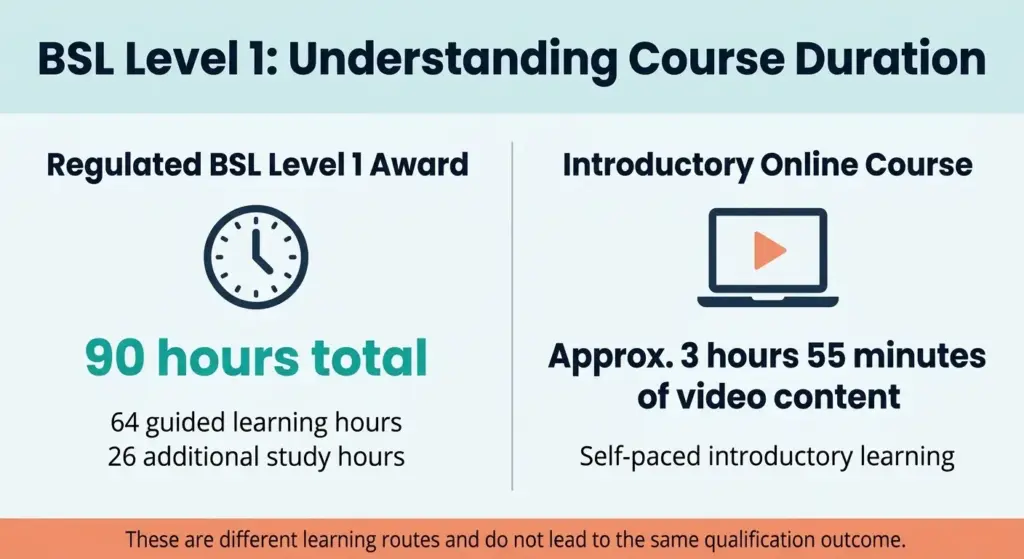
Signature’s regulated Level 1 Award has a total qualification time of 90 hours. However, introductory online courses may have much shorter advertised learning durations.
According to Signature’s qualification information, the regulated award includes:
64 guided learning hours involving teaching, supported practice and assessment.
26 additional study hours for independent learning, homework and preparation.
Depending on the provider, these hours may be spread across several weeks or months.
Short introductory programmes work differently. For example, Janet’s advertises approximately three hours and 55 minutes of course content for its self-paced BSL Level 1 programme.
This shorter programme should not be confused with Signature’s regulated qualification.
Your learning time also depends on how regularly you revise vocabulary, practise conversations and develop receptive skills.
How Often Should Beginners Practise BSL?
Short, regular practice sessions can help you become more familiar with common signs.
You could revise fingerspelling, practise introductions or watch demonstrations without relying on spoken explanations.
As you progress, practise simple conversations with another learner or fluent signer.
The aim is not simply to memorise more signs, but to develop the ability to recognise and use them naturally.
Does BSL Level 1 Have an Exam?
Yes, Signature’s regulated BSL Level 1 Award includes three practical assessments. These evaluate your ability to understand and communicate through British Sign Language.
Unlike conventional written examinations, they focus on signing skills and everyday conversations.
How Are Signature BSL Level 1 Assessments Structured?
The qualification includes three units.
BSL101 – Introduction to BSL
This introductory assessment evaluates basic receptive and productive communication through a conversation with the teacher.
BSL102 – Conversational BSL
Learners demonstrate their ability to take part in a short signed conversation involving familiar course topics.
BSL103 – Communication in BSL About Everyday Life
This assessment involves another practical conversation based on everyday experiences and communication.
BSL101 is internally assessed, while BSL102 and BSL103 are externally assessed.
Learners must complete all three units to achieve the regulated award.
Do All Online BSL Courses Have Exams?
No. Assessment arrangements depend on the programme.
Some introductory courses use quizzes, activities or internal assessments rather than Signature’s practical examinations.
Others provide completion certificates after learners finish their course content.
Before enrolling, check exactly what assessment is required and what certificate or qualification you will receive.
How Much Does BSL Level 1 Cost in the UK?
BSL Level 1 course fees vary depending on the provider, teaching format, course duration and assessment requirements.
Short self-paced courses can cost under £50, while tutor-led programmes leading towards regulated qualifications may cost several hundred pounds.
The difference often reflects teaching hours, tutor feedback, assessment arrangements and learning support.
Some providers also charge separately for examinations, materials or certificates.
When comparing prices, consider what each course includes rather than focusing only on the advertised fee.
Some learners may also qualify for financial support. The National Deaf Children’s Society’s BSL guidance discusses learning options and potential funding support for eligible families.
Can You Complete BSL Level 1 Online?
Yes. You can study introductory BSL online through independent lessons or live classes with a tutor.
However, completing an online course does not automatically mean you have earned a regulated BSL Level 1 qualification.
The outcome depends on the programme, awarding organisation and assessments involved.
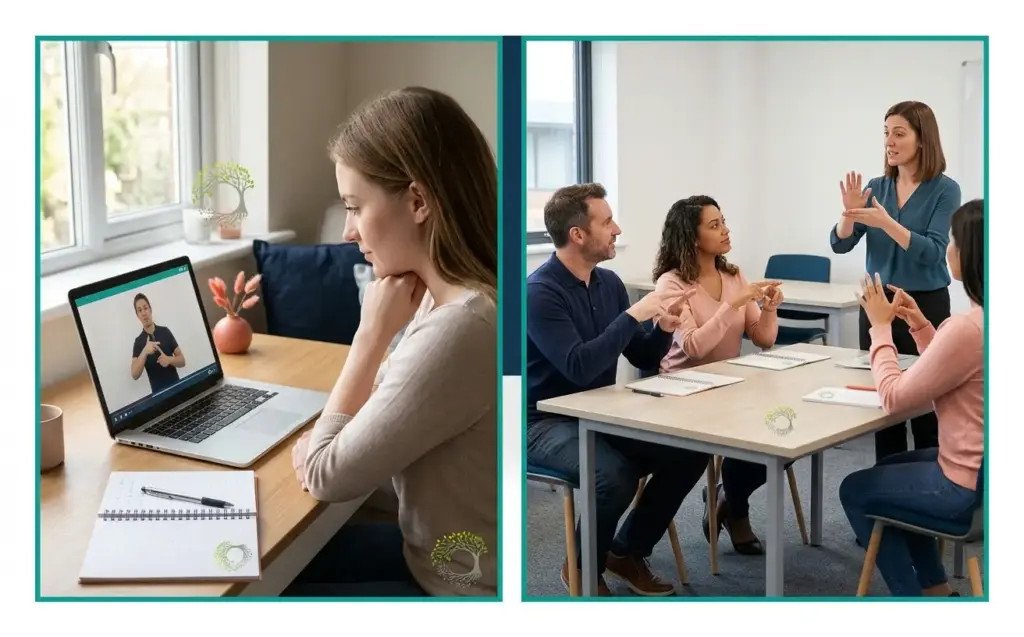
Self-Paced vs Tutor-Led BSL Learning
Self-paced courses allow you to watch demonstrations, repeat lessons and study when convenient.
They can suit people balancing employment, family responsibilities or other commitments.
Video learning also provides opportunities to revisit unfamiliar signs and practise at a comfortable pace.
Tutor-led classes offer more direct interaction. Learners can practise conversations, receive corrections and observe different signing styles.
This feedback is particularly valuable because BSL communication involves movement, expression and understanding signed responses.
How to Choose the Right Online BSL Course
Before selecting a programme, consider these questions:
- Do you want introductory knowledge or a regulated qualification?
- Can you attend scheduled classes, or do you need flexible learning?
- Will you have opportunities to practise conversations?
- What assessments does the course require?
- What certificate will you receive after completion?
Your answers can help narrow down the available options.
If you prefer independent study, the Janets BSL Level 1 course provides video-based learning covering fingerspelling, everyday vocabulary, conversations and basic grammar.
The course includes online study materials, learner support and a completion e-certificate. Its self-paced structure allows you to revisit lessons without following a fixed classroom timetable.
Start building your BSL knowledge with Janet’s beginner-friendly online lessons, while choosing additional tutor-led or regulated training if your goals require it.
How Can Beginners Practise BSL Effectively?
Learning BSL involves more than watching demonstrations. Regular practice helps you recognise familiar signs, improve accuracy and develop confidence.
A few simple habits can support progress:
- Practise regularly. Revisit common greetings, numbers and everyday vocabulary rather than trying to learn everything at once.
- Watch different signers. Observing different signing styles can help strengthen receptive skills.
- Use familiar situations. Practise introducing yourself, discussing family members or asking simple questions.
- Seek feedback. A fluent signer or qualified tutor can help identify mistakes that may be difficult to recognise independently.
- Learn about Deaf culture. Understanding how BSL is used within Deaf communities helps put your language learning into context.
Try to focus on what you can understand and communicate rather than simply counting the signs you remember.
What Can You Do After BSL Level 1?
BSL Level 1 can help you develop basic communication skills and greater awareness of visual language.
You may become more comfortable introducing yourself, discussing familiar subjects and recognising everyday expressions.
These skills may complement existing responsibilities in education, childcare, customer service and community support.
However, completing beginner BSL training does not qualify someone to work as a professional interpreter.
The National Careers Service’s BSL interpreter guidance explains that professional interpreting involves substantially more advanced language skills and specialist qualifications.
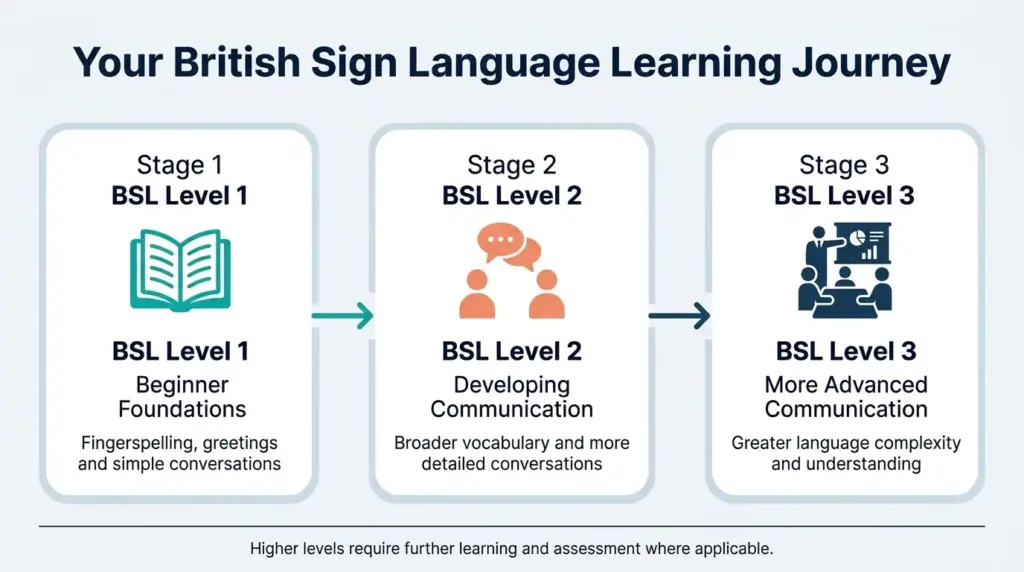
If you enjoy learning BSL, progressing to Level 2 may help you develop broader vocabulary and more detailed conversations.
Conclusion
BSL Level 1 provides a starting point for learning British Sign Language, introducing fingerspelling, everyday vocabulary and simple conversations.
The right course depends on your learning goals, available time and whether you need a regulated qualification or introductory training.
Before enrolling, check the course content, duration, assessment arrangements and certification carefully.
Whether you begin with flexible online lessons or tutor-led classes, regular practice and meaningful interaction with BSL users will help you build your skills.
FAQs About BSL Level 1
Is BSL Level 1 Difficult?
BSL Level 1 is designed for beginners, although learning unfamiliar handshapes, facial expressions and grammar takes practice. Regular revision and opportunities to communicate with others can help you develop confidence.
Can I Teach Myself BSL?
You can begin learning BSL independently using video lessons and educational resources. However, practising with fluent signers or qualified tutors is valuable for developing accuracy and natural communication skills.
Are There Any Free BSL Courses?
Free introductory learning resources are available, and some people may qualify for funded training. Check whether the programme offers informal lessons, a completion certificate, or a regulated qualification.
Is BSL Level 1 Enough to Become Fluent?
No. BSL Level 1 introduces foundational communication skills. Becoming fluent requires further language development, regular practice, and meaningful experience communicating with BSL users.