


Course Library View the full range of courses
-
Accounting (145 courses)
- Xero Accounting and Bookkeeping Online
- Sage 50 Accounting & Payroll
- Project Finance
- Financial Modelling Training
- Tax Accounting
- Introduction to VAT
- Accounting and Finance Course for Managers
- Internal Compliance Auditor
- Financial Statement Analysis
- Payroll Administrator Level 3 Diploma
- View all Accounting courses
-
Language (67 courses)
- British Sign Language (BSL) Level 1 & 2
- Speech and Language Therapy Diploma
- TEFL (TESOL) Course
- English Spelling, Punctuation, and Grammar
- Child & Adult Speech & Language Disorders Training
- Teaching English as Foreign Language (TEFL) Certificate
- Mastering Spanish Language
- French Course for Beginners
- German Course for Beginners
- Body Language and Gesture Training
- View all Language courses
-
Teaching & Education (37 courses)
- Teaching Assistant Complete Course (TA, SEN, Autism, ADHD & Dyslexia) – CPD Certified
- EYFS Teaching Assistant Training Course
- Advanced Diploma in Coaching and Mentoring
- Level 3 Diploma in Teaching and Classroom Management
- Remote Teaching
- SENCO – Special Educational Needs Coordination
- Teaching English as Foreign Language (TEFL)
- Life Coaching
- Phonics Teaching Diploma
- View all Teaching & Education courses
-
Health and Social Care (138 courses)
- Health and Social Care Management
- Paediatric Nursing Assistant
- Mental Health Awareness Training
- Emergency Medicine – Paramedicine
- Level 3 Diploma in Adult Care
- Paediatric First Aid Training
- Safeguarding Children Level 3
- Level 3 Diploma in Anatomy and Physiology of Human Body
- Play Therapy
- The Care Certificate Preparation – Standards (1 to 15)
- View all Health and Social Care courses
-
Management (539 courses)
- Office Admin, Secretarial and PA Diploma
- Estate Agent and Property Management Training
- Diploma in Data Analysis Fundamentals
- Advanced Diploma in Stress & Anxiety Management
- Good Manufacturing Practice (GMP)
- Property Development and Management Course
- Diploma in Hotel Management
- Supply Chain Management
- Quality Assurance (QA) Manager
- Compliance and Risk Management
- View all Management courses
-
IT & Software (123 courses)
- Coding with Python 3
- Search Engine Optimisation (SEO) Training
- Cyber Security
- Motion Graphics with After Effects
- CompTIA A+ Core 1 (220-1101) Course
- Machine Learning for Aspiring Data Scientists
- Next.js Web Dev: Master this Powerful React Framework
- Learn 2D Animation with Adobe Animate
- GDPR Challenges in Education
- View all IT & Software courses
-
Employability (1043 courses)
- Office Administrator Skills
- Presentation Skills
- Legal Secretary and Office Skills
- Hospitality Management
- Estate Agent Diploma
- Hairdressing and Barbering
- Diploma in UK Employment Law
- Diploma in Data Analysis Fundamentals
- Building Surveyor Training
- Emotional Intelligence Training
- View all Employability courses
-
Personal Development (1439 courses)
- Productivity Habits
- Minute Taking Course
- Presentation Skills
- Excel: Top 50 Microsoft Excel Formulas in 50 Minutes!
- Critical Thinking and Problem Solving Skills
- Time Management
- Self Esteem and Confidence Building Course
- Essential IT Skills
- Legal Secretary and Office Skills
- Personality Development
- View all Personal Development courses


SENCO - Special Educational Needs Coordination
271 Students (7 Reviews)
Empower Students with Special Needs! This SENCO course equips you to champion inclusion and support students with SEN. Develop essential skills, knowledge, and leadership to excel as a SENCO and create a thriving learning environment for all.

Course Curriculum
| Module 1: Introduction to SEN Co-ordination | |||
| Introduction to SEN Co-ordination | 00:13:00 | ||
| Module 2: The SENCO Role in Policy and Practice | |||
| The SENCO Role in Policy and Practice | 00:12:00 | ||
| Module 3: Roles and Responsibilities within whole School SEN Co-ordination | |||
| Roles within Whole School SEN Co-ordination | 00:12:00 | ||
| Module 4: Supporting Teaching and Learning | |||
| Supporting Teaching and Learning | 00:22:00 | ||
| Module 5: The SENCO and the Senior Leadership Team | |||
| The SENCO and the Senior Leadership Team | 00:14:00 | ||
| Module 6: Supporting Colleagues and working with Professionals and Organisations beyond the School | |||
| Working with Professionals beyond the School | 00:24:00 | ||
| Module 7: Developing Relationship with Pupils and Parents | |||
| Developing Relationships with Pupils and Parents | 00:19:00 | ||
| Module 8: SENCO’s Role in Leading and Managing SEND Administration | |||
| Leading and Managing SEND Administration | 00:17:00 | ||
| Module 9: Challenges and Opportunities | |||
| Challenges and Opportunities | 00:16:00 | ||
| Module 10: Developing Inclusive Practice and the Future SENCO Role | |||
| Developing Inclusive Practice and the Future SENCO Role | 00:13:00 | ||
| Mock Exam | |||
| Mock Exam – SENCO – Special Educational Needs Coordination | 00:20:00 | ||
| Final Exam | |||
| Final Exam – SENCO – Special Educational Needs Coordination | 00:20:00 | ||
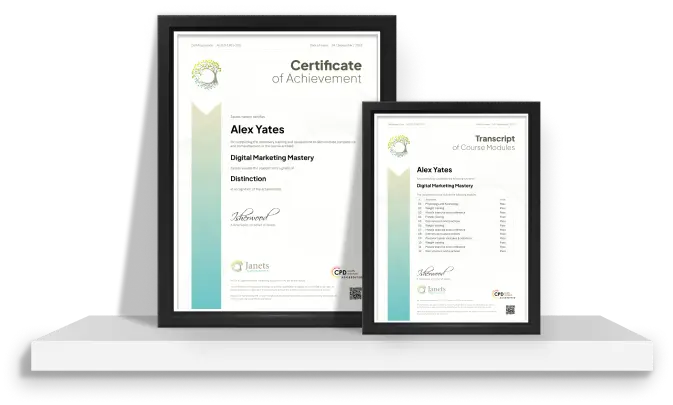
| Order your Certificates & Transcripts | |||
| Order your Certificates & Transcripts | 00:00:00 | ||

Original price was: £319.£25Current price is: £25. ex Vat
SAVE 92% - OFFER ENDS IN

 14-Day Money-Back Guarantee
- Personal
- Team
Quantity:
Total:
50% discount for orders of 10+ courses
60% discount for orders of 50+ courses
70% discount for orders of 100+ courses
For more personalised package, contact us


Frequently asked questions
Can’t find the anwser you’re looking for ? Reach out to customer support team.
To become a SENCO in the UK, a qualified teacher must complete the National Award for Special Educational Needs Coordination within three years of taking up the role. This involves being a qualified teacher with Qualified Teacher Status (QTS) or Qualified Teacher Learning and Skills (QTLS) status. They must also have relevant experience working with children with special educational needs (SEN).
Yes, it is common for SENCOs to receive a Teaching and Learning Responsibility (TLR) payment. This additional allowance reflects the extra responsibilities they hold in managing and coordinating SEN provision within the school.
A SENCO in the context of autism is a professional responsible for coordinating and overseeing the support and educational provision for students with autism. They work to ensure these students' needs are met through appropriate interventions, resources, and individualized education plans (IEPs).
A teaching assistant (TA) cannot be a SENCO, as the role requires being a qualified teacher with the appropriate status (QTS or QTLS). However, TAs can support the SENCO and work closely with students who have special educational needs.
Yes, ADHD (Attention Deficit Hyperactivity Disorder) falls under the remit of a SENCO. They coordinate support and strategies to help students with ADHD succeed in the educational environment.
Being a SENCO can be stressful due to the high levels of responsibility, workload, and the need to support students with diverse and complex needs. Balancing administrative duties, liaising with parents and external agencies, and providing direct support to students can be challenging.
A SENCO assistant supports the SENCO in administrative tasks, preparing and maintaining documentation related to SEN students, organizing meetings, liaising with parents and staff, and sometimes providing direct support to students.
SEN stands for Special Educational Needs. When related to autism, it refers to the additional or different support required by students with autism to help them access the curriculum and succeed in school.
NASEN stands for the National Association for Special Educational Needs. It is a UK-based organization that supports education professionals by providing resources, training, and information on best practices for working with students with SEN.
Being a SENCO can be demanding due to the multifaceted nature of the role, requiring strong organizational, communication, and problem-solving skills. It involves working with a range of stakeholders, addressing varied student needs, and staying updated with SEN legislation and best practices.
A SENCO is crucial in ensuring that students with special educational needs receive the support and resources they need to succeed academically and socially. They play a key role in promoting inclusive education and helping to create a supportive school environment.
Expectations of a SENCO include identifying and assessing students' SEN, developing and implementing IEPs, coordinating with teachers, parents, and external agencies, providing professional development for staff, ensuring compliance with SEN legislation, and monitoring and evaluating the effectiveness of SEN provision.
NPQ stands for National Professional Qualification. It is a suite of qualifications designed for teachers and leaders in the UK to develop their skills and knowledge in educational leadership and management. Examples include NPQ for Senior Leadership (NPQSL), NPQ for Headship (NPQH), and NPQ for Middle Leadership (NPQML).