LOGIN/Sign up


Retail visual merchandising skills are the choices behind what shoppers notice, find and understand in a shop. They include planning window displays, grouping products and making prices easy to read. Retail management brings in the decisions about staffing, stock and priorities that keep those displays working during a busy trading week.
Imagine a high-street fashion shop preparing for its autumn launch. The visual merchandiser plans a window around a new raincoat range. The store manager checks whether enough sizes are available and sets aside time for the team to change the display. Both decisions matter. A window may attract attention, but shoppers still need to find the coat and try on the right size.
If you are new to retail or considering a supervisory role, use the examples below to practise both sides of the job. The Janets Retail Management & Visual Merchandising Training Bundle brings those topics together with merchandise planning, retail analytics and supplier quality.
What are retail visual merchandising skills?
Visual merchandising is how a retailer presents products across its windows, shelves, fixtures and other display areas. In-store merchandising skills include choosing a focal product, grouping related items, planning how customers move through the shop and deciding where signs belong.
Build a window display around one idea
Choose the product or theme shoppers should notice first. For a back-to-school display, a shoe shop might feature one pair prominently, then add a small selection of bags or socks. Lighting, spacing and colour can draw attention to the main product while keeping the rest of the display readable.
Step outside and look at the window from the pavement. Can you tell what the shop is featuring at a glance? Can you read the sign from where a passer-by might stop? Finally, check that the product is easy to locate once customers come inside.
Plan the layout from the shopper’s point of view
Walk the shop floor from the entrance to a display, then to the fitting rooms or tills. Look for furniture that interrupts the route and signs that are hard to see at the point where customers need them. Leave clear space around fixtures and pay attention to how shoppers using a wheelchair or pushing a pram might move through the area.
Some retailers use a planogram, which is a diagram showing where products belong on a shelf or fixture. If the shop uses one, refer to it when resetting a display. A clear reference also gives colleagues a way to put products back in the right place during a busy shift.
Make product and price information easy to read
Check that each sign clearly relates to the products around it. In a clothing shop, two similar rails can look like one offer from a distance. If the promotion applies to selected lines, position the sign beside those items and check it from the customer’s approach.
Use a short message, readable type and clear contrast between the text and its background. Then check the detail most likely to cause confusion, such as whether the sign shows a starting price or the price of every item on the fixture.
Retail management skills behind a well-run shop floor
Managing a shop involves planning people’s time, checking stock, handling customer issues and reviewing trading information. These skills support retail display planning because every display needs someone to set it up, maintain it and respond when products run low.
Brief the team and check stock before launch
A useful shift brief covers the products on display, the reason for the change and who is responsible for each task. For example, one colleague might reset the fixture while another checks the stockroom for missing sizes. A named person can check the finished display against the brief before the shop gets busy.
Check how much stock is available before giving a product a prominent spot. If key sizes are missing and the next delivery is uncertain, consider switching to another line or using a smaller fixture. Give the incoming shift a short handover covering what changed, what stock is low and which checks are due next.
Use sales figures and shop-floor observations together
Start with a specific question, such as whether shoppers are finding the accessories featured beside a new clothing range. Check units sold, stock availability and feedback from colleagues. If shoppers keep asking where an item is, review the signs or improve its visibility from the main aisle.
Compare similar trading periods when you can, such as two Saturdays with similar opening hours. Record other changes, including promotions, deliveries and gaps in stock. If sales rise after a display moves, the new location is one possible explanation. The extra stock or weekend offer may also have contributed.
For a simple weekly record, note the fixture location, featured products, dates and main stock gaps. Add one question to check on the next shift. For instance, if small sizes sell out early, check whether colleagues had stock available to refill the rail. That detail helps you decide whether to change the presentation or review how the team replenishes it.
UK shop-floor example: Plan an autumn display
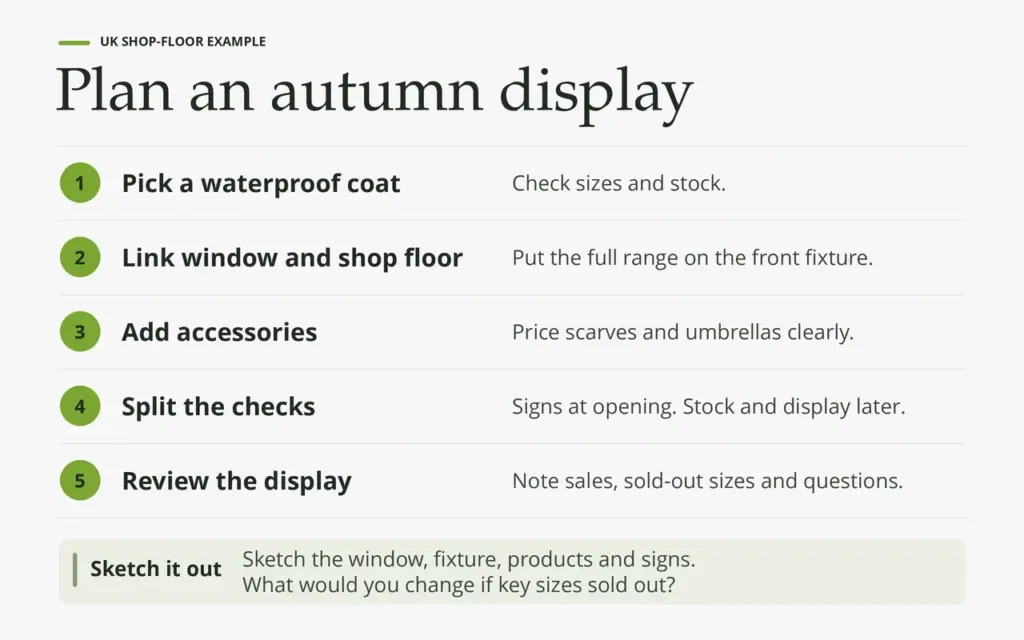
A high-street fashion shop wants to feature waterproof coats ahead of the weekend. The team has one front fixture and a small window. Here is how the store manager and visual merchandiser could plan the change together.
1.Select the lead product. Check which coat has a useful range of sizes and enough stock to replenish the display.
2.Connect the window to the shop floor. Feature the coat in the window and place the full range where customers can find it easily.
3.Group products that belong together. Add a small selection of scarves or umbrellas, with visible prices for each product.
4.Assign the maintenance checks. Ask the opening team to check the signs. Give the afternoon shift a stock and presentation check.
5.Review what happened. Note customer questions, sizes that ran out and units sold. Use those observations when planning the next change.
You can practise these product presentation skills with a paper sketch. Draw a window and one fixture, mark where the coat and accessories sit, and add a sign. Then explain what you would change if the main sizes ran out on Saturday morning.
How to develop in-store merchandising skills
If you already work in retail, ask to help refresh a small display or audit shelf-edge signs during a shift. Record the purpose of the task, what you noticed and why you chose a particular layout. If your employer permits photos, a before-and-after set can illustrate your decisions. A sketch and short written explanation also work as practice material.
If you are exploring retail roles, compare the work involved before choosing what to study. Visual merchandising may appeal if you enjoy display design and product presentation. Store management may suit you if you prefer organising people, stock and daily operations. The National Careers Service outlines typical duties and entry routes for both. Visual merchandiser career profile · Retail manager career profile
How the Janets training bundle fits
The Retail Management & Visual Merchandising Training Bundle explores how retail visual merchandising skills fit into the day-to-day work of running a shop. It brings together window displays, store layouts and product presentation with team leadership, merchandise planning and pricing. The bundle also covers sales data and supplier quality, including how fashion buyers assess suppliers and review product standards.
Think about a high-street shop preparing a seasonal window. Someone needs to choose the featured products, check which sizes are in stock and brief the team on how to maintain the display. Those decisions link shop-floor display techniques with the stock and staffing decisions behind them.
To practise, sketch a window and a matching shop-floor fixture. Write a short brief covering what to feature, who checks the display and what the team could change if a product sells out. This exercise gives you a way to explore visual merchandising and retail management through the same task.
Explore retail management and visual merchandising training
A window display starts with a product choice. Keeping it relevant throughout the week takes stock checks, clear pricing and a team that knows when to refresh it. The Retail Management & Visual Merchandising Training Bundle brings these decisions together so you can study retail visual merchandising skills alongside the daily work of running a shop.
Plan displays with stock and pricing in mind
Explore how window displays, shop layouts and product placement influence what shoppers notice and where they look next. For example, a high-street clothing shop might feature a new coat in the window and display the full range near the entrance. Planning that display involves checking which sizes are available, where the price should sit and what to feature if stock runs low.
Connect shop-floor displays with team and trading decisions
The bundle also covers team leadership, merchandise planning, pricing, sales data and supplier quality. These topics put in-store merchandising in a wider context. If a featured line sells slowly, a retail team might check whether shoppers can find it, whether popular sizes are available or whether the price is clear. Each observation points to a different decision about the display.
Find a starting point that suits your role
If you’re new to retail, start with product grouping, signage and shop layout. If you already work on the shop floor, consider how you would brief colleagues before a display change. If you’re exploring a supervisory role, look at how rotas, stock checks and sales figures inform the timing of a promotion.
Frequently Asked Questions
What does a visual merchandiser do?
A visual merchandiser plans and arranges product displays and shop layouts. Day-to-day tasks can include dressing windows, choosing fixtures and updating product displays for seasonal ranges or promotions.
What are examples of visual merchandising in retail?
Examples include a seasonal window display, a mannequin styled with a full outfit and a shelf that groups related products. A bookshop might place holiday reads on a front table, while a shoe shop might display socks beside school shoes.
What skills do you need for visual merchandising?
Useful retail visual merchandising skills include product styling, layout planning, colour coordination and attention to detail. Communication matters too, especially when explaining how colleagues should set up or maintain a display.
How do I become a visual merchandiser in the UK?
Common routes include starting in a shop-floor role, applying for an apprenticeship or taking a relevant course. If you already work in retail, ask to help with a display change. You could use sketches or photos taken with permission to show your ideas in a portfolio.
What is the difference between retail management and visual merchandising?
Visual merchandising focuses on how shoppers see and find products. Retail management covers how the shop runs, including staffing, stock and daily trading. The roles overlap when a shop launches a promotion or rearranges its floor layout.