


Course Library View the full range of courses
-
Accounting (145 courses)
- Xero Accounting and Bookkeeping Online
- Sage 50 Accounting & Payroll
- Project Finance
- Financial Modelling Training
- Tax Accounting
- Introduction to VAT
- Accounting and Finance Course for Managers
- Internal Compliance Auditor
- Financial Statement Analysis
- Payroll Administrator Level 3 Diploma
- View all Accounting courses
-
Language (67 courses)
- British Sign Language (BSL) Level 1 & 2
- Speech and Language Therapy Diploma
- TEFL (TESOL) Course
- English Spelling, Punctuation, and Grammar
- Child & Adult Speech & Language Disorders Training
- Teaching English as Foreign Language (TEFL) Certificate
- Mastering Spanish Language
- French Course for Beginners
- German Course for Beginners
- Body Language and Gesture Training
- View all Language courses
-
Teaching & Education (37 courses)
- Teaching Assistant Complete Course (TA, SEN, Autism, ADHD & Dyslexia) – CPD Certified
- EYFS Teaching Assistant Training Course
- Advanced Diploma in Coaching and Mentoring
- Level 3 Diploma in Teaching and Classroom Management
- Remote Teaching
- SENCO – Special Educational Needs Coordination
- Teaching English as Foreign Language (TEFL)
- Life Coaching
- Phonics Teaching Diploma
- View all Teaching & Education courses
-
Health and Social Care (138 courses)
- Health and Social Care Management
- Paediatric Nursing Assistant
- Mental Health Awareness Training
- Emergency Medicine – Paramedicine
- Level 3 Diploma in Adult Care
- Paediatric First Aid Training
- Safeguarding Children Level 3
- Level 3 Diploma in Anatomy and Physiology of Human Body
- Play Therapy
- The Care Certificate Preparation – Standards (1 to 15)
- View all Health and Social Care courses
-
Management (539 courses)
- Office Admin, Secretarial and PA Diploma
- Estate Agent and Property Management Training
- Diploma in Data Analysis Fundamentals
- Advanced Diploma in Stress & Anxiety Management
- Good Manufacturing Practice (GMP)
- Property Development and Management Course
- Diploma in Hotel Management
- Supply Chain Management
- Quality Assurance (QA) Manager
- Compliance and Risk Management
- View all Management courses
-
IT & Software (123 courses)
- Coding with Python 3
- Search Engine Optimisation (SEO) Training
- Cyber Security
- Motion Graphics with After Effects
- CompTIA A+ Core 1 (220-1101) Course
- Machine Learning for Aspiring Data Scientists
- Next.js Web Dev: Master this Powerful React Framework
- Learn 2D Animation with Adobe Animate
- GDPR Challenges in Education
- View all IT & Software courses
-
Employability (1043 courses)
- Office Administrator Skills
- Presentation Skills
- Legal Secretary and Office Skills
- Hospitality Management
- Estate Agent Diploma
- Hairdressing and Barbering
- Diploma in UK Employment Law
- Diploma in Data Analysis Fundamentals
- Building Surveyor Training
- Emotional Intelligence Training
- View all Employability courses
-
Personal Development (1438 courses)
- Productivity Habits
- Minute Taking Course
- Presentation Skills
- Excel: Top 50 Microsoft Excel Formulas in 50 Minutes!
- Critical Thinking and Problem Solving Skills
- Time Management
- Self Esteem and Confidence Building Course
- Essential IT Skills
- Legal Secretary and Office Skills
- Personality Development
- View all Personal Development courses


Functional Skills Teacher (Maths)
89 Students (3 Reviews)
Elevate your teaching skills and help your students acquire excellent functional maths skills

Course Curriculum
| Integers ( Directed Numbers) | |||
| Lecture 1 Introduction | 00:02:00 | ||
| Lecture 2 Multiplying any digit number by 11, 22, and 33 | 00:09:00 | ||
| Lecture 3 Integers and ordering of integers | 00:06:00 | ||
| Lecture 4 Addition and Subtractions of Integers | 00:07:00 | ||
| Lecture 5 Operations on Integers | 00:04:00 | ||
| Lecture 6 Multiplication and Division of Integers | 00:04:00 | ||
| Lecture 7 Powers of Integers (Exponents) | 00:04:00 | ||
| Factors and Multiples | |||
| Lecture 8 Complete knowledge about factors and multiples | 00:06:00 | ||
| Lecture 9 Divisibility tests for 2,3,4,5,6 | 00:07:00 | ||
| Lecture 10 Divisibility rules 7,8,9,10,11 | 00:06:00 | ||
| Lecture 11 Prime Factorization | 00:06:00 | ||
| Lecture 12 Highest Common Factor HCF | 00:10:00 | ||
| Lecture 13 Least Common Multiple LCM | 00:16:00 | ||
| Lecture 14 Relation between LCM and HCF | 00:04:00 | ||
| Fractions | |||
| Lecture 15 Classification of Fractions | 00:04:00 | ||
| Lecture 16 Convert mixed to improper and improper to mixed fractions | 00:03:00 | ||
| Lecture 17 Equivalent Fractions | 00:04:00 | ||
| Lecture 18 Comparing Fractions after converting to like fractions | 00:09:00 | ||
| Lecture 19 Reducing a fraction to lowest term | 00:04:00 | ||
| Lecture 20 Addition and subtraction OF fractions | 00:08:00 | ||
| Lecture 21 Multiplication and division of fractions | 00:11:00 | ||
| Lecture 22 Word problems on fractions | 00:16:00 | ||
| Simplification Rule : BODMAS | |||
| Lecture 23 BODMAS and rules to remove brackets | 00:03:00 | ||
| Lecture 24 Simplify expressions using BODMAS rules | 00:05:00 | ||
| Lecture 25 Simplify expressions involving fractions using BODMAS | 00:07:00 | ||
| Decimal numbers | |||
| Lecture 26 Decimal numbers in relation to fractions | 00:08:00 | ||
| Lecture 27 Like and unlike Decimals | 00:05:00 | ||
| Lecture 28 Ordering of Decimal numbers | 00:10:00 | ||
| Lecture 29 Addition and subtraction of Decimal | 00:07:00 | ||
| Lecture 30 Multiplication of Decimal | 00:03:00 | ||
| Lecture 31 Division of Decimal | 00:05:00 | ||
| Rational Numbers | |||
| Lecture 32 Rational number | 00:02:00 | ||
| Lecture 33 Representation of Rational Numbers on Number line | 00:04:00 | ||
| Lecture 34 Determining which fraction is terminating or non terminating | 00:05:00 | ||
| Lecture 35 shortcut method of writing decimal expansion of fraction to decimal | 00:08:00 | ||
| Approximation | |||
| Lecture 36 Rounding to whole number | 00:06:00 | ||
| Lecture 37 Rounding to required number of decimals (1 d.p. ) | 00:05:00 | ||
| Lecture 38 rounding to significant digits | 00:07:00 | ||
| Lecture 39 Practice question on three methods of approximation | 00:05:00 | ||
| Estimation and Scientific Notation or Standard form | |||
| Lecture 40 Estimation | 00:05:00 | ||
| Lecture 41 Scientific Notation | 00:07:00 | ||
| Lecture 42 Operation on numbers when they are in scientific notation | 00:06:00 | ||
| Percentage | |||
| Lecture 43 Percentage to fraction and fraction to percentage | 00:06:00 | ||
| Lecture 44 Percentage of a quantity and conversation to decimal | 00:06:00 | ||
| Lecture 45 Expressing one quantity as percentage of another quantity | 00:06:00 | ||
| Lecture 46 Finding increase decrease percent | 00:05:00 | ||
| Lecture 47 Uses of percentages-Word Problems | 00:09:00 | ||
| Ratio and Proportion | |||
| Lecture 48 Ratio- How to express as simple ratio | 00:09:00 | ||
| Lecture 49 How to compare Ratios | 00:04:00 | ||
| Lecture 50 Word problems on finding ratios | 00:07:00 | ||
| Lecture 51 To divide a given quantity into a given Ratio | 00:11:00 | ||
| Lecture 52 Proportion | 00:04:00 | ||
| Lecture 53 Practice problems on Proportion | 00:06:00 | ||
| Lecture 54 Continued proportion | 00:06:00 | ||
| Unitary Method and its Applications | |||
| Lecture 55 Direct Variation ( or proportion) | 00:04:00 | ||
| Lecture 56 Problems based on Direct proportion | 00:10:00 | ||
| Lecture 57 Inverse Variation ( or proportion) | 00:10:00 | ||
| Lecture 58 Multiple Ratios | 00:10:00 | ||
| Profit , Loss, discount and Tax | |||
| Lecture 59 Basics – Profit and Loss | 00:04:00 | ||
| Lecture 60 More practice problems on Profit & Loss | 00:06:00 | ||
| Lecture 61 Selling price formula and Problems | 00:04:00 | ||
| Lecture 62 Cost price formula and Problems | 00:03:00 | ||
| Lecture 63 Higher problems on Profit and Loss | 00:08:00 | ||
| Lecture 64 Basics – Discount | 00:05:00 | ||
| Lecture 65 Practice problems on Discount | 00:04:00 | ||
| Lecture 66 Tax | 00:06:00 | ||
| Resources | |||
| Resources – Functional Skills Teacher (Maths) | 00:00:00 | ||
| Mock Exam | |||
| Mock Exam – Functional Skills Teacher (Maths) | 00:20:00 | ||
| Final Exam | |||
| Final Exam – Functional Skills Teacher (Maths) | 00:20:00 | ||
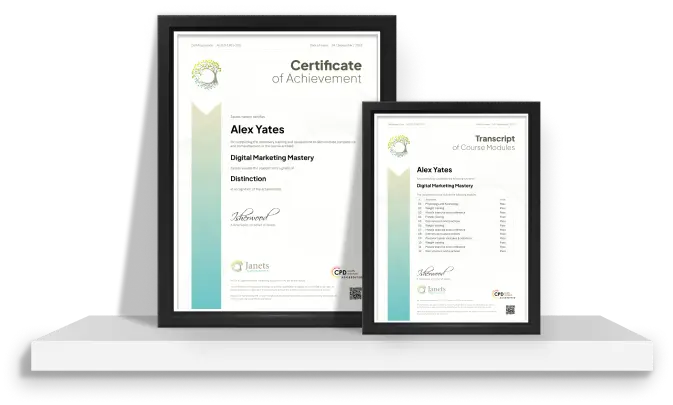
| Order your Certificates & Transcripts | |||
| Order your Certificates & Transcripts | 00:00:00 | ||
| Order your Certificates & Transcripts | |||
| Order your Certificates & Transcripts | 00:00:00 | ||

Original price was: £319.£25Current price is: £25. ex Vat
SAVE 92% - OFFER ENDS IN

 ALL
COURSES FOR £49
ALL
COURSES FOR £49  14-Day Money-Back Guarantee
- Personal
- Team
Quantity:
Total:
50% discount for orders of 10+ courses
60% discount for orders of 50+ courses
70% discount for orders of 100+ courses
For more personalised package, contact us


Frequently asked questions
Can’t find the anwser you’re looking for ? Reach out to customer support team.
Functional Skills Maths is a qualification designed to develop practical mathematical skills for use in everyday life, work, and education. The levels are equivalent to: Entry Level 1, 2, and 3: Basic understanding of mathematics. Level 1: Equivalent to a GCSE grade 1-3 (D-G). Level 2: Equivalent to a GCSE grade 4-9 (A*-C).
To prepare for Functional Skills in Math: Understand the Syllabus: Familiarize yourself with the topics covered. Practice Regularly: Solve practice papers and exercises. Use Study Guides: Utilize textbooks and online resources specific to Functional Skills Maths. Attend Classes: If available, attend classes or workshops. Seek Help: Get support from teachers or tutors if you struggle with certain topics.
The pass mark for Functional Skills Maths can vary slightly depending on the exam board, but it is generally around 55-60%.
The difficulty of Functional Skills Maths varies by individual. Generally, Level 1 is considered easier than Level 2. Level 2 covers more complex topics and requires a good understanding of mathematical concepts. However, with regular practice and the right resources, it is manageable.
If you fail Functional Skills Maths, you can retake the exam. There are no restrictions on the number of attempts you can make, and many providers offer support and resources to help you pass.
This can vary by individual, but some commonly challenging topics in maths include: Algebra Trigonometry Calculus Problem-solving and reasoning tasks
The time it takes to complete Functional Skills Maths depends on the individual and the mode of study. Some learners complete it within a few months, while others might take longer. Typically, courses range from a few weeks to several months.
Functional Skills Maths is graded on a pass/fail basis. There are no letter grades or percentages given on the certificate, just an indication of whether the candidate has met the required standard to pass.
Level 2 Functional Skills in Maths is designed to provide learners with practical mathematical skills needed in everyday life, work, and further education. It covers areas such as: Numbers and the number system Common measures, shapes, and space Handling information and data
Yes, you are allowed a calculator in certain parts of the Functional Skills Maths exam. The exam usually consists of two parts: a non-calculator section and a calculator-allowed section.
There is no specific age requirement for Functional Skills Maths. It is suitable for anyone who needs to develop their practical mathematical skills, including school students, adults, and employees.
Functional Skills Maths is often free for learners aged 19 and over who do not already have a grade C or higher in GCSE Maths. Funding may be available through government schemes, adult education centers, or employers.
To revise for Functional Skills Maths: Identify Weak Areas: Focus on topics you find challenging. Use Past Papers: Practice with past exam papers to familiarize yourself with the format. Online Resources: Utilize free online resources and tutorials. Join Study Groups: Collaborate with others to share knowledge and techniques. Regular Practice: Consistent practice is key to mastering mathematical skills.
Yes, Functional Skills qualifications are nationally recognized in the UK and valued by employers, educational institutions, and training providers.
Functional Skills Level 1 Maths is roughly equivalent to a GCSE grade 1-3 (D-G). It demonstrates a basic understanding and capability in mathematics necessary for everyday tasks and employment.