


Course Library View the full range of courses
-
Accounting (145 courses)
- Xero Accounting and Bookkeeping Online
- Sage 50 Accounting & Payroll
- Project Finance
- Financial Modelling Training
- Tax Accounting
- Introduction to VAT
- Accounting and Finance Course for Managers
- Internal Compliance Auditor
- Financial Statement Analysis
- Payroll Administrator Level 3 Diploma
- View all Accounting courses
-
Language (67 courses)
- British Sign Language (BSL) Level 1 & 2
- Speech and Language Therapy Diploma
- TEFL (TESOL) Course
- English Spelling, Punctuation, and Grammar
- Child & Adult Speech & Language Disorders Training
- Teaching English as Foreign Language (TEFL) Certificate
- Mastering Spanish Language
- French Course for Beginners
- German Course for Beginners
- Body Language and Gesture Training
- View all Language courses
-
Teaching & Education (37 courses)
- Teaching Assistant Complete Course (TA, SEN, Autism, ADHD & Dyslexia) – CPD Certified
- EYFS Teaching Assistant Training Course
- Advanced Diploma in Coaching and Mentoring
- Level 3 Diploma in Teaching and Classroom Management
- Remote Teaching
- SENCO – Special Educational Needs Coordination
- Teaching English as Foreign Language (TEFL)
- Life Coaching
- Phonics Teaching Diploma
- View all Teaching & Education courses
-
Health and Social Care (138 courses)
- Health and Social Care Management
- Paediatric Nursing Assistant
- Mental Health Awareness Training
- Emergency Medicine – Paramedicine
- Level 3 Diploma in Adult Care
- Paediatric First Aid Training
- Safeguarding Children Level 3
- Level 3 Diploma in Anatomy and Physiology of Human Body
- Play Therapy
- The Care Certificate Preparation – Standards (1 to 15)
- View all Health and Social Care courses
-
Management (539 courses)
- Office Admin, Secretarial and PA Diploma
- Estate Agent and Property Management Training
- Diploma in Data Analysis Fundamentals
- Advanced Diploma in Stress & Anxiety Management
- Good Manufacturing Practice (GMP)
- Property Development and Management Course
- Diploma in Hotel Management
- Supply Chain Management
- Quality Assurance (QA) Manager
- Compliance and Risk Management
- View all Management courses
-
IT & Software (123 courses)
- Coding with Python 3
- Search Engine Optimisation (SEO) Training
- Cyber Security
- Motion Graphics with After Effects
- CompTIA A+ Core 1 (220-1101) Course
- Machine Learning for Aspiring Data Scientists
- Next.js Web Dev: Master this Powerful React Framework
- Learn 2D Animation with Adobe Animate
- GDPR Challenges in Education
- View all IT & Software courses
-
Employability (1043 courses)
- Office Administrator Skills
- Presentation Skills
- Legal Secretary and Office Skills
- Hospitality Management
- Estate Agent Diploma
- Hairdressing and Barbering
- Diploma in UK Employment Law
- Diploma in Data Analysis Fundamentals
- Building Surveyor Training
- Emotional Intelligence Training
- View all Employability courses
-
Personal Development (1439 courses)
- Productivity Habits
- Minute Taking Course
- Presentation Skills
- Excel: Top 50 Microsoft Excel Formulas in 50 Minutes!
- Critical Thinking and Problem Solving Skills
- Time Management
- Self Esteem and Confidence Building Course
- Essential IT Skills
- Legal Secretary and Office Skills
- Personality Development
- View all Personal Development courses


Business and Data Analysis With SQL
42 Students (7 Reviews)
Develop SQL, business analysis, database, and data interpretation skills with the Business and Data Analysis With SQL Course.

Course Curriculum
| Introduction | |||
| Business and Data Analysis with SQL | 00:06:00 | ||
| Database and Datawarehouse Design | |||
| Introduction to Databases- A History | 00:04:00 | ||
| SQL Statement Categories | 00:02:00 | ||
| Capture data requirements | 00:09:00 | ||
| Physical Vs Logical Data Representations | 00:03:00 | ||
| Normalise data | 00:07:00 | ||
| Fact Tables | 00:04:00 | ||
| Aggregate data | 00:07:00 | ||
| Entity Relationship Diagrams (ERD’s) | 00:08:00 | ||
| Extract, Transform and Load (ETL) | 00:13:00 | ||
| Structured Query Language (SQL) - Fundamentals | |||
| MySQL Server Setup | 00:05:00 | ||
| MySQL Server Start and stop Service | 00:02:00 | ||
| Connect to database | 00:07:00 | ||
| Comments in SQL | 00:05:00 | ||
| Select data from a table | 00:16:00 | ||
| Table Indexes | 00:08:00 | ||
| Table and Column Aliases | 00:06:00 | ||
| Inner Join Tables | 00:02:00 | ||
| Left and Right Outer Table Joins | 00:04:00 | ||
| Union (all) Results | 00:04:00 | ||
| Project Management | |||
| Project Management (Agile Methodology) | 00:11:00 | ||
| Kanban boards | 00:09:00 | ||
| Prioritise Requirements using MoSCoW | 00:04:00 | ||
| Sales Project | |||
| Sales Project – Introduction | 00:05:00 | ||
| Create and Drop Database | 00:05:00 | ||
| Query Workflow | 00:09:00 | ||
| Sales Project – Part 1 – Data Capture | 00:15:00 | ||
| Sales Project – Part 2 – Data Analysis | 00:08:00 | ||
| Sales Project – Part 3 – Data Summary | 00:12:00 | ||
| Sales Project – Part 4 – Send to production | 00:09:00 | ||
| MySQL Query Explain Plan | 00:07:00 | ||
| Common Table Expressions (WITH) | 00:14:00 | ||
| Data Control Language (DCL) | |||
| User Administration | 00:13:00 | ||
| MySQL Programs | |||
| MySQL Set Windows Environment Variable | 00:05:00 | ||
| MySQL Command Line | 00:17:00 | ||
| Visualising Data | |||
| Export results to Excel | 00:06:00 | ||
| Setup MySQL ODBC (Open Database Connector) | 00:11:00 | ||
| Creating a report in Microsoft Excel | 00:21:00 | ||
| Assignment | |||
| Assignment – Business and Data Analysis with SQL | 2 weeks, 1 day | ||
| Order Your Certificate | |||
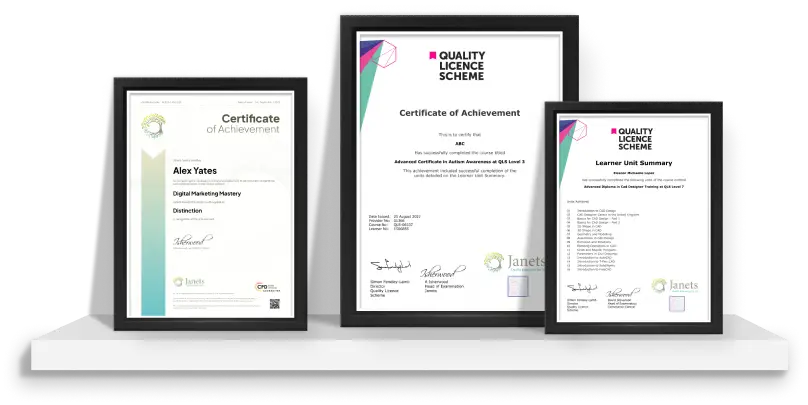
| Order your Certificate QLS | 00:00:00 | ||

Original price was: £319.£25Current price is: £25. ex Vat
SAVE 92% - OFFER ENDS IN

 14-Day Money-Back Guarantee
- Personal
- Team
Quantity:
Total:
50% discount for orders of 10+ courses
60% discount for orders of 50+ courses
70% discount for orders of 100+ courses
For more personalised package, contact us

Frequently asked questions
Can’t find the anwser you’re looking for ? Reach out to customer support team.
Business and Data Analysis With SQL focuses on using data and database techniques to understand business performance and support better decisions. The course combines analytical methods with SQL skills to help learners work confidently with business information.
This course is suitable for individuals interested in data, technology, and business improvement. It can benefit beginners, professionals, managers, and anyone looking to develop practical skills for working with databases and business reports.
No, coding experience is not necessary. The course introduces SQL concepts from the basics and helps learners understand how to write queries, retrieve information, and work with structured data.
The course covers database fundamentals, SQL queries, data analysis methods, reporting techniques, business intelligence concepts, and strategies for converting data into useful business information.
SQL allows professionals to access and manage large amounts of stored information efficiently. It helps analysts examine data, create reports, discover trends, and provide insights that support organisational decisions.
Learners can develop analytical thinking, database knowledge, reporting abilities, problem-solving skills, and confidence in interpreting information. These skills are useful for understanding business challenges and identifying improvement opportunities.
Yes, this course builds foundational knowledge required for many data-focused roles. It helps learners understand how data professionals collect, analyse, and present information in modern workplaces.
Data analysis helps organisations identify customer needs, improve processes, measure performance, and make strategic decisions. Businesses use insights from data to reduce risks and discover new opportunities.
Yes, the course is suitable for beginners with basic computer knowledge. It provides a structured introduction to SQL and business analysis concepts without requiring advanced technical experience.
Data analysis focuses on examining information to find patterns and insights, while business analysis focuses on improving processes and solving organisational challenges. Both areas work together to support effective decisions.
SQL is commonly used to manage databases, generate reports, track business performance, and retrieve important information. Many organisations rely on SQL skills for daily operations and strategic planning.
After completing this course, learners may pursue roles such as Data Analyst, Business Analyst, Reporting Analyst, SQL Developer, or Business Intelligence Analyst across various industries.