- Home
- Personal development
- CompTIA Certification Path for Beginners: From IT Support to Security
CompTIA Certification Path for Beginners: From IT Support to Security

Starting a career in IT can feel confusing when there are so many certifications to choose from. Should you begin with A+, move into networking, or head straight towards cybersecurity?
The CompTIA certification path offers a practical way to develop technical knowledge in stages.
A common route is Tech+ → A+ → Network+ → Security+, followed by specialist certifications such as CySA+ or PenTest+.
However, this sequence is not compulsory. Your starting point depends on your existing skills, experience and career goals. This guide explains the pathway and how it can support progression from IT support towards cybersecurity in the UK.
What Is the CompTIA Certification Path?
The CompTIA certification path is a progression of industry-recognised IT certifications covering foundational computing, technical support, networking and cybersecurity.
CompTIA certifications are vendor-neutral, meaning they focus on skills and concepts applicable across different technologies rather than one company’s products.
The pathway includes foundational, core and specialist credentials. You can explore the available options through the official CompTIA certification information.
If cybersecurity is your goal, Janets’ CompTIA Security+ course offers self-paced training covering security fundamentals and preparation for the certification exam.
CompTIA Certification Path: From IT Support to Security
The following roadmap shows how different CompTIA certifications can support your technical development.
| Certification | Main learning focus | Career direction |
|---|---|---|
| Tech+ | Basic IT concepts and technology | Beginner IT learning |
| A+ | Computer support and troubleshooting | IT support and service desk |
| Network+ | Networking and connectivity | Network support and infrastructure |
| Security+ | Cybersecurity principles and risk management | Security-focused IT roles |
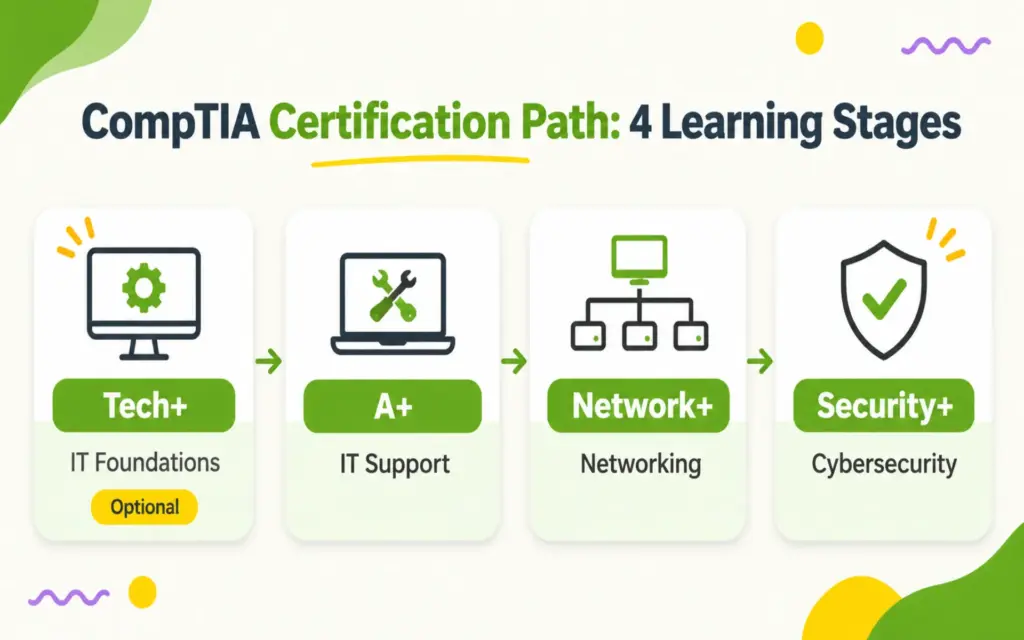
These stages represent a common learning progression, not mandatory prerequisites or guaranteed job outcomes.
Step 1 — Start With CompTIA Tech+ (Optional)
If you have little technical experience, CompTIA Tech+ can introduce the basics before you move towards more demanding certifications.
It covers essential computing concepts, including hardware, software, operating systems and basic networking.
For example, you might learn how computers communicate, what operating systems do and how common technology components work together.
Tech+ is optional. If you already understand these fundamentals, you may be ready for A+ or another suitable starting point.
Still deciding? Our guide to which CompTIA certification to get first can help you assess your options.
Step 2 — Build IT Support Skills With CompTIA A+

CompTIA A+ focuses on the technical knowledge used in computer support and troubleshooting.
It introduces:
↪ Computer hardware and operating systems
↪ Software installation and troubleshooting
↪ Basic networking and connectivity
↪ Security awareness and technical support practices
↪ These skills are relevant to service desk and IT technician work.
Imagine a colleague cannot connect their laptop to the office network. Understanding how to identify possible hardware, software or connectivity problems is a practical example of the knowledge developed at this stage.
The UK IT support technician career profile also identifies CompTIA A+ as an example of useful industry-standard training.
Step 3 — Develop Networking Knowledge With Network+
Once you understand basic technical support, CompTIA Network+ can help you develop more specialised networking knowledge.
↪ It covers important concepts such as:
↪ IP addressing and network connectivity
↪ Networking devices and protocols
↪ Network troubleshooting
↪ Network security fundamentals
For instance, understanding DNS, IP configuration and network devices helps you investigate why users cannot access a shared system.
These skills matter because cybersecurity often involves protecting networks, identifying suspicious connections and understanding how systems communicate.
The National Careers Service’s network engineer profile also identifies Network+ as a relevant industry certification.
Not everyone needs to take Network+ before Security+. Our Network+ or Security+ first guide explores which order may suit different goals.
Step 4 — Move Towards Cybersecurity With Security+
CompTIA Security+ introduces the foundational knowledge used to protect systems, networks and information.
Its main areas include:
↪ Cybersecurity threats and vulnerabilities
↪ Access controls and authentication
↪ Network security and protective measures
↪ Risk management and incident response
For example, a security professional may investigate unusual login attempts, assess potential risks and recommend appropriate protective measures.
Security+ helps establish the knowledge behind these activities. However, practical experience remains important, particularly for specialist security positions.
You can pursue Security+ without first earning A+ or Network+, although relevant networking knowledge and IT experience are valuable preparation.
Learners considering this stage can use Janets’ Security+ training to develop their understanding of security concepts and prepare for the separate CompTIA examination.
What Jobs Can the CompTIA Certification Path Lead To in the UK?
A CompTIA career path may support opportunities in technical support, networking and cybersecurity, depending on your knowledge, experience and other qualifications.
| Learning stage | Potential UK career direction |
|---|---|
| A+ and IT support skills | IT support technician, service desk analyst |
| Network+ and networking skills | Network technician, network support roles |
| Security+ and practical security skills | Security-focused IT support, junior security opportunities |
These are possible career directions, not jobs automatically awarded by certification.
In the UK, learners can also explore college courses, T Levels, apprenticeships and workplace training. For example, the IT security co-ordinator career profile describes routes involving education, apprenticeships and progression from existing IT roles.
Experience is particularly relevant in cybersecurity. According to the UK government’s 2026 cybersecurity skills research, 64% of core cybersecurity job postings in 2025 that specified minimum experience requested two to six years.
This does not mean beginners cannot enter cybersecurity. It highlights why practical experience and realistic career planning should accompany certification study.
How to Build Practical Skills Alongside CompTIA Certifications
Passing an exam can demonstrate technical knowledge, but applying that knowledge helps you develop confidence and workplace readiness.
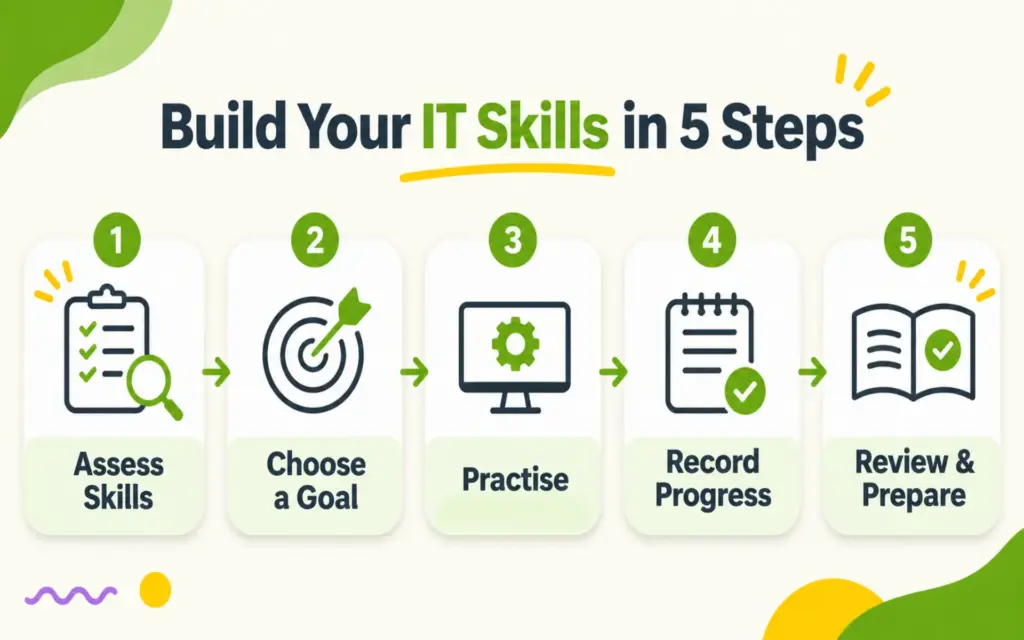
Follow these five steps alongside your CompTIA certification roadmap.
-
Assess your existing knowledge Identify whether you need to strengthen basic computing, technical support, networking or security skills.
-
Choose a relevant milestone Select a certification aligned with your present knowledge and the responsibilities of roles that interest you.
-
Practise technical tasks Use safe home labs or simulations to troubleshoot systems, configure networks or investigate simulated security events.
-
Record your progress Keep brief notes about problems you solved, tools you used and lessons learned. These examples may help you discuss your skills during interviews.
-
Review and prepare for exams Use relevant learning materials, practice questions and current exam objectives to identify knowledge gaps.
Remember that certification study and professional development do not follow identical timelines. Someone already working in IT may progress differently from someone learning technology for the first time.
What Comes After CompTIA Security+?
Security+ can provide a foundation for more specialised cybersecurity learning.
Depending on your interests, possible next steps include:
↪ CompTIA CySA+: Focuses on security analysis, threat detection and incident response.
↪ CompTIA PenTest+: Develops knowledge relating to penetration testing and vulnerability assessment.
↪ CompTIA SecurityX: Targets more advanced security knowledge and responsibilities.
You do not need to collect every advanced certification. Choose further learning based on the skills required for your intended role.
The UK Cyber Security Council’s cybersecurity career pathways also describe different specialisms and flexible routes through the profession.
Plan Your Next Step With Confidence
The CompTIA certification path offers a flexible way to develop from IT fundamentals towards networking and cybersecurity.
Start with the knowledge you already have, choose relevant certifications and strengthen your skills through practical experience.
If Security+ is your next learning goal, see Janets’ CompTIA Security+ Certification course. It offers self-paced exam preparation and a CPD-accredited certificate of achievement following successful completion of its final assessment. Earning the official CompTIA certification requires passing the separate CompTIA exam.
Frequently Asked Questions
Is CompTIA Equivalent to a UK Degree?
No. CompTIA certifications are professional IT credentials, not UK university degrees. They do not automatically carry a regulated qualification level on the UK’s Regulated Qualifications Framework (RQF).
They can demonstrate technical knowledge and complement academic qualifications, training and workplace experience.
Do You Need Every CompTIA Certification?
No. The CompTIA certification hierarchy is better understood as a collection of possible learning pathways than a compulsory sequence.
For example, someone with networking experience may move directly towards Security+, while a complete beginner may benefit from studying IT fundamentals first.
How Long Does the CompTIA Certification Path Take?
There is no fixed completion time.
Your progress depends on previous technical knowledge, available study hours, practical experience and the number of certifications you pursue.
Preparing for an individual exam may take weeks or months, while developing the experience needed for more advanced professional roles can take considerably longer.
Can You Start Security+ Without IT Support Experience?
Yes. Security+ does not require you to hold A+ or Network+ first.
However, networking fundamentals and practical IT knowledge are valuable preparation. Employers may also require relevant work experience for cybersecurity positions, regardless of which certifications you hold.
Get a FREE Course