- Home
- Career Guide
- Animal Care Jobs Without Qualifications: A UK Starter Guide
Animal Care Jobs Without Qualifications: A UK Starter Guide
Animal care jobs without qualifications are worth exploring if you love animals but lack a degree or specialist certificate. Some UK employers consider beginners for entry-level roles, particularly when they have relevant experience and show a responsible approach to animal welfare. Other jobs require recognised training, practical assessment or professional registration. The important first step is understanding the difference.
You might picture working in a rescue centre, grooming dogs, looking after cats or caring for horses. Each route involves different responsibilities. This guide explains realistic entry points, practical experience, online study, UK rules and the questions worth asking before changing careers.
Can You Work With Animals Without a Degree?
Yes, for some roles. A university degree is not the standard entry route into every animal-care job. The National Careers Service’s animal care worker profile identifies several routes: college study, apprenticeships, volunteering and direct applications. It also notes that entry-level applicants may not need formal qualifications, although experience helps.
That does not mean every animal job is open without training. Veterinary surgeons and veterinary nurses follow separate professional pathways. Equally, an online introductory course cannot replace supervised animal handling or practical competency checks.
Start with the specific role, rather than buying training first and deciding later. Read several current vacancies. Compare the duties, required experience, location, shifts and any stated certificates. You will quickly see which requirements are essential and which are merely desirable.
Six Animal Care and Pet Service Roles to Explore
Lorem ipsum dolor sit amet, consectetur adipiscing elit. Ut elit tellus, luctus nec ullamcorper matti
1. Animal Care Assistant
Animal care assistants support daily routines in kennels, rescue centres, catteries, sanctuaries or pet businesses. Tasks can include preparing food, cleaning accommodation, monitoring animals and maintaining records. Patience matters, but so does comfort with repetitive cleaning and physical work.
The National Careers Service lists animal care worker pay at £21,000–£24,000, depending on experience. These are guidance ranges, not a promise of earnings. Volunteering can provide relevant exposure before you apply.
2. Dog Walker or Pet Sitter
Dog walking involves much more than enjoying an outdoor walk. You need to plan safe routes, manage leads, follow owners’ instructions and notice changes in behaviour. Pet sitting also involves feeding schedules, household access and keeping owners informed.
For ordinary dog walking, there is generally no single statutory UK qualification. However, customers and employers may expect experience, suitable insurance and reliable animal-handling knowledge. Requirements for related boarding or day-care activities can be different, especially in England.
3. Dog Grooming Assistant
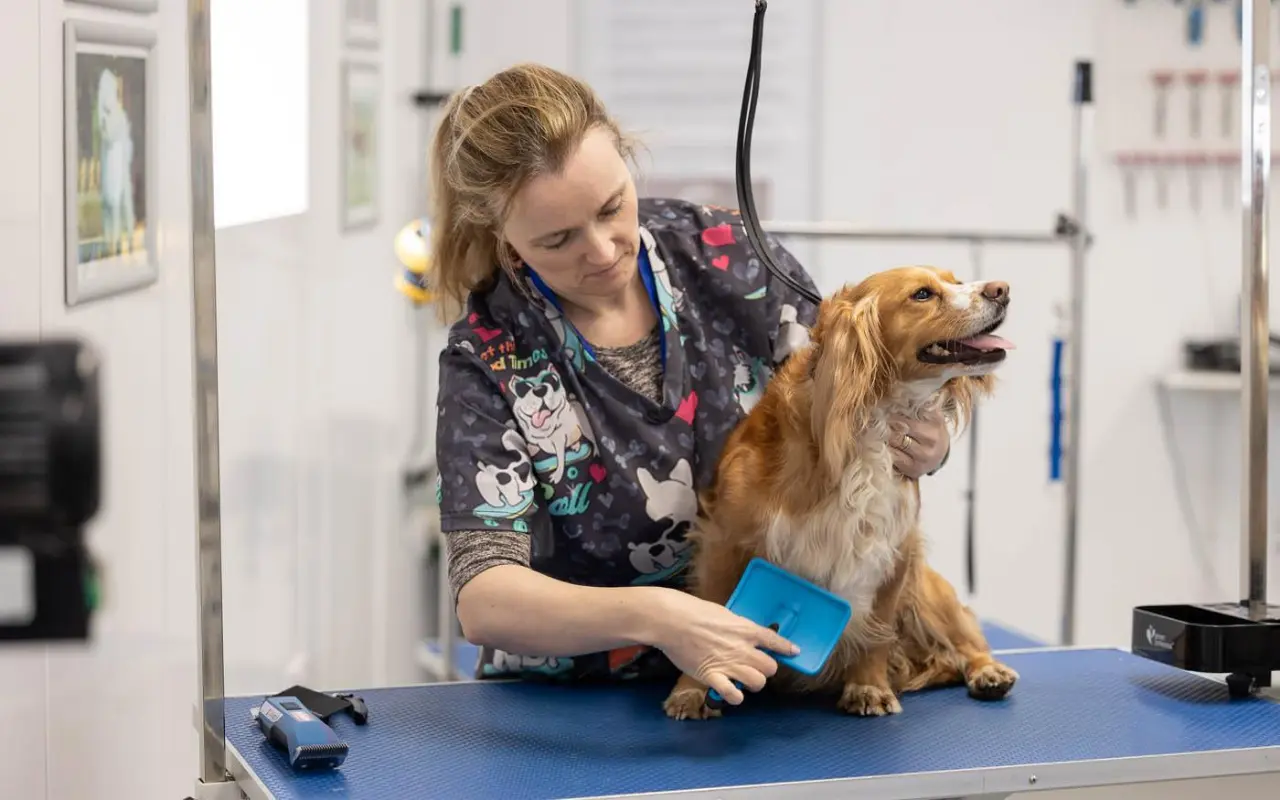
A grooming assistant may help with washing, drying, brushing, cleaning equipment and calmly handling dogs. A beginner can sometimes learn alongside an experienced groomer. Moving towards independent work typically requires more extensive supervised practice.
According to the National Careers Service dog groomer profile, routes can include a college course, apprenticeship, working in a salon or volunteering. The guide lists indicative pay of £15,000–£23,000.
4. Cattery or Pet Care Assistant
Cat care calls for patience and attention to feline behaviour. A cat may hide, avoid touch or become stressed in unfamiliar surroundings. Daily tasks can involve feeding, grooming awareness, cleaning, enrichment and recording changes in appetite or behaviour.
Comfortable handling must be learned gradually, with the animal’s welfare taking priority. A written course can explain warning signs, but real-world judgement develops through supervised experience.
5. Horse Groom or Stable Assistant
Horse grooms help with feeding, water, stable cleaning, coat care, tack and routine health observations. It is physically demanding work, often involving early starts and weekends. Employers may place substantial value on safe handling and dependable experience around horses.
The National Careers Service horse groom profile describes college, apprenticeship and specialist training routes. The published salary guide is £16,000–£28,000. Experience in a suitable stable can clarify whether the lifestyle suits you.
6. Animal Rescue or Welfare Volunteer
Volunteering is a useful route into animal-care work, although available tasks depend on the organisation and your experience. You may help with cleaning, feeding preparation, enrichment, walking dogs or supporting staff. Some roles require induction, supervision or additional checks.
The RSPCA’s animal-care volunteering guidance describes opportunities involving cats, dogs and animal centres. Start by checking local vacancies rather than assuming every shelter can offer hands-on placements.
s, pulvinar dapibus leo.
How to Start an Animal Care Career: A Practical Route
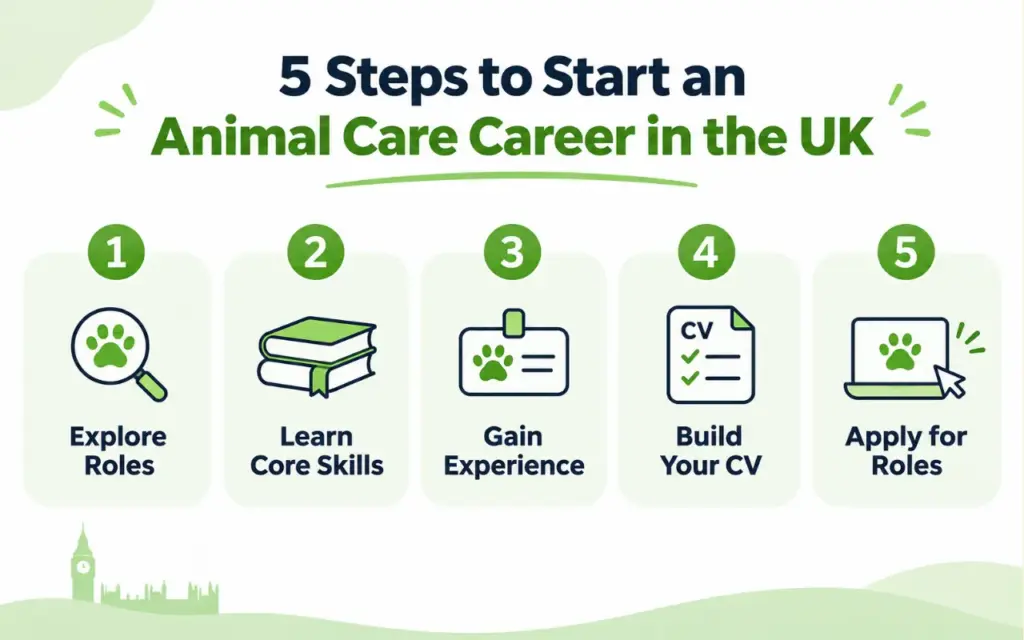
Step 1: Choose One Starting Role
Begin with a manageable target, such as dog-walking assistant, kennel worker or grooming assistant. A narrow goal makes it easier to choose meaningful learning and experience. List the everyday tasks you would actually enjoy, not just the animals you love.
Step 2: Read Current Job Adverts
Look for five to ten relevant vacancies. Record recurring requirements in a simple table: animal handling, record keeping, customer service, weekend availability, transport and any qualifications. A role may be entry-level without being easy or low-responsibility.
Step 3: Gain Supervised Experience
Contact reputable shelters, grooming salons, riding yards or local animal charities. Ask whether they offer volunteering, observation days or supervised assistant work. If you already care for pets, keep accurate examples of your responsibilities, without overstating them as professional experience.
A regular, realistic commitment can be more useful than one ambitious but unsustainable placement. Listen to instructions, learn safe routines and ask questions when unsure.
Step 4: Build Foundation Knowledge
Study species-specific welfare, routine care, behaviour, hygiene and emergency awareness. Online courses can be convenient for learning terminology and procedures around your current responsibilities. However, knowing the theory does not establish that you can handle an anxious dog or safely groom a horse in practice.
Choose course subjects linked to the role you want. Verify what is assessed, whether any practical component exists, what certificate is offered and whether there are extra charges.
Step 5: Consider Formal Training Where Needed
Apprenticeships combine employment with structured learning. Colleges may offer recognised vocational awards, certificates or diplomas, while specialist bodies provide additional routes. The right option depends on the employer and the job.
For example, independent dog grooming requires hands-on skills and safe use of equipment. Horse-care employers also expect competent handling. If a vacancy specifies a regulated qualification, do not assume an online completion certificate is interchangeable.
Step 6: Prepare an Evidence-Based CV
Describe the animals you have worked with, your duties, supervision and reliability. Include any relevant volunteering, customer service, first-aid awareness and training. Be precise about what you have actually done.
When applying, explain why that employer and its welfare standards interest you. Use examples showing patience, attention to detail, timekeeping and willingness to learn. Never claim practical competence that you have not demonstrated.
Six Areas of Knowledge for Aspiring Pet Care Professionals
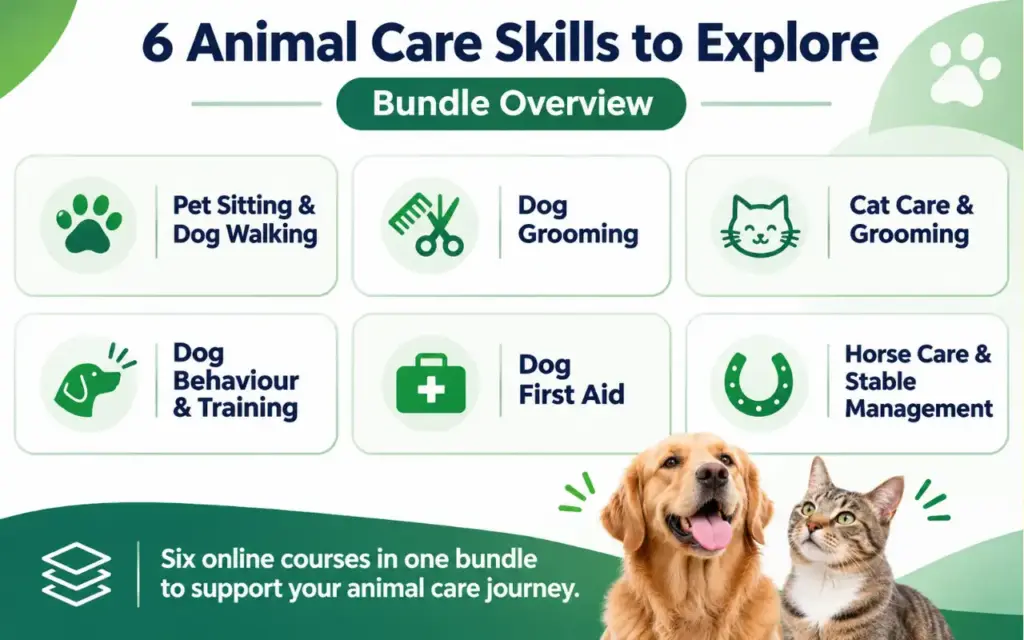
An introductory bundle can organise related topics into one learning plan. The Animal Care & Pet Services Career Bundle at Janets brings together six online subjects. Each has a different emphasis, even when some basic welfare themes overlap.
Pet Sitting and Dog Walking
The Pet Sitting and Dog Walking course relates to animal routines, owner instructions and supervising pets. These subjects connect with the responsibilities of walkers and sitters. Use the learning to prepare questions for experienced providers, and practise suitable tasks only with proper permission and guidance.
Dog Grooming Diploma
The Dog Grooming Diploma covers coat types, equipment, brushing, bathing, drying and grooming-related hygiene. It can introduce the language and sequence of salon tasks. Supervised, practical training remains important before offering professional grooming independently.
Diploma in Pet Cat Care and Grooming
The Diploma in Pet Cat Care and Grooming introduces everyday cat care, feeding, health awareness and coat maintenance. Understanding that cats respond differently to handling can support better observation. Real cats should never be forced through stressful grooming procedures for practice.
Dog Behaviour and Training – Advanced Psychology and Behavioural Analysis
The Dog Behaviour and Training – Advanced Psychology and Behavioural Analysis course focuses on canine behaviour and training concepts. Recognising body language is relevant to walkers, sitters and grooming assistants. Complex behavioural cases require appropriate expertise and a welfare-led approach.
Dog First Aid
The Dog First Aid course introduces emergency-related topics, including recognising problems and first-aid principles. Such knowledge can help you identify when to seek urgent veterinary advice. Online learning is not a substitute for practical assessment, emergency veterinary care or supervised clinical training.
Horse Care and Stable Management
The Horse Care and Stable Management course covers daily equine-care themes such as feeding, grooming and stable routines. It may help aspiring stable assistants become familiar with terminology. Work around horses still requires proper instruction, safe environments and experienced supervision.
What Qualifications Do You Actually Need?
There is no single qualification that applies to every animal-related job. Some assistant posts allow applicants to start with transferable skills and gain experience on the job. Others ask for vocational training or evidence of practical handling. Regulated professions have their own entry conditions.
Before enrolling, distinguish between an online course completion certificate, a regulated qualification and a practical competency assessment. They are not automatically the same. Check the awarding organisation, assessment method and requirements of the job you want.
A sensible plan combines knowledge with experience. The National Careers Service specifically advises people to check whether an online course requires work or volunteering for practical assessment. That distinction matters when comparing different providers and programmes.
Animal Welfare, Insurance and UK Legal Considerations
Animal care carries responsibilities to animals and owners. Safe transport, suitable exercise, stress-aware handling, hygiene, feeding instructions and emergency contacts all matter. You must also be clear about which services you are offering.
England’s licensing rules distinguish dog walking from commercial home boarding and day care. GOV.UK’s home-boarding guidance explains when a licence may apply. The dog day-care guidance separately excludes walkers and sitters working in a dog’s usual home from that day-care licensing category.
The position is not identical in Scotland, Wales and Northern Ireland. Check the rules applicable to your location and service. Consider suitable insurance, written customer agreements, emergency arrangements and privacy when storing owners’ information. Training alone does not establish legal compliance.
Explore Animal Care Learning With Janets
If you want an introduction to several pet-care topics, the Janets Animal Care & Pet Services Career Bundle brings together dog walking, dog grooming, cat care, canine behaviour, dog first aid and horse care. It is designed for flexible online study, alongside practical experience where appropriate.
Review the six individual course descriptions before enrolling. Confirm the final bundle price, certificate arrangements and access terms at checkout.
Frequently Asked Questions
Can I work with animals without a degree in the UK?
Yes, some entry-level roles do not require a degree. Animal care assistants, kennel workers and certain grooming assistants may enter through volunteering or supervised work. Specialist or regulated roles can have different requirements.
Can I become a dog walker without qualifications?
There is generally no universal formal qualification for ordinary dog walking. However, handling experience, insurance and welfare knowledge are important. Check the rules for any additional services, particularly boarding or day care.
Do online animal care courses qualify me for a job?
They may help develop relevant knowledge, but completion does not guarantee employment. Employers may require practical experience, a specific regulated qualification or other evidence of competence.
What is the best first job if I love animals?
It depends on your interests and circumstances. Kennel assistant, grooming assistant, pet sitter and stable assistant are possible starting points. Compare current job descriptions and seek supervised experience before committing.
Is animal care work physically demanding?
It often is. Cleaning accommodation, carrying supplies, standing for long periods and working during weekends are common. Consider the real working conditions, not only the enjoyable animal interactions.
Can I change careers into animal care later in life?
A career change is possible at different ages, depending on the role and requirements. Transferable skills such as communication, organisation and customer service can be useful. Practical exposure helps you choose realistic next steps.
Get a FREE Course