


Course Library View the full range of courses
-
Accounting (145 courses)
- Xero Accounting and Bookkeeping Online
- Sage 50 Accounting & Payroll
- Project Finance
- Financial Modelling Training
- Tax Accounting
- Introduction to VAT
- Accounting and Finance Course for Managers
- Internal Compliance Auditor
- Financial Statement Analysis
- Payroll Administrator Level 3 Diploma
- View all Accounting courses
-
Language (67 courses)
- British Sign Language (BSL) Level 1 & 2
- Speech and Language Therapy Diploma
- TEFL (TESOL) Course
- English Spelling, Punctuation, and Grammar
- Child & Adult Speech & Language Disorders Training
- Teaching English as Foreign Language (TEFL) Certificate
- Mastering Spanish Language
- French Course for Beginners
- German Course for Beginners
- Body Language and Gesture Training
- View all Language courses
-
Teaching & Education (37 courses)
- Teaching Assistant Complete Course (TA, SEN, Autism, ADHD & Dyslexia) – CPD Certified
- EYFS Teaching Assistant Training Course
- Advanced Diploma in Coaching and Mentoring
- Level 3 Diploma in Teaching and Classroom Management
- Remote Teaching
- SENCO – Special Educational Needs Coordination
- Teaching English as Foreign Language (TEFL)
- Life Coaching
- Phonics Teaching Diploma
- View all Teaching & Education courses
-
Health and Social Care (138 courses)
- Health and Social Care Management
- Paediatric Nursing Assistant
- Mental Health Awareness Training
- Emergency Medicine – Paramedicine
- Level 3 Diploma in Adult Care
- Paediatric First Aid Training
- Safeguarding Children Level 3
- Level 3 Diploma in Anatomy and Physiology of Human Body
- Play Therapy
- The Care Certificate Preparation – Standards (1 to 15)
- View all Health and Social Care courses
-
Management (539 courses)
- Office Admin, Secretarial and PA Diploma
- Estate Agent and Property Management Training
- Diploma in Data Analysis Fundamentals
- Advanced Diploma in Stress & Anxiety Management
- Good Manufacturing Practice (GMP)
- Property Development and Management Course
- Diploma in Hotel Management
- Supply Chain Management
- Quality Assurance (QA) Manager
- Compliance and Risk Management
- View all Management courses
-
IT & Software (124 courses)
- Coding with Python 3
- Search Engine Optimisation (SEO) Training
- Cyber Security
- Motion Graphics with After Effects
- CompTIA A+ Core 1 (220-1101) Course
- Machine Learning for Aspiring Data Scientists
- Next.js Web Dev: Master this Powerful React Framework
- Learn 2D Animation with Adobe Animate
- GDPR Challenges in Education
- View all IT & Software courses
-
Employability (1043 courses)
- Office Administrator Skills
- Presentation Skills
- Legal Secretary and Office Skills
- Hospitality Management
- Estate Agent Diploma
- Hairdressing and Barbering
- Diploma in UK Employment Law
- Diploma in Data Analysis Fundamentals
- Building Surveyor Training
- Emotional Intelligence Training
- View all Employability courses
-
Personal Development (1439 courses)
- Productivity Habits
- Minute Taking Course
- Presentation Skills
- Excel: Top 50 Microsoft Excel Formulas in 50 Minutes!
- Critical Thinking and Problem Solving Skills
- Time Management
- Self Esteem and Confidence Building Course
- Essential IT Skills
- Legal Secretary and Office Skills
- Personality Development
- View all Personal Development courses


Basic Electricity and Fundamentals of DC Circuit
52 Students (8 Reviews)
Learn basic electricity and DC circuit fundamentals with electrical theory, Ohm’s Law, circuit analysis, electrical safety, troubleshooting, and measurement skills.

Original price was: £319.£25Current price is: £25.
Course Curriculum
| Basic Electricity and Fundamentals of DC Circuit | |||
| Ch – 00 Intro Basic Electricity | 00:07:00 | ||
| Ch – 01 The Nature of Electricity | 00:20:00 | ||
| Ch – 02 Conductors & Insulators | 00:08:00 | ||
| Ch – 03 Current and Electric Circuits | 00:13:00 | ||
| Ch – 04 Ohm’s Law | 00:06:00 | ||
| Ch – 05 Electric Power | 00:12:00 | ||
| Ch – 06 Series _ Parallel Circuits | 00:18:00 | ||
| Ch – 07 Circuit Theorems | 01:31:00 | ||
| Ch – 07 Theorem Example Explained | 00:14:00 | ||
| Ch – 08 Electric Fields and Capacitance | 00:26:00 | ||
| Ch – 09 Magnetism and Inductance | 00:49:00 | ||
| Ch – 10 Transient Response Capacitors & Inductors | 00:10:00 | ||
| Mock Exam | |||
| Mock Exam – Basic Electricity and Fundamentals of DC Circuit | 00:20:00 | ||
| Final Exam | |||
| Final Exam – Basic Electricity and Fundamentals of DC Circuit | 00:20:00 | ||
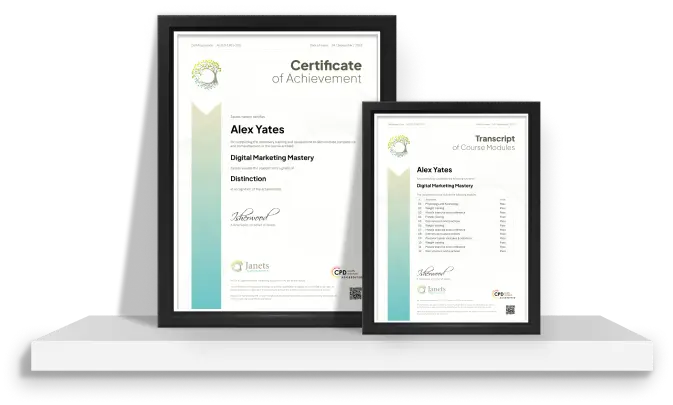
| Order your Certificates & Transcripts | |||
| Order your Certificates & Transcripts | 00:00:00 | ||

Original price was: £319.£25Current price is: £25. ex Vat
SAVE 92% - OFFER ENDS IN

 14-Day Money-Back Guarantee
- Personal
- Team
Quantity:
Total:
50% discount for orders of 10+ courses
60% discount for orders of 50+ courses
70% discount for orders of 100+ courses
For more personalised package, contact us


Frequently asked questions
Can’t find the anwser you’re looking for ? Reach out to customer support team.
This course provides learners with a comprehensive introduction to electrical theory and direct current (DC) circuits. It covers essential electrical principles, circuit components, calculations, safety practices, and practical concepts that form the foundation for electrical and engineering careers.
Yes, the course is designed for beginners and does not require previous knowledge of electricity or engineering. It introduces electrical concepts in a structured and easy-to-follow manner before progressing to more detailed circuit analysis.
You will learn about voltage, current, resistance, electrical power, Ohm's Law, Kirchhoff's Laws, series and parallel circuits, electrical components, circuit diagrams, measuring instruments, troubleshooting methods, and electrical safety procedures.
DC circuits are widely used in batteries, electronic devices, renewable energy systems, vehicles, and industrial equipment. Understanding how they operate provides a strong foundation for working with electrical systems and supports further study in electronics and electrical engineering.
No, previous electrical experience is not required. The course has been developed to guide beginners through the fundamental principles of electricity while building practical knowledge step by step.
Important skills include logical thinking, problem-solving, mathematical ability, attention to detail, technical understanding, analytical reasoning, safe working practices, circuit analysis, and the ability to interpret electrical diagrams accurately.
Yes, upon successfully completing the course, you will receive a certificate of completion. This certificate can be a valuable addition to your professional portfolio and can be shared on your various social networks.
We want you to have a positive learning experience. If you're not satisfied with the course, you can request a course transfer or refund within 14 days of the initial purchase.
Our platform provides tracking tools and progress indicators for each course. You can monitor your progress, completed lessons, and assessments through your learner dashboard for the course.
If you encounter technical issues or content-related difficulties with the course, our support team is available to assist you. You can reach out to them for prompt resolution.