


Course Library View the full range of courses
-
Accounting (145 courses)
- Xero Accounting and Bookkeeping Online
- Sage 50 Accounting & Payroll
- Project Finance
- Financial Modelling Training
- Tax Accounting
- Introduction to VAT
- Accounting and Finance Course for Managers
- Internal Compliance Auditor
- Financial Statement Analysis
- Payroll Administrator Level 3 Diploma
- View all Accounting courses
-
Language (67 courses)
- British Sign Language (BSL) Level 1 & 2
- Speech and Language Therapy Diploma
- TEFL (TESOL) Course
- English Spelling, Punctuation, and Grammar
- Child & Adult Speech & Language Disorders Training
- Teaching English as Foreign Language (TEFL) Certificate
- Mastering Spanish Language
- French Course for Beginners
- German Course for Beginners
- Body Language and Gesture Training
- View all Language courses
-
Teaching & Education (37 courses)
- Teaching Assistant Complete Course (TA, SEN, Autism, ADHD & Dyslexia) – CPD Certified
- EYFS Teaching Assistant Training Course
- Advanced Diploma in Coaching and Mentoring
- Level 3 Diploma in Teaching and Classroom Management
- Remote Teaching
- SENCO – Special Educational Needs Coordination
- Teaching English as Foreign Language (TEFL)
- Life Coaching
- Phonics Teaching Diploma
- View all Teaching & Education courses
-
Health and Social Care (138 courses)
- Health and Social Care Management
- Paediatric Nursing Assistant
- Mental Health Awareness Training
- Emergency Medicine – Paramedicine
- Level 3 Diploma in Adult Care
- Paediatric First Aid Training
- Safeguarding Children Level 3
- Level 3 Diploma in Anatomy and Physiology of Human Body
- Play Therapy
- The Care Certificate Preparation – Standards (1 to 15)
- View all Health and Social Care courses
-
Management (539 courses)
- Office Admin, Secretarial and PA Diploma
- Estate Agent and Property Management Training
- Diploma in Data Analysis Fundamentals
- Advanced Diploma in Stress & Anxiety Management
- Good Manufacturing Practice (GMP)
- Property Development and Management Course
- Diploma in Hotel Management
- Supply Chain Management
- Quality Assurance (QA) Manager
- Compliance and Risk Management
- View all Management courses
-
IT & Software (124 courses)
- Coding with Python 3
- Search Engine Optimisation (SEO) Training
- Cyber Security
- Motion Graphics with After Effects
- CompTIA A+ Core 1 (220-1101) Course
- Machine Learning for Aspiring Data Scientists
- Next.js Web Dev: Master this Powerful React Framework
- Learn 2D Animation with Adobe Animate
- GDPR Challenges in Education
- View all IT & Software courses
-
Employability (1043 courses)
- Office Administrator Skills
- Presentation Skills
- Legal Secretary and Office Skills
- Hospitality Management
- Estate Agent Diploma
- Hairdressing and Barbering
- Diploma in UK Employment Law
- Diploma in Data Analysis Fundamentals
- Building Surveyor Training
- Emotional Intelligence Training
- View all Employability courses
-
Personal Development (1439 courses)
- Productivity Habits
- Minute Taking Course
- Presentation Skills
- Excel: Top 50 Microsoft Excel Formulas in 50 Minutes!
- Critical Thinking and Problem Solving Skills
- Time Management
- Self Esteem and Confidence Building Course
- Essential IT Skills
- Legal Secretary and Office Skills
- Personality Development
- View all Personal Development courses


Counselling & Psychotherapy Course
316 Students (7 Reviews)
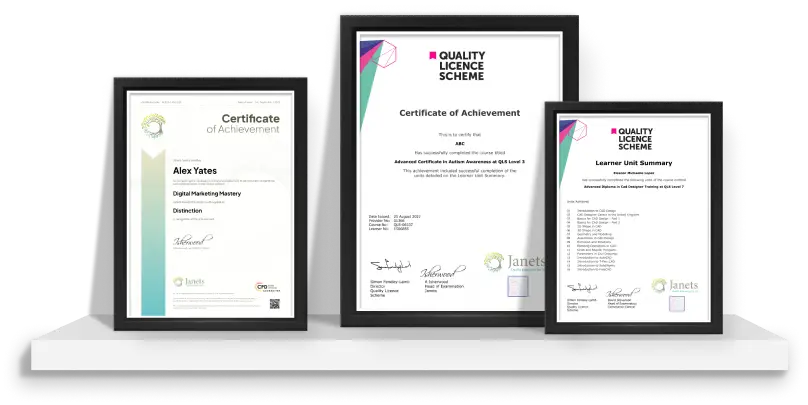
Pursue a rewarding career in helping others with our QLS endorsed Level 6 Counselling & Psychotherapy Diploma. Develop essential skills to become a qualified counsellor and explore various career paths in mental health.

Course Curriculum
| Counselling & Psychotherapy Course - Updated Version | |||
| Introduction to the course | |||
| Psychotherapy Promo | 00:02:00 | ||
| About the Instructor | 00:02:00 | ||
| About the Course | 00:04:00 | ||
| Understanding Psychotherapy | |||
| What is Psychotherapy? | 00:08:00 | ||
| A Short Historical Introduction | 00:07:00 | ||
| Psychology, Counselling & Psychotherapy | 00:08:00 | ||
| Where do Psychotherapists work? | 00:08:00 | ||
| Starting Psychotherapy Practice | |||
| Who Can Benefit from Psychotherapy? | 00:08:00 | ||
| Short-Term Vs Long-Term Therapy | 00:08:00 | ||
| Therapeutic Relationship | 00:07:00 | ||
| Your Potential Clients in Therapy | |||
| What does the First Psychotherapy Session Involve? | 00:08:00 | ||
| Psychotherapy for Children | 00:12:00 | ||
| Individual and Group Sessions | 00:07:00 | ||
| Family Therapy | 00:08:00 | ||
| Psychodynamic Approach | 00:06:00 | ||
| Different Types of Psychotherapy | |||
| Unconscious Processes (The Unconscious Mind) | 00:08:00 | ||
| Defense Mechanisms | 00:08:00 | ||
| Humanistic Approach | 00:07:00 | ||
| Cognitive Behavioural Approach (CBT) | 00:08:00 | ||
| Face-to-face Vs ‘Online’ Psychotherapy | 00:08:00 | ||
| Internet Based Therapy | |||
| How to Become an Online Psychotherapist? | 00:09:00 | ||
| Thank You and Good Bye! | 00:02:00 | ||
| Resources | |||
| Resources – Counselling and Psychotherapy Course | 00:00:00 | ||
| Mock Exam | |||
| Mock Exam – Counselling & Psychotherapy Course | 00:20:00 | ||
| Final Exam | |||
| Final Exam – Counselling & Psychotherapy Course | 00:20:00 | ||
| Counselling & Psychotherapy Course - Old Version | |||
| Counselling | |||
| What is Counselling? | 00:15:00 | ||
| Purpose and Aims of Counselling | 00:15:00 | ||
| Fields of Counselling | 00:15:00 | ||
| Counselling Theories | 00:15:00 | ||
| Skills Needed in Counselling | 00:30:00 | ||
| Group Counselling | 00:30:00 | ||
| Ethics in Counselling | 00:15:00 | ||
| Conducting Sessions | 00:30:00 | ||
| Addiction Counselling | |||
| Introduction to Addiction Counselling | 00:15:00 | ||
| Adlerian Psychology | 00:30:00 | ||
| Behavioral Therapy | 00:15:00 | ||
| Brief Therapy | 00:30:00 | ||
| Role of Addiction Counsellor | 00:30:00 | ||
| Goals and Objectives of Individual Drug Counseling | 00:15:00 | ||
| Treatment Initiation | 00:15:00 | ||
| Dealing With Problems That Arise | 00:15:00 | ||
| Counsellor Characteristics and Training | 00:15:00 | ||
| Addiction Recovery | |||
| Addiction Counselling Basics | 01:00:00 | ||
| Realize That You Need Help | 01:00:00 | ||
| Realize the Importance of Selecting the Correct Treatment | 01:00:00 | ||
| Work On Identifying the Source of Why You Have an Addiction | 01:00:00 | ||
| Have an Open Mind | 01:00:00 | ||
| Be Honest With Yourself and Others | 01:00:00 | ||
| The Dangers of Not Getting Help When You Need It | 00:30:00 | ||
| Introduction to Psychotherapy | |||
| What is Psychotherapy? | 00:30:00 | ||
| Theories of Psychotherapy | 00:30:00 | ||
| Structure of Personality | 00:30:00 | ||
| MDMA-Assisted Psychotherapy | 01:00:00 | ||
| How Does Psychodynamic Psychotherapy Work? | 00:30:00 | ||
| Why Is Emotion Regulation Important? | 00:30:00 | ||
| Psychotherapy Healing | |||
| Introduction | 00:30:00 | ||
| Types Of Psychotherapies | 00:15:00 | ||
| Psychoanalysis | 00:30:00 | ||
| Gestalt Therapy | 01:00:00 | ||
| Cognitive Behavioural Therapy | 00:30:00 | ||
| Expressive Therapy | 00:30:00 | ||
| Hypnotherapy | 00:30:00 | ||
| Wrapping Up | 00:15:00 | ||
| Assignment | |||
| Assignment – Counselling & Psychotherapy Course | 3 weeks, 3 days | ||
| Order Your Certificate | |||
| Order your Certificate QLS | 00:00:00 | ||

Original price was: £319.£25Current price is: £25. ex Vat
SAVE 92% - OFFER ENDS IN

 14-Day Money-Back Guarantee
- Personal
- Team
Quantity:
Total:
50% discount for orders of 10+ courses
60% discount for orders of 50+ courses
70% discount for orders of 100+ courses
For more personalised package, contact us

Frequently asked questions
Can’t find the anwser you’re looking for ? Reach out to customer support team.
Psychotherapy typically involves long-term treatment focusing on gaining insight into chronic physical and emotional problems. Its goal is to change behaviour by exploring relationships and experiences. Counselling tends to be more focused on specific problems, is shorter term, and is more likely to offer direct advice.
The best courses for becoming a counsellor usually include degrees in counselling psychology or related fields. Accredited programs that include supervised practical experience, such as internships or placements, are highly recommended.
In the UK, psychotherapists typically earn between £30,000 and £50,000 per year, though this can vary widely based on experience, location, and the type of practice.
A course in psychology and counselling covers theories and methodologies from both fields, providing students with a foundation in psychological theory along with practical skills in counselling for professional practice.
No, a counsellor typically focuses on specific issues and provides guidance and support, while a therapist might offer deeper psychotherapeutic treatments for a broader range of mental health issues.
A psychologist may conduct assessments, diagnoses, and therapy, often with a focus on behavioural intervention based on psychological research. A psychotherapist focuses on longer-term therapy to treat emotional and mental suffering in patients with behavioural intervention.
Typically, therapists with specialisations that require higher levels of education or unique certifications, like clinical psychologists or psychiatrists (who are medical doctors), earn the most.
It can be, especially in specialised areas such as clinical, educational, or forensic psychology. Salaries can vary widely depending on the sector and experience level.
It usually takes about 7 to 8 years to qualify as a psychotherapist in the UK, including obtaining a degree, completing requisite training, and accumulating supervised clinical experience.
Counsellors with specialties in high-demand areas such as marriage and family therapy, or those who manage private practices, typically earn more than their peers in other areas.
A Master’s degree in counselling or clinical psychology is typically necessary for becoming a licensed counsellor.
A person who is empathetic, supportive, trustworthy, and has a strong desire to help others deal with personal and psychological issues would be well-suited to be a counsellor.
If you provide focused, directive advice and support for specific issues, you might be more aligned with being a counsellor. If your work involves deeper, long-term exploration of psychological issues, you may be acting more as a psychotherapist.
Neither is inherently better; the choice depends on the needs of the individual. Counselling might be preferable for dealing with specific, immediate issues, while therapy could be a better option for addressing more complex, deeply-rooted psychological problems.
"Psychotherapist" is a specific type of therapist, and whether one is better than the other depends on the needs of the patient. The terms are often used interchangeably, but all psychotherapists are therapists, not all therapists are psychotherapists.