


Course Library View the full range of courses
-
Accounting (145 courses)
- Xero Accounting and Bookkeeping Online
- Sage 50 Accounting & Payroll
- Project Finance
- Financial Modelling Training
- Tax Accounting
- Introduction to VAT
- Accounting and Finance Course for Managers
- Internal Compliance Auditor
- Financial Statement Analysis
- Payroll Administrator Level 3 Diploma
- View all Accounting courses
-
Language (67 courses)
- British Sign Language (BSL) Level 1 & 2
- Speech and Language Therapy Diploma
- TEFL (TESOL) Course
- English Spelling, Punctuation, and Grammar
- Child & Adult Speech & Language Disorders Training
- Teaching English as Foreign Language (TEFL) Certificate
- Mastering Spanish Language
- French Course for Beginners
- German Course for Beginners
- Body Language and Gesture Training
- View all Language courses
-
Teaching & Education (37 courses)
- Teaching Assistant Complete Course (TA, SEN, Autism, ADHD & Dyslexia) – CPD Certified
- EYFS Teaching Assistant Training Course
- Advanced Diploma in Coaching and Mentoring
- Level 3 Diploma in Teaching and Classroom Management
- Remote Teaching
- SENCO – Special Educational Needs Coordination
- Teaching English as Foreign Language (TEFL)
- Life Coaching
- Phonics Teaching Diploma
- View all Teaching & Education courses
-
Health and Social Care (138 courses)
- Health and Social Care Management
- Paediatric Nursing Assistant
- Mental Health Awareness Training
- Emergency Medicine – Paramedicine
- Level 3 Diploma in Adult Care
- Paediatric First Aid Training
- Safeguarding Children Level 3
- Level 3 Diploma in Anatomy and Physiology of Human Body
- Play Therapy
- The Care Certificate Preparation – Standards (1 to 15)
- View all Health and Social Care courses
-
Management (539 courses)
- Office Admin, Secretarial and PA Diploma
- Estate Agent and Property Management Training
- Diploma in Data Analysis Fundamentals
- Advanced Diploma in Stress & Anxiety Management
- Good Manufacturing Practice (GMP)
- Property Development and Management Course
- Diploma in Hotel Management
- Supply Chain Management
- Quality Assurance (QA) Manager
- Compliance and Risk Management
- View all Management courses
-
IT & Software (123 courses)
- Coding with Python 3
- Search Engine Optimisation (SEO) Training
- Cyber Security
- Motion Graphics with After Effects
- CompTIA A+ Core 1 (220-1101) Course
- Machine Learning for Aspiring Data Scientists
- Next.js Web Dev: Master this Powerful React Framework
- Learn 2D Animation with Adobe Animate
- GDPR Challenges in Education
- View all IT & Software courses
-
Employability (1043 courses)
- Office Administrator Skills
- Presentation Skills
- Legal Secretary and Office Skills
- Hospitality Management
- Estate Agent Diploma
- Hairdressing and Barbering
- Diploma in UK Employment Law
- Diploma in Data Analysis Fundamentals
- Building Surveyor Training
- Emotional Intelligence Training
- View all Employability courses
-
Personal Development (1438 courses)
- Productivity Habits
- Minute Taking Course
- Presentation Skills
- Excel: Top 50 Microsoft Excel Formulas in 50 Minutes!
- Critical Thinking and Problem Solving Skills
- Time Management
- Self Esteem and Confidence Building Course
- Essential IT Skills
- Legal Secretary and Office Skills
- Personality Development
- View all Personal Development courses


HR and Payroll Management
33 Students (8 Reviews)
Become an HR and Payroll pro! This course equips you with the skills to manage the employee lifecycle, process payroll, and navigate HR regulations, making you a valuable asset to any organisation.

Course Curriculum
| Human Resource Management | |||
| Introduction to Human Resources | 00:20:00 | ||
| Employee Recruitment and Selection Procedure | 00:35:00 | ||
| Employee Training and Development Process | 00:24:00 | ||
| Performance Appraisal Management | 00:22:00 | ||
| Employee Relations | 00:15:00 | ||
| Motivation and Counselling | 00:19:00 | ||
| Ensuring Health and Safety at the Workplace | 00:16:00 | ||
| Employee Termination | 00:15:00 | ||
| Employer Records and Statistics | 00:11:00 | ||
| Essential UK Employment Law | 00:27:00 | ||
| Bookkeeping & Payroll Basics | |||
| Module One – Introduction | 00:30:00 | ||
| Module Two – Basic Terminology | 01:00:00 | ||
| Module Three – Basic Terminology (II) | 01:00:00 | ||
| Module Four – Accounting Methods | 01:00:00 | ||
| Module Five – Keeping Track of Your Business | 01:00:00 | ||
| Module Six – Understanding the Balance Sheet | 01:00:00 | ||
| Module Seven – Other Financial Statements | 01:00:00 | ||
| Module Eight – Payroll Accounting Terminology | 01:00:00 | ||
| Module Nine – End of Period Procedures | 01:00:00 | ||
| Module Ten – Financial Planning, Budgeting and Control | 01:00:00 | ||
| Module Eleven – Auditing | 01:00:00 | ||
| Module Twelve – Wrapping Up | 00:30:00 | ||
| Managing Payroll | |||
| What Is Payroll? | 00:30:00 | ||
| Principles Of Payroll Systems | 01:00:00 | ||
| Confidentiality And Security Of Information | 00:30:00 | ||
| Effective Payroll Processing | 01:00:00 | ||
| Increasing Payroll Efficiency | 01:00:00 | ||
| Risk Management in Payroll | 00:30:00 | ||
| Time Management | 00:30:00 | ||
| Personnel Filing | 00:30:00 | ||
| When Workers Leave Employment | 01:00:00 | ||
| Hiring Employees | 00:30:00 | ||
| Paye and Payroll for Employers | 01:00:00 | ||
| Tell HMRC about a New Employee | 01:00:00 | ||
| Net And Gross Pay | 00:30:00 | ||
| Statutory Sick Pay | 00:30:00 | ||
| Minimum Wage for Different types of Work | 01:00:00 | ||
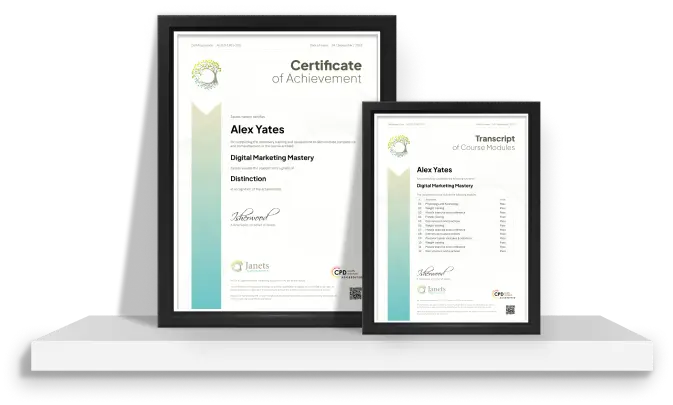
| Order your Certificates & Transcripts | |||
| Order Certificates & Transcripts / CPD QS | 00:00:00 | ||

Original price was: £319.£25Current price is: £25. ex Vat
SAVE 92% - OFFER ENDS IN

 ALL
COURSES FOR £49
ALL
COURSES FOR £49  14-Day Money-Back Guarantee
- Personal
- Team
Quantity:
Total:
50% discount for orders of 10+ courses
60% discount for orders of 50+ courses
70% discount for orders of 100+ courses
For more personalised package, contact us


Frequently asked questions
Can’t find the anwser you’re looking for ? Reach out to customer support team.
HR (Human Resources) management involves overseeing various aspects of employment, such as compliance with labour laws, employee recruitment, training, benefits, and workplace culture. Payroll management, on the other hand, deals specifically with the processing of employee payments, including salaries, benefits, taxes, and other deductions.
HR and payroll are closely linked but distinct functions within an organisation. HR manages employee data which is essential for payroll processing, such as employee hours worked, leave balances, and other variables that affect pay.
In smaller organisations, an HR manager might be responsible for payroll; however, in larger organisations, payroll often has its own manager or department, although HR still plays a role in providing the necessary employee information.
The separation of duties helps in reducing errors and fraud. HR typically handles hiring, benefits administration, and maintaining employee records, while payroll ensures that employees are paid accurately and on time, managing deductions, and compliance with tax laws.
The human resources and payroll cycle involves the continuous process of hiring, onboarding, managing, and compensating employees. HR manages the administrative and compliance aspects, while payroll handles the compensation and tax-related tasks.
HR and payroll outsourcing involves delegating HR and payroll functions to an external provider. This can help companies reduce costs, improve efficiency, and gain access to specialised expertise that they might not have in-house.
HR is typically kept accountable by top management or the executive team. In some organisations, an audit committee or compliance officer may also oversee the HR practices to ensure they meet legal standards and ethical practices.
The seven roles include: strategic advisor, employee advocate, change agent, talent architect, compliance officer, culture and engagement curator, and analytics and insights expert.
The five main tasks include: recruiting and staffing, benefits administration, performance management, training and development, and compliance with labour laws.
The primary role of payroll is to ensure that all employees are paid accurately and on time, including the correct calculation of deductions, such as taxes and benefits, and compliance with employment laws.
Responsibilities include recruitment, staffing, training and development, employee relations, compensation and benefits management, ensuring compliance with laws and regulations, and maintaining employee records.
The main functions include organisational staffing, performance management, learning and development, workplace safety, employee benefits, employee relations, and compliance with employment laws.
HR and payroll work together to manage employee data that impacts compensation. HR provides the necessary data, like hours worked and leaves taken, while payroll uses this information to execute accurate payment and tax deductions.
No, they are not the same thing. HR focuses on managing the employee lifecycle and enhancing the workforce, while payroll specifically handles the compensation aspect of employment.
HR and payroll software streamlines processes, reduces errors, ensures compliance, and can offer insights into workforce management through analytics. It helps in managing large amounts of data efficiently and effectively, improving overall operational efficiency.