


Course Library View the full range of courses
-
Accounting (145 courses)
- Xero Accounting and Bookkeeping Online
- Sage 50 Accounting & Payroll
- Project Finance
- Financial Modelling Training
- Tax Accounting
- Introduction to VAT
- Accounting and Finance Course for Managers
- Internal Compliance Auditor
- Financial Statement Analysis
- Payroll Administrator Level 3 Diploma
- View all Accounting courses
-
Language (67 courses)
- British Sign Language (BSL) Level 1 & 2
- Speech and Language Therapy Diploma
- TEFL (TESOL) Course
- English Spelling, Punctuation, and Grammar
- Child & Adult Speech & Language Disorders Training
- Teaching English as Foreign Language (TEFL) Certificate
- Mastering Spanish Language
- French Course for Beginners
- German Course for Beginners
- Body Language and Gesture Training
- View all Language courses
-
Teaching & Education (37 courses)
- Teaching Assistant Complete Course (TA, SEN, Autism, ADHD & Dyslexia) – CPD Certified
- EYFS Teaching Assistant Training Course
- Advanced Diploma in Coaching and Mentoring
- Level 3 Diploma in Teaching and Classroom Management
- Remote Teaching
- SENCO – Special Educational Needs Coordination
- Teaching English as Foreign Language (TEFL)
- Life Coaching
- Phonics Teaching Diploma
- View all Teaching & Education courses
-
Health and Social Care (138 courses)
- Health and Social Care Management
- Paediatric Nursing Assistant
- Mental Health Awareness Training
- Emergency Medicine – Paramedicine
- Level 3 Diploma in Adult Care
- Paediatric First Aid Training
- Safeguarding Children Level 3
- Level 3 Diploma in Anatomy and Physiology of Human Body
- Play Therapy
- The Care Certificate Preparation – Standards (1 to 15)
- View all Health and Social Care courses
-
Management (539 courses)
- Office Admin, Secretarial and PA Diploma
- Estate Agent and Property Management Training
- Diploma in Data Analysis Fundamentals
- Advanced Diploma in Stress & Anxiety Management
- Good Manufacturing Practice (GMP)
- Property Development and Management Course
- Diploma in Hotel Management
- Supply Chain Management
- Quality Assurance (QA) Manager
- Compliance and Risk Management
- View all Management courses
-
IT & Software (123 courses)
- Coding with Python 3
- Search Engine Optimisation (SEO) Training
- Cyber Security
- Motion Graphics with After Effects
- CompTIA A+ Core 1 (220-1101) Course
- Machine Learning for Aspiring Data Scientists
- Next.js Web Dev: Master this Powerful React Framework
- Learn 2D Animation with Adobe Animate
- GDPR Challenges in Education
- View all IT & Software courses
-
Employability (1043 courses)
- Office Administrator Skills
- Presentation Skills
- Legal Secretary and Office Skills
- Hospitality Management
- Estate Agent Diploma
- Hairdressing and Barbering
- Diploma in UK Employment Law
- Diploma in Data Analysis Fundamentals
- Building Surveyor Training
- Emotional Intelligence Training
- View all Employability courses
-
Personal Development (1438 courses)
- Productivity Habits
- Minute Taking Course
- Presentation Skills
- Excel: Top 50 Microsoft Excel Formulas in 50 Minutes!
- Critical Thinking and Problem Solving Skills
- Time Management
- Self Esteem and Confidence Building Course
- Essential IT Skills
- Legal Secretary and Office Skills
- Personality Development
- View all Personal Development courses


Information Systems Security Professional Certification - (CISSP) Course
1168 Students (1 Reviews)
Become an information security hero! The CISSP Course equips you with the knowledge to excel in cybersecurity. Master essential security practices, conquer the CISSP exam, and embark on your rewarding mission as a guardian of the digital world!
Course Curriculum
| Information Systems Security Professional | |||
| Security and Risk Management | 00:24:00 | ||
| Asset Security | 00:12:00 | ||
| Security Engineering | 00:15:00 | ||
| Communication and Network Security | 00:10:00 | ||
| Identity and Access Management | 00:10:00 | ||
| Security Assessment and Testing | 00:12:00 | ||
| Security Operations | 00:36:00 | ||
| Software Development Security | 00:13:00 | ||
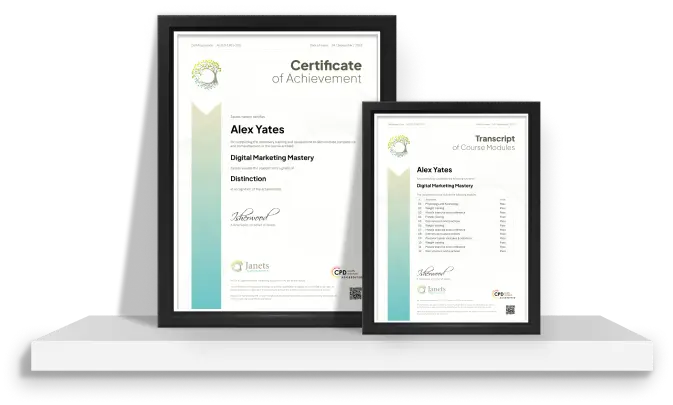
| Order your Certificates & Transcripts | |||
| Order your Certificates & Transcripts | 00:00:00 | ||

Original price was: £319.£25Current price is: £25. ex Vat
SAVE 92% - OFFER ENDS IN

 ALL
COURSES FOR £49
ALL
COURSES FOR £49  14-Day Money-Back Guarantee
- Personal
- Team
Quantity:
Total:
50% discount for orders of 10+ courses
60% discount for orders of 50+ courses
70% discount for orders of 100+ courses
For more personalised package, contact us


Frequently asked questions
Can’t find the anwser you’re looking for ? Reach out to customer support team.
The cost of a CISSP course can vary widely depending on the provider and format (in-person, online, self-paced). Generally, it ranges from $1,000 to $5,000. This includes the cost of training materials, access to online resources, and sometimes the exam fee. The exam fee itself is $749.
Yes, CISSP (Certified Information Systems Security Professional) is considered one of the premier certifications in the field of information security. It is recognized globally and demonstrates a high level of competence in cybersecurity management and practice.
CISSP is known to be a challenging certification due to its broad and in-depth coverage of security topics. The exam requires not only knowledge of various security domains but also the ability to apply this knowledge in real-world scenarios. The difficulty level is high, reflecting the certification's rigorous standards.
Passing the CISSP in 3 months is possible but requires a disciplined and intensive study schedule. Most candidates need between 3 to 6 months of preparation. A thorough understanding of the eight domains of the CISSP CBK (Common Body of Knowledge) and extensive practice with sample questions are crucial.
CISSP certification does not expire after three years, but it does require renewal. You must earn 120 Continuing Professional Education (CPE) credits over three years and pay an annual maintenance fee to maintain your certification.
While precise statistics on first-time pass rates are not publicly available, it is generally understood that the CISSP exam has a lower pass rate compared to other certifications, often cited around 50-70%. Proper preparation and understanding of the material are key to passing on the first attempt.
No, the CISSP exam is not an open book. You must rely on your knowledge and understanding of the material to answer the questions. The exam is designed to test not just rote memorization but also the application of security concepts and principles.
The CISSP is intended for experienced security professionals. To qualify, you need at least five years of cumulative, paid work experience in two or more of the eight domains of the CISSP CBK. However, if you lack the required experience, you can take the exam and become an Associate of (ISC)² until you gain the necessary experience.
Yes, CISSP is generally considered more challenging than CompTIA Security+. The CISSP exam covers more advanced topics in greater depth and requires a broader and deeper understanding of information security. Security+ is often seen as an entry-level certification, while CISSP is designed for experienced professionals.
As of now, the CISSP exam must be taken at a Pearson VUE test center under proctored conditions to ensure the integrity of the exam process. (ISC)² does not offer an option to take the CISSP exam at home.
The recommended study time for the CISSP exam varies, but most candidates spend between 150 to 300 hours preparing. This can depend on your existing knowledge and experience in the field. Creating a study plan that covers all domains and includes practice exams is essential.
CISSP certification is not a lifetime certification. To maintain your CISSP, you must earn 120 CPE credits every three years and pay an annual maintenance fee. This ensures that certified professionals stay current with evolving security practices and technologies.
While it is unlikely to get the CISSP certification entirely for free due to the exam fee and potential course costs, there are free resources available for studying, such as online forums, study groups, and some free study materials. However, investing in quality study materials and possibly a prep course is recommended.
CISSP does not specifically require coding skills. The certification focuses more on security management and best practices across various domains. However, having a basic understanding of programming can be beneficial in understanding certain concepts and technologies.
To become CISSP certified, you must have at least five years of paid work experience in two or more of the eight domains of the CISSP CBK. If you lack this experience, you can take the exam and become an Associate of (ISC)² until you fulfill the experience requirements. This allows you to demonstrate your commitment to the field while gaining the necessary experience.