


Course Library View the full range of courses
-
Accounting (145 courses)
- Xero Accounting and Bookkeeping Online
- Sage 50 Accounting & Payroll
- Project Finance
- Financial Modelling Training
- Tax Accounting
- Introduction to VAT
- Accounting and Finance Course for Managers
- Internal Compliance Auditor
- Financial Statement Analysis
- Payroll Administrator Level 3 Diploma
- View all Accounting courses
-
Language (67 courses)
- British Sign Language (BSL) Level 1 & 2
- Speech and Language Therapy Diploma
- TEFL (TESOL) Course
- English Spelling, Punctuation, and Grammar
- Child & Adult Speech & Language Disorders Training
- Teaching English as Foreign Language (TEFL) Certificate
- Mastering Spanish Language
- French Course for Beginners
- German Course for Beginners
- Body Language and Gesture Training
- View all Language courses
-
Teaching & Education (37 courses)
- Teaching Assistant Complete Course (TA, SEN, Autism, ADHD & Dyslexia) – CPD Certified
- EYFS Teaching Assistant Training Course
- Advanced Diploma in Coaching and Mentoring
- Level 3 Diploma in Teaching and Classroom Management
- Remote Teaching
- SENCO – Special Educational Needs Coordination
- Teaching English as Foreign Language (TEFL)
- Life Coaching
- Phonics Teaching Diploma
- View all Teaching & Education courses
-
Health and Social Care (138 courses)
- Health and Social Care Management
- Paediatric Nursing Assistant
- Mental Health Awareness Training
- Emergency Medicine – Paramedicine
- Level 3 Diploma in Adult Care
- Paediatric First Aid Training
- Safeguarding Children Level 3
- Level 3 Diploma in Anatomy and Physiology of Human Body
- Play Therapy
- The Care Certificate Preparation – Standards (1 to 15)
- View all Health and Social Care courses
-
Management (539 courses)
- Office Admin, Secretarial and PA Diploma
- Estate Agent and Property Management Training
- Diploma in Data Analysis Fundamentals
- Advanced Diploma in Stress & Anxiety Management
- Good Manufacturing Practice (GMP)
- Property Development and Management Course
- Diploma in Hotel Management
- Supply Chain Management
- Quality Assurance (QA) Manager
- Compliance and Risk Management
- View all Management courses
-
IT & Software (124 courses)
- Coding with Python 3
- Search Engine Optimisation (SEO) Training
- Cyber Security
- Motion Graphics with After Effects
- CompTIA A+ Core 1 (220-1101) Course
- Machine Learning for Aspiring Data Scientists
- Next.js Web Dev: Master this Powerful React Framework
- Learn 2D Animation with Adobe Animate
- GDPR Challenges in Education
- View all IT & Software courses
-
Employability (1043 courses)
- Office Administrator Skills
- Presentation Skills
- Legal Secretary and Office Skills
- Hospitality Management
- Estate Agent Diploma
- Hairdressing and Barbering
- Diploma in UK Employment Law
- Diploma in Data Analysis Fundamentals
- Building Surveyor Training
- Emotional Intelligence Training
- View all Employability courses
-
Personal Development (1439 courses)
- Productivity Habits
- Minute Taking Course
- Presentation Skills
- Excel: Top 50 Microsoft Excel Formulas in 50 Minutes!
- Critical Thinking and Problem Solving Skills
- Time Management
- Self Esteem and Confidence Building Course
- Essential IT Skills
- Legal Secretary and Office Skills
- Personality Development
- View all Personal Development courses


Data Science and Machine Learning using Python : A Bootcamp
29 Students (7 Reviews)
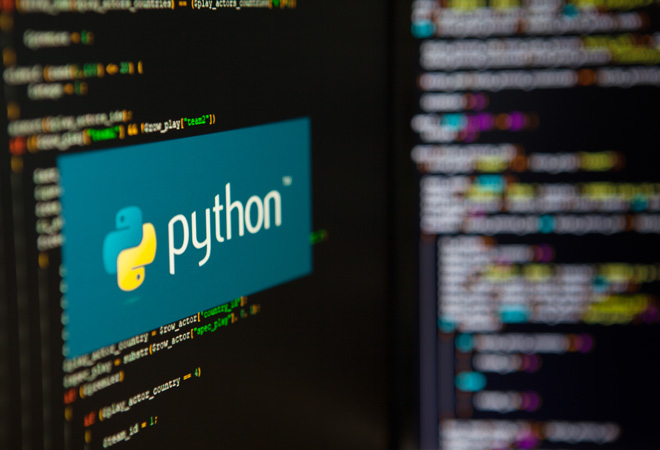
Master Python data science and machine learning skills through this practical bootcamp for modern technology careers.
Course Curriculum
| Welcome, Course Introduction & overview, and Environment set-up | |||
| Welcome & Course Overview | 00:07:00 | ||
| Set-up the Environment for the Course (lecture 1) | 00:09:00 | ||
| Set-up the Environment for the Course (lecture 2) | 00:25:00 | ||
| Two other options to setup environment | 00:04:00 | ||
| Python Essentials | |||
| Python data types Part 1 | 00:21:00 | ||
| Python Data Types Part 2 | 00:15:00 | ||
| Loops, List Comprehension, Functions, Lambda Expression, Map and Filter (Part 1) | 00:16:00 | ||
| Loops, List Comprehension, Functions, Lambda Expression, Map and Filter (Part 2) | 00:20:00 | ||
| Python Essentials Exercises Overview | 00:02:00 | ||
| Python Essentials Exercises Solutions | 00:22:00 | ||
| Python for Data Analysis using NumPy | |||
| What is Numpy? A brief introduction and installation instructions. | 00:03:00 | ||
| NumPy Essentials – NumPy arrays, built-in methods, array methods and attributes. | 00:28:00 | ||
| NumPy Essentials – Indexing, slicing, broadcasting & boolean masking | 00:26:00 | ||
| NumPy Essentials – Arithmetic Operations & Universal Functions | 00:07:00 | ||
| NumPy Essentials Exercises Overview | 00:02:00 | ||
| NumPy Essentials Exercises Solutions | 00:25:00 | ||
| Python for Data Analysis using Pandas | |||
| What is pandas? A brief introduction and installation instructions. | 00:02:00 | ||
| Pandas Introduction | 00:02:00 | ||
| Pandas Essentials – Pandas Data Structures – Series | 00:20:00 | ||
| Pandas Essentials – Pandas Data Structures – DataFrame | 00:30:00 | ||
| Pandas Essentials – Handling Missing Data | 00:12:00 | ||
| Pandas Essentials – Data Wrangling – Combining, merging, joining | 00:20:00 | ||
| Pandas Essentials – Groupby | 00:10:00 | ||
| Pandas Essentials – Useful Methods and Operations | 00:26:00 | ||
| Pandas Essentials – Project 1 (Overview) Customer Purchases Data | 00:08:00 | ||
| Pandas Essentials – Project 1 (Solutions) Customer Purchases Data | 00:31:00 | ||
| Pandas Essentials – Project 2 (Overview) Chicago Payroll Data | 00:04:00 | ||
| Pandas Essentials – Project 2 (Solutions Part 1) Chicago Payroll Data | 00:18:00 | ||
| Python for Data Visualization using matplotlib | |||
| Matplotlib Essentials (Part 1) – Basic Plotting & Object Oriented Approach | 00:13:00 | ||
| Matplotlib Essentials (Part 2) – Basic Plotting & Object Oriented Approach | 00:22:00 | ||
| Matplotlib Essentials (Part 3) – Basic Plotting & Object Oriented Approach | 00:22:00 | ||
| Matplotlib Essentials – Exercises Overview | 00:06:00 | ||
| Matplotlib Essentials – Exercises Solutions | 00:21:00 | ||
| Python for Data Visualization using Seaborn | |||
| Seaborn – Introduction & Installation | 00:04:00 | ||
| Seaborn – Distribution Plots | 00:25:00 | ||
| Seaborn – Categorical Plots (Part 1) | 00:21:00 | ||
| Seaborn – Categorical Plots (Part 2) | 00:16:00 | ||
| Seborn-Axis Grids | 00:25:00 | ||
| Seaborn – Matrix Plots | 00:13:00 | ||
| Seaborn – Regression Plots | 00:11:00 | ||
| Seaborn – Controlling Figure Aesthetics | 00:10:00 | ||
| Seaborn – Exercises Overview | 00:04:00 | ||
| Seaborn – Exercise Solutions | 00:19:00 | ||
| Python for Data Visualization using pandas | |||
| Pandas Built-in Data Visualization | 00:34:00 | ||
| Pandas Data Visualization Exercises Overview | 00:03:00 | ||
| Panda Data Visualization Exercises Solutions | 00:13:00 | ||
| Python for interactive & geographical plotting using Plotly and Cufflinks | |||
| Plotly & Cufflinks – Interactive & Geographical Plotting (Part 1) | 00:19:00 | ||
| Plotly & Cufflinks – Interactive & Geographical Plotting (Part 2) | 00:14:00 | ||
| Plotly & Cufflinks – Interactive & Geographical Plotting Exercises (Overview) | 00:11:00 | ||
| Plotly & Cufflinks – Interactive & Geographical Plotting Exercises (Solutions) | 00:37:00 | ||
| Capstone Project - Python for Data Analysis & Visualization | |||
| Project 1 – Oil vs Banks Stock Price during recession (Overview) | 00:15:00 | ||
| Project 1 – Oil vs Banks Stock Price during recession (Solutions Part 1) | 00:18:00 | ||
| Project 1 – Oil vs Banks Stock Price during recession (Solutions Part 2) | 00:18:00 | ||
| Project 1 – Oil vs Banks Stock Price during recession (Solutions Part 3) | 00:17:00 | ||
| Project 2 (Optional) – Emergency Calls from Montgomery County, PA (Overview) | 00:03:00 | ||
| Python for Machine Learning (ML) - scikit-learn - Linear Regression Model | |||
| Introduction to ML – What, Why and Types….. | 00:15:00 | ||
| Theory Lecture on Linear Regression Model, No Free Lunch, Bias Variance Tradeoff | 00:15:00 | ||
| scikit-learn – Linear Regression Model – Hands-on (Part 1) | 00:17:00 | ||
| scikit-learn – Linear Regression Model Hands-on (Part 2) | 00:19:00 | ||
| Good to know! How to save and load your trained Machine Learning Model! | 00:01:00 | ||
| scikit-learn – Linear Regression Model (Insurance Data Project Overview) | 00:08:00 | ||
| scikit-learn – Linear Regression Model (Insurance Data Project Solutions) | 00:30:00 | ||
| Python for Machine Learning - scikit-learn - Logistic Regression Model | |||
| Theory: Logistic Regression, conf. mat., TP, TN, Accuracy, Specificity…etc. | 00:10:00 | ||
| scikit-learn – Logistic Regression Model – Hands-on (Part 1) | 00:17:00 | ||
| scikit-learn – Logistic Regression Model – Hands-on (Part 2) | 00:20:00 | ||
| scikit-learn – Logistic Regression Model – Hands-on (Part 3) | 00:11:00 | ||
| scikit-learn – Logistic Regression Model – Hands-on (Project Overview) | 00:05:00 | ||
| scikit-learn – Logistic Regression Model – Hands-on (Project Solutions) | 00:15:00 | ||
| Python for Machine Learning - scikit-learn - K Nearest Neighbors | |||
| Theory: K Nearest Neighbors, Curse of dimensionality …. | 00:08:00 | ||
| scikit-learn – K Nearest Neighbors – Hands-on | 00:25:00 | ||
| scikt-learn – K Nearest Neighbors (Project Overview) | 00:04:00 | ||
| scikit-learn – K Nearest Neighbors (Project Solutions) | 00:14:00 | ||
| Python for Machine Learning - scikit-learn - Decision Tree and Random Forests | |||
| Theory: D-Tree & Random Forests, splitting, Entropy, IG, Bootstrap, Bagging…. | 00:18:00 | ||
| scikit-learn – Decision Tree and Random Forests – Hands-on (Part 1) | 00:19:00 | ||
| scikit-learn – Decision Tree and Random Forests (Project Overview) | 00:05:00 | ||
| scikit-learn – Decision Tree and Random Forests (Project Solutions) | 00:15:00 | ||
| Python for Machine Learning - scikit-learn -Support Vector Machines (SVMs) | |||
| Support Vector Machines (SVMs) – (Theory Lecture) | 00:07:00 | ||
| scikit-learn – Support Vector Machines – Hands-on (SVMs) | 00:30:00 | ||
| scikit-learn – Support Vector Machines (Project 1 Overview) | 00:07:00 | ||
| scikit-learn – Support Vector Machines (Project 1 Solutions) | 00:20:00 | ||
| scikit-learn – Support Vector Machines (Optional Project 2 – Overview) | 00:02:00 | ||
| Python for Machine Learning - scikit-learn - K Means Clustering | |||
| Theory: K Means Clustering, Elbow method ….. | 00:11:00 | ||
| scikit-learn – K Means Clustering – Hands-on | 00:23:00 | ||
| scikit-learn – K Means Clustering (Project Overview) | 00:07:00 | ||
| scikit-learn – K Means Clustering (Project Solutions) | 00:22:00 | ||
| Python for Machine Learning - scikit-learn - Principal Component Analysis (PCA) | |||
| Theory: Principal Component Analysis (PCA) | 00:09:00 | ||
| scikit-learn – Principal Component Analysis (PCA) – Hands-on | 00:22:00 | ||
| scikit-learn – Principal Component Analysis (PCA) – (Project Overview) | 00:02:00 | ||
| scikit-learn – Principal Component Analysis (PCA) – (Project Solutions) | 00:17:00 | ||
| Recommender Systems with Python - (Additional Topic) | |||
| Theory: Recommender Systems their Types and Importance | 00:06:00 | ||
| Python for Recommender Systems – Hands-on (Part 1) | 00:18:00 | ||
| Python for Recommender Systems – – Hands-on (Part 2) | 00:19:00 | ||
| Python for Natural Language Processing (NLP) - NLTK - (Additional Topic) | |||
| Natural Language Processing (NLP) – (Theory Lecture) | 00:13:00 | ||
| NLTK – NLP-Challenges, Data Sources, Data Processing ….. | 00:13:00 | ||
| NLTK – Feature Engineering and Text Preprocessing in Natural Language Processing | 00:19:00 | ||
| NLTK – NLP – Tokenization, Text Normalization, Vectorization, BoW…. | 00:19:00 | ||
| NLTK – BoW, TF-IDF, Machine Learning, Training & Evaluation, Naive Bayes … | 00:13:00 | ||
| NLTK – NLP – Pipeline feature to assemble several steps for cross-validation… | 00:09:00 | ||
| Resources | |||
| Resources – Data Science and Machine Learning using Python : A Bootcamp | 00:00:00 | ||
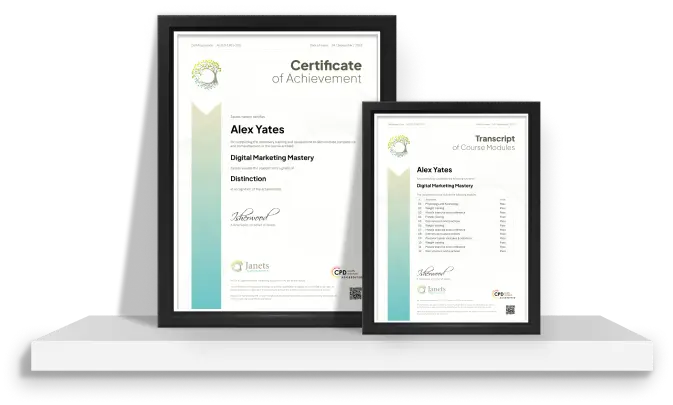
| Order your Certificates & Transcripts | |||
| Order your Certificates & Transcripts | 00:00:00 | ||

Original price was: £319.£25Current price is: £25. ex Vat
SAVE 92% - OFFER ENDS IN

 14-Day Money-Back Guarantee
- Personal
- Team
Quantity:
Total:
50% discount for orders of 10+ courses
60% discount for orders of 50+ courses
70% discount for orders of 100+ courses
For more personalised package, contact us


Frequently asked questions
Can’t find the anwser you’re looking for ? Reach out to customer support team.
Data Science and Machine Learning using Python is a comprehensive training program that teaches learners how to work with data, develop algorithms, and create intelligent solutions using Python-based technologies.
Yes, this course is suitable for beginners because it introduces essential concepts step-by-step and helps learners build confidence in programming, data analysis, and machine learning techniques.
You will gain skills in Python programming, data handling, data visualisation, statistical analysis, machine learning models, and interpreting information to support better decisions.
Python is widely used in data science because it provides simple programming methods, powerful libraries, and flexible frameworks for analysing data and developing intelligent applications.
No, previous coding experience is not required. The course begins with programming fundamentals and gradually introduces more advanced data science and machine learning concepts.
The course includes Python programming, data preparation, data analysis, visualisation techniques, machine learning algorithms, predictive modelling, and practical applications of data science.
Yes, completing this bootcamp can help learners develop valuable technical skills needed for entry-level positions in data science, analytics, programming, and artificial intelligence fields.
Machine learning is used to identify patterns, make predictions, automate processes, and create smart systems that improve efficiency across different industries.
Yes, learners will complete practical activities that allow them to apply Python techniques, analyse datasets, and understand how real-world machine learning projects are developed.
Data science skills are used in healthcare, finance, technology, retail, marketing, and business sectors to improve decision-making and create innovative solutions.
The course develops problem-solving skills by teaching learners how to examine data, identify patterns, create models, and use analytical approaches for challenges.
After completing this bootcamp, learners can explore careers such as data analyst, machine learning engineer, Python developer, AI specialist, and business intelligence professional.