


Course Library View the full range of courses
-
Accounting (145 courses)
- Xero Accounting and Bookkeeping Online
- Sage 50 Accounting & Payroll
- Project Finance
- Financial Modelling Training
- Tax Accounting
- Introduction to VAT
- Accounting and Finance Course for Managers
- Internal Compliance Auditor
- Financial Statement Analysis
- Payroll Administrator Level 3 Diploma
- View all Accounting courses
-
Language (67 courses)
- British Sign Language (BSL) Level 1 & 2
- Speech and Language Therapy Diploma
- TEFL (TESOL) Course
- English Spelling, Punctuation, and Grammar
- Child & Adult Speech & Language Disorders Training
- Teaching English as Foreign Language (TEFL) Certificate
- Mastering Spanish Language
- French Course for Beginners
- German Course for Beginners
- Body Language and Gesture Training
- View all Language courses
-
Teaching & Education (37 courses)
- Teaching Assistant Complete Course (TA, SEN, Autism, ADHD & Dyslexia) – CPD Certified
- EYFS Teaching Assistant Training Course
- Advanced Diploma in Coaching and Mentoring
- Level 3 Diploma in Teaching and Classroom Management
- Remote Teaching
- SENCO – Special Educational Needs Coordination
- Teaching English as Foreign Language (TEFL)
- Life Coaching
- Phonics Teaching Diploma
- View all Teaching & Education courses
-
Health and Social Care (138 courses)
- Health and Social Care Management
- Paediatric Nursing Assistant
- Mental Health Awareness Training
- Emergency Medicine – Paramedicine
- Level 3 Diploma in Adult Care
- Paediatric First Aid Training
- Safeguarding Children Level 3
- Level 3 Diploma in Anatomy and Physiology of Human Body
- Play Therapy
- The Care Certificate Preparation – Standards (1 to 15)
- View all Health and Social Care courses
-
Management (539 courses)
- Office Admin, Secretarial and PA Diploma
- Estate Agent and Property Management Training
- Diploma in Data Analysis Fundamentals
- Advanced Diploma in Stress & Anxiety Management
- Good Manufacturing Practice (GMP)
- Property Development and Management Course
- Diploma in Hotel Management
- Supply Chain Management
- Quality Assurance (QA) Manager
- Compliance and Risk Management
- View all Management courses
-
IT & Software (124 courses)
- Coding with Python 3
- Search Engine Optimisation (SEO) Training
- Cyber Security
- Motion Graphics with After Effects
- CompTIA A+ Core 1 (220-1101) Course
- Machine Learning for Aspiring Data Scientists
- Next.js Web Dev: Master this Powerful React Framework
- Learn 2D Animation with Adobe Animate
- GDPR Challenges in Education
- View all IT & Software courses
-
Employability (1043 courses)
- Office Administrator Skills
- Presentation Skills
- Legal Secretary and Office Skills
- Hospitality Management
- Estate Agent Diploma
- Hairdressing and Barbering
- Diploma in UK Employment Law
- Diploma in Data Analysis Fundamentals
- Building Surveyor Training
- Emotional Intelligence Training
- View all Employability courses
-
Personal Development (1439 courses)
- Productivity Habits
- Minute Taking Course
- Presentation Skills
- Excel: Top 50 Microsoft Excel Formulas in 50 Minutes!
- Critical Thinking and Problem Solving Skills
- Time Management
- Self Esteem and Confidence Building Course
- Essential IT Skills
- Legal Secretary and Office Skills
- Personality Development
- View all Personal Development courses


Diploma in Art and Painting
302 Students (1 Reviews)
Develop drawing, painting, colour theory, composition, and creative art skills with the Diploma in Art and Painting.

Original price was: £319.£25Current price is: £25.
Course Curriculum
| Module-1 | |||
| Painting 101 | 00:30:00 | ||
| Understanding Paints | 00:30:00 | ||
| Choosing Your Brushes | 00:30:00 | ||
| Color Your World | 00:30:00 | ||
| Light Sources in Painting | 00:30:00 | ||
| What type of painter are you? | 00:30:00 | ||
| Module-2 | |||
| Choosing A Subject | 01:00:00 | ||
| Setting Up Your Studio | 00:30:00 | ||
| Art Supply Resources | 01:00:00 | ||
| Clean Up Time | 00:30:00 | ||
| Free Art Lessons | 00:30:00 | ||
| Take Care of Your Creation | 00:15:00 | ||
| Module-3 | |||
| Pay Attention to Detail | 01:00:00 | ||
| Enjoy Your Subject | 01:00:00 | ||
| Frequently Asked Questions | 00:30:00 | ||
| Art Schools | 00:30:00 | ||
| Museums of Fine Art | 00:15:00 | ||
| One Final Word | 01:00:00 | ||
| Module-4 | |||
| INTRODUCTION | 01:00:00 | ||
| BRIEF HISTORY OF PENCIL DRAWING | 00:15:00 | ||
| GETTING STARTED | 01:00:00 | ||
| LEARNING THE BASICS OF DRAWING AND SKETCHING | 01:00:00 | ||
| Basic Perspectives on Drawing | 01:00:00 | ||
| Basic Elements of Light, Shadows, and Shading | 01:00:00 | ||
| Different Shading Techniques | 00:15:00 | ||
| How to Add Tones and Values? | 00:30:00 | ||
| FINISHING TOUCHES | 00:30:00 | ||
| MIXED MEDIA APPLICATIONS | 01:00:00 | ||
| Drawing with Pencils in Oil Painting | 01:00:00 | ||
| CONCLUSION | 00:15:00 | ||
| Module-5 | |||
| Start Your Own Art Business | 00:15:00 | ||
| Steps to Creating a Successful Business from Your Art | 01:00:00 | ||
| How to Write an Artist Business Plan | 00:30:00 | ||
| Module-6 | |||
| Introduction | 00:30:00 | ||
| Incorporate Your Business | 01:00:00 | ||
| Employing Or Contracting – What Is The Difference? | 00:30:00 | ||
| From Where Can You Hire Workers | 01:00:00 | ||
| Getting Insurance | 00:30:00 | ||
| Getting Ready – Portfolios, Flyers And Cards | 00:30:00 | ||
| What Do You Need For Outdoor Painting | 01:00:00 | ||
| What Do You Need To Know About Indoor Painting | 01:00:00 | ||
| Fancy Indoor Painting Touches – How To Get Them | 00:30:00 | ||
| Paint Primer 101 | 01:00:00 | ||
| How To Get Customers | 01:00:00 | ||
| The Non-Paying Customers! | 00:30:00 | ||
| Mock Exam | |||
| Mock Exam- Diploma in Art and Painting | 00:20:00 | ||
| Final Exam | |||
| Final Exam- Diploma in Art and Painting | 00:20:00 | ||
| Recommended Materials | |||
| Workbook – Diploma in Art and Painting | 1 week, 2 days | ||
| Assignment | |||
| Assignment – Diploma in Art and Painting | 6 days, 4 hours | ||
| Order Your Certificate | |||
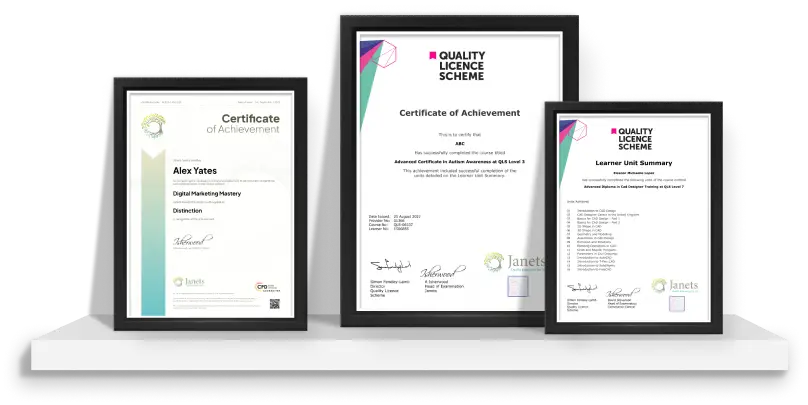
| Order your Certificate QLS | 00:00:00 | ||

Original price was: £319.£25Current price is: £25. ex Vat
SAVE 92% - OFFER ENDS IN

 14-Day Money-Back Guarantee
- Personal
- Team
Quantity:
Total:
50% discount for orders of 10+ courses
60% discount for orders of 50+ courses
70% discount for orders of 100+ courses
For more personalised package, contact us

Frequently asked questions
Can’t find the anwser you’re looking for ? Reach out to customer support team.
Art and painting involve the creation of visual works that express ideas, emotions, stories, or observations through various artistic techniques, materials, and styles.
You will learn drawing fundamentals, painting techniques, colour theory, composition, perspective, artistic expression, design principles, and methods for creating original artwork.
No. This course is suitable for beginners as well as individuals who want to improve their existing artistic knowledge and painting abilities.
Colour theory helps artists understand how colours interact, create harmony, convey mood, and influence the overall impact of an artwork.
Composition refers to the arrangement of visual elements within an artwork. Strong composition helps guide the viewer's eye and creates balance and interest.
You will explore a range of techniques that may include blending, layering, brushwork, texture creation, shading, and colour application methods.
Perspective is a technique used to create the illusion of depth and distance on a flat surface, making artwork appear more realistic and three-dimensional.
Yes. Painting encourages creative thinking, self-expression, observation, problem-solving, and the development of unique artistic ideas.
Artists commonly use paints, brushes, canvases, sketchbooks, pencils, palettes, and various drawing and painting tools depending on their chosen medium.
Yes. The course helps you create and develop artwork that can contribute to a personal or professional art portfolio.
Art can offer rewarding opportunities in creative industries, education, illustration, design, freelance practice, and community arts, depending on your interests and goals.