


Course Library View the full range of courses
-
Accounting (145 courses)
- Xero Accounting and Bookkeeping Online
- Sage 50 Accounting & Payroll
- Project Finance
- Financial Modelling Training
- Tax Accounting
- Introduction to VAT
- Accounting and Finance Course for Managers
- Internal Compliance Auditor
- Financial Statement Analysis
- Payroll Administrator Level 3 Diploma
- View all Accounting courses
-
Language (67 courses)
- British Sign Language (BSL) Level 1 & 2
- Speech and Language Therapy Diploma
- TEFL (TESOL) Course
- English Spelling, Punctuation, and Grammar
- Child & Adult Speech & Language Disorders Training
- Teaching English as Foreign Language (TEFL) Certificate
- Mastering Spanish Language
- French Course for Beginners
- German Course for Beginners
- Body Language and Gesture Training
- View all Language courses
-
Teaching & Education (37 courses)
- Teaching Assistant Complete Course (TA, SEN, Autism, ADHD & Dyslexia) – CPD Certified
- EYFS Teaching Assistant Training Course
- Advanced Diploma in Coaching and Mentoring
- Level 3 Diploma in Teaching and Classroom Management
- Remote Teaching
- SENCO – Special Educational Needs Coordination
- Teaching English as Foreign Language (TEFL)
- Life Coaching
- Phonics Teaching Diploma
- View all Teaching & Education courses
-
Health and Social Care (138 courses)
- Health and Social Care Management
- Paediatric Nursing Assistant
- Mental Health Awareness Training
- Emergency Medicine – Paramedicine
- Level 3 Diploma in Adult Care
- Paediatric First Aid Training
- Safeguarding Children Level 3
- Level 3 Diploma in Anatomy and Physiology of Human Body
- Play Therapy
- The Care Certificate Preparation – Standards (1 to 15)
- View all Health and Social Care courses
-
Management (539 courses)
- Office Admin, Secretarial and PA Diploma
- Estate Agent and Property Management Training
- Diploma in Data Analysis Fundamentals
- Advanced Diploma in Stress & Anxiety Management
- Good Manufacturing Practice (GMP)
- Property Development and Management Course
- Diploma in Hotel Management
- Supply Chain Management
- Quality Assurance (QA) Manager
- Compliance and Risk Management
- View all Management courses
-
IT & Software (123 courses)
- Coding with Python 3
- Search Engine Optimisation (SEO) Training
- Cyber Security
- Motion Graphics with After Effects
- CompTIA A+ Core 1 (220-1101) Course
- Machine Learning for Aspiring Data Scientists
- Next.js Web Dev: Master this Powerful React Framework
- Learn 2D Animation with Adobe Animate
- GDPR Challenges in Education
- View all IT & Software courses
-
Employability (1043 courses)
- Office Administrator Skills
- Presentation Skills
- Legal Secretary and Office Skills
- Hospitality Management
- Estate Agent Diploma
- Hairdressing and Barbering
- Diploma in UK Employment Law
- Diploma in Data Analysis Fundamentals
- Building Surveyor Training
- Emotional Intelligence Training
- View all Employability courses
-
Personal Development (1439 courses)
- Productivity Habits
- Minute Taking Course
- Presentation Skills
- Excel: Top 50 Microsoft Excel Formulas in 50 Minutes!
- Critical Thinking and Problem Solving Skills
- Time Management
- Self Esteem and Confidence Building Course
- Essential IT Skills
- Legal Secretary and Office Skills
- Personality Development
- View all Personal Development courses


Diploma in Restaurant and Food Management
137 Students (20 Reviews)
Become a restaurant industry leader! This Diploma in Restaurant and Food Management equips you with the skills to excel in all aspects of restaurant operations. Learn from menu planning to staff management and launch your dream career in the culinary world.

Course Curriculum
| Restaurant And Food Management - Updated Version | |||
| An Overview of the Restaurant Industry | 00:21:00 | ||
| Choosing Your Restaurant | 00:17:00 | ||
| Restaurant Layout Management and Legal Requirements | 00:20:00 | ||
| Menu Planning | 00:26:00 | ||
| Drinks Management | 00:17:00 | ||
| Purchasing, Receiving, Inventory, and Storage | 00:30:00 | ||
| Financing Your Business | 00:26:00 | ||
| Finding, Recruiting, and Training Employees | 00:26:00 | ||
| Running a Safe and Clean Restaurant | 00:27:00 | ||
| Handling Service Using Technology | 00:24:00 | ||
| Teamwork and Daily Routine of a Restaurant | 00:23:00 | ||
| Customer Relations and Marketing Policy | 00:27:00 | ||
| Restaurant And Food Management - Old Version | |||
| Starting a Restaurant | |||
| Are you ready for the challenge? | 00:15:00 | ||
| How to decide on a concept | 00:30:00 | ||
| Designing your restaurant | 00:15:00 | ||
| Friends and family | 00:15:00 | ||
| Writing a Business Plan | 00:30:00 | ||
| Insurance | 00:15:00 | ||
| Restaurant Organizations that you need to check out. | 00:15:00 | ||
| What are the best Catering Industry Trade Shows? | 00:15:00 | ||
| Managing a Restaurant | |||
| Managing Yourself | 00:30:00 | ||
| Managing Others | 00:30:00 | ||
| Managing Your Money | 00:15:00 | ||
| Managing Your Food and Supplies | 00:30:00 | ||
| Managing Everything Else | 00:30:00 | ||
| Food Business | |||
| Food Business Basics | 00:45:00 | ||
| Put Together Your Business Concept | 00:10:00 | ||
| Identify your Target Market | 00:05:00 | ||
| Identify Your Competition | 00:05:00 | ||
| Write A Mission Statement | 00:10:00 | ||
| Downline Basics | 00:15:00 | ||
| Equipment And Supplies | 00:05:00 | ||
| Marketing And Quality Control | 00:05:00 | ||
| Wrapping Up | 00:02:00 | ||
| Starting Food Catering | |||
| Where You Work | 00:15:00 | ||
| Health and safety | 00:15:00 | ||
| Staff, Suppliers and Transport | 00:00:00 | ||
| Food Hygiene | 01:00:00 | ||
| Rules about Menus | 00:15:00 | ||
| Paperwork and Finances | 00:15:00 | ||
| Law | 00:15:00 | ||
| Mock Exam | |||
| Mock Exam – Diploma in Restaurant and Food Management | 00:20:00 | ||
| Final Exam | |||
| Final Exam- Diploma in Restaurant and Food Management | 00:20:00 | ||
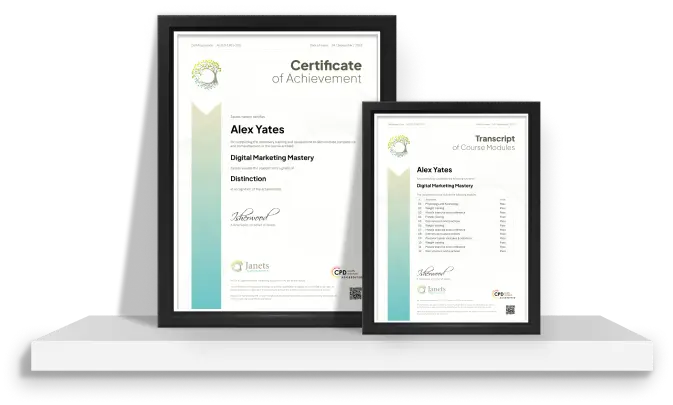
| Order your Certificates & Transcripts | |||
| Order your Certificates & Transcripts | 00:00:00 | ||

Original price was: £319.£25Current price is: £25. ex Vat
SAVE 92% - OFFER ENDS IN

 14-Day Money-Back Guarantee
- Personal
- Team
Quantity:
Total:
50% discount for orders of 10+ courses
60% discount for orders of 50+ courses
70% discount for orders of 100+ courses
For more personalised package, contact us


Frequently asked questions
Can’t find the anwser you’re looking for ? Reach out to customer support team.
The best course for restaurant management is often a Bachelor’s degree in Hospitality Management with a focus on Restaurant Management. Top institutions like Cornell University’s School of Hotel Administration, the Culinary Institute of America, and the University of Nevada, Las Vegas offer highly regarded programs. Certificate programs from entities like the National Restaurant Association also provide specialized training.
Management in food service management involves overseeing the operations of establishments that prepare and serve food, such as restaurants, cafes, and cafeterias. It includes tasks such as staffing, budgeting, inventory management, maintaining food safety standards, and ensuring customer satisfaction.
The food service industry encompasses all businesses that prepare and serve food outside the home. This includes restaurants, cafes, catering services, fast food chains, food trucks, and institutional food services like those in schools, hospitals, and workplaces.
The most important aspect in food service is ensuring customer satisfaction through high-quality food, excellent service, and a pleasant dining environment. Consistency, cleanliness, and adherence to food safety standards are also crucial.
Skills needed for food service include excellent communication, customer service, multitasking, teamwork, time management, attention to detail, and the ability to work under pressure. Basic math skills for handling transactions and inventory are also important.
A food preparation worker needs knife skills, knowledge of cooking techniques, ability to follow recipes, time management, attention to detail, understanding of food safety and hygiene standards, and the ability to work in a fast-paced environment.
There are several types of menus in a restaurant, including à la carte, table d'hôte, fixed, cycle, du jour (daily), and tasting menus.
Five examples of the food industry are restaurants, food manufacturing, catering services, food retail (grocery stores), and food transportation and logistics.
"Food service" refers to the act of serving food, while "foodservice" is an industry term encompassing all businesses involved in preparing, serving, and selling food.
Restaurant management involves overseeing the day-to-day operations of a restaurant, including hiring and training staff, managing finances, ensuring food safety, maintaining inventory, and delivering excellent customer service.
Food management typically refers to professionals who oversee operations within the food service industry, ensuring efficient and profitable management of food production and service.
A restaurant manager’s role includes hiring and training staff, managing budgets and payroll, maintaining inventory and supplies, ensuring compliance with health and safety regulations, overseeing food preparation and presentation, and ensuring customer satisfaction.
The highest-paid restaurant managers typically work in high-end, luxury, or Michelin-starred restaurants, large restaurant chains, or top-tier corporate dining facilities. Salaries can vary widely but can reach upwards of $70,000 to $100,000 or more annually, depending on location, experience, and the prestige of the establishment.
A degree in Hospitality Management, Business Administration, or Culinary Arts is considered best for a restaurant owner. These programs provide a solid foundation in both the business and operational aspects of running a restaurant.
The best degree to start a restaurant business is typically a Bachelor’s degree in Hospitality Management or Business Administration. These degrees offer comprehensive training in business principles, management practices, and industry-specific knowledge essential for successfully operating a restaurant.