


Course Library View the full range of courses
-
Accounting (145 courses)
- Xero Accounting and Bookkeeping Online
- Sage 50 Accounting & Payroll
- Project Finance
- Financial Modelling Training
- Tax Accounting
- Introduction to VAT
- Accounting and Finance Course for Managers
- Internal Compliance Auditor
- Financial Statement Analysis
- Payroll Administrator Level 3 Diploma
- View all Accounting courses
-
Language (67 courses)
- British Sign Language (BSL) Level 1 & 2
- Speech and Language Therapy Diploma
- TEFL (TESOL) Course
- English Spelling, Punctuation, and Grammar
- Child & Adult Speech & Language Disorders Training
- Teaching English as Foreign Language (TEFL) Certificate
- Mastering Spanish Language
- French Course for Beginners
- German Course for Beginners
- Body Language and Gesture Training
- View all Language courses
-
Teaching & Education (37 courses)
- Teaching Assistant Complete Course (TA, SEN, Autism, ADHD & Dyslexia) – CPD Certified
- EYFS Teaching Assistant Training Course
- Advanced Diploma in Coaching and Mentoring
- Level 3 Diploma in Teaching and Classroom Management
- Remote Teaching
- SENCO – Special Educational Needs Coordination
- Teaching English as Foreign Language (TEFL)
- Life Coaching
- Phonics Teaching Diploma
- View all Teaching & Education courses
-
Health and Social Care (138 courses)
- Health and Social Care Management
- Paediatric Nursing Assistant
- Mental Health Awareness Training
- Emergency Medicine – Paramedicine
- Level 3 Diploma in Adult Care
- Paediatric First Aid Training
- Safeguarding Children Level 3
- Level 3 Diploma in Anatomy and Physiology of Human Body
- Play Therapy
- The Care Certificate Preparation – Standards (1 to 15)
- View all Health and Social Care courses
-
Management (539 courses)
- Office Admin, Secretarial and PA Diploma
- Estate Agent and Property Management Training
- Diploma in Data Analysis Fundamentals
- Advanced Diploma in Stress & Anxiety Management
- Good Manufacturing Practice (GMP)
- Property Development and Management Course
- Diploma in Hotel Management
- Supply Chain Management
- Quality Assurance (QA) Manager
- Compliance and Risk Management
- View all Management courses
-
IT & Software (123 courses)
- Coding with Python 3
- Search Engine Optimisation (SEO) Training
- Cyber Security
- Motion Graphics with After Effects
- CompTIA A+ Core 1 (220-1101) Course
- Machine Learning for Aspiring Data Scientists
- Next.js Web Dev: Master this Powerful React Framework
- Learn 2D Animation with Adobe Animate
- GDPR Challenges in Education
- View all IT & Software courses
-
Employability (1043 courses)
- Office Administrator Skills
- Presentation Skills
- Legal Secretary and Office Skills
- Hospitality Management
- Estate Agent Diploma
- Hairdressing and Barbering
- Diploma in UK Employment Law
- Diploma in Data Analysis Fundamentals
- Building Surveyor Training
- Emotional Intelligence Training
- View all Employability courses
-
Personal Development (1439 courses)
- Productivity Habits
- Minute Taking Course
- Presentation Skills
- Excel: Top 50 Microsoft Excel Formulas in 50 Minutes!
- Critical Thinking and Problem Solving Skills
- Time Management
- Self Esteem and Confidence Building Course
- Essential IT Skills
- Legal Secretary and Office Skills
- Personality Development
- View all Personal Development courses


Human Resource Management and Recruitment Training
52 Students (1 Reviews)
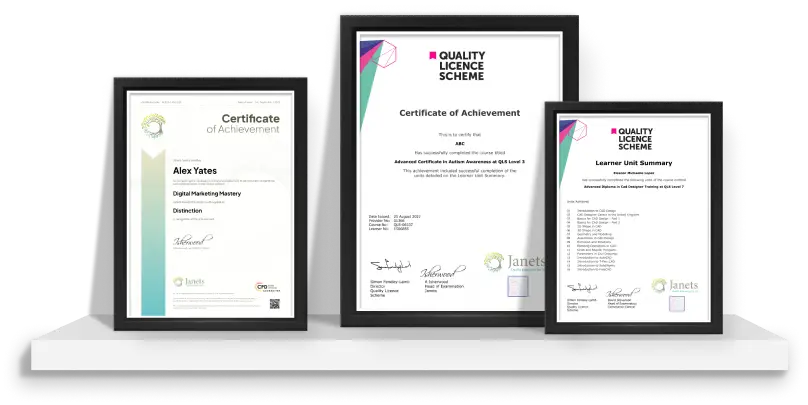
Launch your HR career! Our QLS endorsed Level 4 course equips you with the fundamentals of HR management, recruitment processes, and HR compliance, preparing you to excel in the exciting world of human resources.

Original price was: £319.£25Current price is: £25.
Course Curriculum
| Human Resource Management | |||
| Introduction to Human Resources | 00:20:00 | ||
| Employee Recruitment and Selection Procedure | 00:35:00 | ||
| Employee Training and Development Process | 00:24:00 | ||
| Performance Appraisal Management | 00:22:00 | ||
| Employee Relations | 00:15:00 | ||
| Motivation and Counselling | 00:19:00 | ||
| Ensuring Health and Safety at the Workplace | 00:16:00 | ||
| Employee Termination | 00:15:00 | ||
| Employer Records and Statistics | 00:11:00 | ||
| Essential UK Employment Law | 00:27:00 | ||
| Assignment | |||
| Assignment – Human Resource Management And Recruitment Training | 2 weeks, 1 day | ||
| Order Your Certificate | |||
| Order your Certificate QLS | 00:00:00 | ||

Original price was: £319.£25Current price is: £25. ex Vat
SAVE 92% - OFFER ENDS IN

 14-Day Money-Back Guarantee
- Personal
- Team
Quantity:
Total:
50% discount for orders of 10+ courses
60% discount for orders of 50+ courses
70% discount for orders of 100+ courses
For more personalised package, contact us

Frequently asked questions
Can’t find the anwser you’re looking for ? Reach out to customer support team.
The best HR training programs are often accredited by recognized professional bodies such as the Society for Human Resource Management (SHRM) or the Chartered Institute of Personnel and Development (CIPD). Courses like SHRM Certified Professional (SHRM-CP), SHRM Senior Certified Professional (SHRM-SCP), and CIPD Level 5 Diploma in Human Resource Management are highly regarded.
To become an HR manager, you typically need a combination of education and experience. This usually involves a bachelor's degree in HR, business administration, or a related field, professional HR certifications (e.g., SHRM-CP, SHRM-SCP, PHR, SPHR), experience in various HR roles such as HR assistant or HR specialist, and continuous professional development through workshops, seminars, and advanced courses.
You can be trained in HR by earning a degree in human resources, business administration, or a related field, completing professional HR certification programs (e.g., SHRM-CP, PHR), gaining practical experience through internships, entry-level HR positions, or volunteer work, and attending HR workshops, seminars, and online courses to stay updated with current practices and regulations.
The best course for HR depends on your career goals, but some highly recommended options include SHRM Certified Professional (SHRM-CP), Professional in Human Resources (PHR) from HRCI, CIPD Level 5 Diploma in Human Resource Management, and advanced courses or a master's degree in HR or related fields for those seeking senior positions.
Yes, HR is a good career path. It offers diverse opportunities, job stability, and the chance to make a significant impact on an organization's culture and employee satisfaction. HR professionals are in demand across various industries.
The best HR qualification to have depends on your career stage and goals, but the SHRM-CP, SHRM-SCP, PHR, and SPHR are widely recognized and respected certifications in the HR field.
The most recognized HR certifications globally include SHRM Certified Professional (SHRM-CP) and SHRM Senior Certified Professional (SHRM-SCP), Professional in Human Resources (PHR) and Senior Professional in Human Resources (SPHR) from HRCI, and CIPD qualifications in the UK.
To become an HR trainee, you need to obtain a relevant degree in human resources, business, or a related field, apply for HR internships or trainee programs offered by companies, network with HR professionals and join HR associations to learn about opportunities, and demonstrate strong communication and organizational skills during the application process.
To start working in HR, earn a degree in HR or a related field, gain experience through internships or entry-level positions such as HR assistant or coordinator, obtain professional certifications (e.g., SHRM-CP, PHR) to enhance your credentials, and apply for HR positions while continuously developing your skills through professional development.
Essential HR skills include communication and interpersonal skills, organizational and time management abilities, knowledge of employment laws and regulations, problem-solving and conflict resolution skills, proficiency in HR software and technology, and strategic thinking and decision-making abilities.
Qualifications for HR management typically include a bachelor's or master's degree in human resources, business administration, or a related field, professional HR certifications (e.g., SHRM-CP, SHRM-SCP, PHR, SPHR), several years of experience in various HR roles, and strong leadership and strategic planning skills.
An HR manager should be a strong leader with excellent communication and interpersonal skills, knowledgeable about employment laws and HR best practices, strategic and able to align HR initiatives with business goals, ethical and fair in handling employee relations and conflicts, and proficient in HR technology and data analysis.
HR (Human Resources) and HRM (Human Resource Management) often refer to the same field, though HRM emphasizes the management aspect. Both terms are used interchangeably, but HRM may imply a more strategic approach to managing human resources.
To get better at HR, continuously update your knowledge through courses, certifications, and reading industry publications, gain practical experience in different HR roles, network with HR professionals and join relevant associations, seek feedback and mentorship from experienced HR practitioners, and stay informed about changes in employment laws and HR trends.
HR training can include formal education (bachelor's or master's degree in HR or related fields), professional certifications (e.g., SHRM-CP, PHR), specialized training programs on topics like talent management, employee relations, and HR technology, workshops, seminars, and webinars on current HR practices and trends, and on-the-job training and practical experience through internships and entry-level positions.