- Home
- Career Development
- How to Start a Sales Career in the UK Without Experience
How to Start a Sales Career in the UK Without Experience

Want to start a sales career without previous experience? Many entry-level roles accept applicants from different backgrounds. Employers often consider communication, organisation and customer service skills. However, requirements depend on the employer and industry.
This guide explains realistic routes into UK sales jobs. You’ll explore everyday duties, transferable skills and practical exercises. You’ll also find training options and salary guidance. Use the examples to prepare your first applications.
Can You Start a Sales Career Without Experience?
Yes, some sales employers recruit complete beginners. The National Careers Service recognises direct applications and apprenticeships. It also describes progression from other workplace positions. Previous customer-facing experience can strengthen an application.
For example, hospitality workers regularly answer customer questions. Retail staff often explain products and handle concerns. Volunteers may organise events and speak with visitors. These experiences can demonstrate useful sales behaviours.
Do You Need a Degree?
Many general sales positions don’t require university degrees. Individual employers decide their own entry requirements. Specialist sectors may prefer technical qualifications or relevant knowledge. Examples include pharmaceutical, engineering and technology sales.
Read each vacancy carefully before applying. Don’t assume every sales role has identical requirements.
Can Career Changers Apply?
Career changers can highlight skills from previous employment. Administration develops planning, documentation and follow-up habits. Hospitality provides opportunities for listening and handling complaints. Customer support builds experience explaining choices and resolving problems.
Describe specific situations rather than claiming general abilities. Evidence makes your experience easier for recruiters to assess.
What Does a Sales Professional Actually Do?
Sales professionals connect customers with suitable products or services. Their work usually begins with understanding customer needs. They explain relevant options, answer questions and discuss terms. Many also maintain records and contact existing customers.
Responsibilities differ between employers and sectors. Some positions focus on new customers or leads. Others involve repeat purchases and longer-term relationships.
Common Entry-Level Sales Roles
Retail sales assistant: Supports customers inside shops. Duties may include product explanations, payments and returns.
Telesales representative: Speaks with prospective customers by telephone. The role can involve enquiries, appointments and follow-ups.
Sales development representative: Researches possible business customers. Junior representatives may qualify leads and arrange introductory meetings.
Junior sales executive: Supports sales conversations and commercial opportunities. Tasks depend on the employer’s products and processes.
Sales administrator: Organises orders, records and customer communications. This position can provide exposure to sales operations.
Retail Sales or Business Sales?
Retail sales often involves direct conversations with shoppers. Business-to-business sales usually involves organisations purchasing from other organisations. Business purchases may require several discussions or decision-makers. Neither environment suits every beginner equally.
Compare vacancies before selecting a preferred pathway. Consider your communication preferences and existing knowledge.
How to Start a Sales Career in the UK
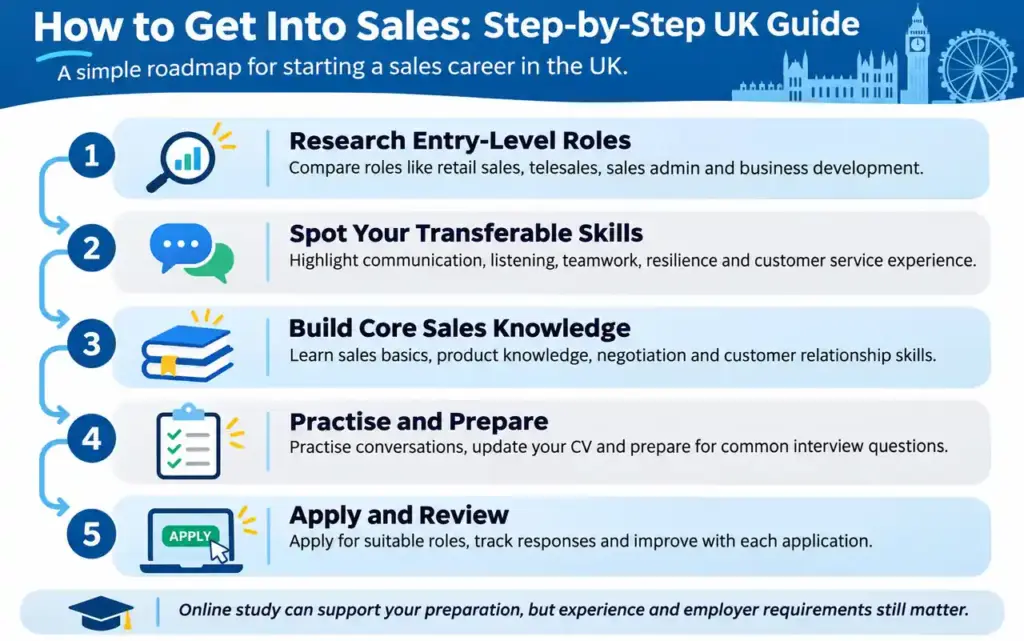
Begin with research, then practise relevant skills. Prepare targeted applications instead of sending identical CVs everywhere. The following steps provide a practical starting framework.
Step 1: Research Entry-Level Vacancies
Search for trainee sales executives and junior sales representatives. Also consider telesales, retail sales and sales administration. Read responsibilities before focusing on advertised earnings.
Record common skills across several suitable vacancies. Check training arrangements, location and working hours. Some positions include weekends or regular travel.
Step 2: Identify Transferable Skills
Review previous jobs, volunteering and education projects. Find examples involving customers, teamwork or organisation.
For instance, café work involves understanding customer requests. An office position may involve accurate record keeping. Charity fundraising can develop confidence starting conversations.
Connect each example with a specific vacancy requirement. Explain what you did and why it mattered. Avoid exaggerating results or inventing achievements.
Step 3: Learn Basic Sales Techniques
Start by understanding a straightforward customer conversation. Ask questions before recommending products or services. Listen for priorities, budgets and practical requirements.
Next, explain how suitable features address those requirements. Invite further questions and discuss possible next steps. Don’t pressure customers or make unsupported claims.
Janets offers Sales Techniques for further learning. Its modules include customer communication and relationship selling.
Step 4: Practise a Customer Conversation
Imagine selling headphones inside a UK electronics shop. A customer needs something suitable for daily commuting.
Customer: “I need comfortable headphones for travelling.”
Salesperson: “Do you prefer wired or wireless models?”
Customer: “Wireless, but battery life matters most.”
Salesperson: “Shall we compare battery life within your budget?”
The salesperson first investigates the customer’s requirements. The discussion then moves towards suitable options. This approach encourages useful conversations rather than rushed recommendations.
Step 5: Understand CRM and Follow-Ups
Customer relationship management involves organising interactions and next steps. Many employers use CRM software for this purpose. Records may contain enquiries, appointments and previous discussions.
Create a fictional record for a practice exercise. Include the enquiry, customer’s priorities and next action.
| Practice Field | Fictional Example |
|---|---|
| Organisation | Example Office Supplies Ltd |
| Enquiry | Printer maintenance |
| Customer priority | Reliable response times |
| Follow-up | Arrange demonstration |
| Status | Awaiting appointment |
Use invented details when practising independently. Actual customer records require appropriate privacy safeguards. The Information Commissioner’s Office explains relevant marketing-data responsibilities.Explore Customer Relationship Management for related concepts.
Step 6: Prepare a Targeted CV
Your CV should reflect each advertised position. Show practical abilities through accurate, specific examples. Mention training only when you actually completed it.
For instance, consider this customer service example:
“Answered customer enquiries and explained available service options.”
Or this administrative example:
“Updated appointment records and coordinated customer follow-up requests.”
These statements describe responsibilities without inventing sales targets. Add measurable achievements only when you can substantiate them.
Step 7: Apply and Prepare for Interviews
Choose roles matching your experience and interests. Research each employer’s customers, products and market. Prepare examples showing communication, reliability and initiative.
Sales interviews may include hypothetical customer situations. Practise asking questions before proposing possible solutions. Explain how you would respond to customer concerns.Follow the employer’s application and communication instructions. Maintain a simple record of applications and responses.
Essential Sales Skills for Beginners
Strong sales conversations require several connected skills. Learn their purpose before practising advanced selling methods.
Communication and Active Listening
Explain information clearly, without unnecessary technical language. Give customers time to describe their requirements. Ask questions when their needs remain unclear.A useful follow-up might be simple. “Is reliability more important than extra features?” This question checks your understanding before continuing.
Product Knowledge
Understand product features, prices and important limitations. Know where to find accurate technical information. Avoid guessing when customers ask unfamiliar questions.
Clear explanations help customers compare realistic options. They also prevent misleading promises during discussions.
Negotiation and Objection Handling
Negotiation involves understanding priorities and discussing possible terms. It doesn’t always involve reducing prices. Customers may prefer different delivery or service arrangements.Imagine a customer questioning a service package’s price. Ask which requirements matter most within their budget. Then explain permitted options and relevant differences.Consider Sales Negotiation Training for additional study.
Organisation and Time Management
Sales employees may balance calls, meetings and quotations. Missed follow-ups can create confusion for customers. Record agreed actions and organise tasks by deadline.Accurate notes also support colleagues handling shared accounts.
Resilience and Professional Conduct
Not every conversation leads to a sale. Rejection is part of many customer-facing positions. Review feedback without taking every outcome personally.Respect customer decisions and avoid unnecessary pressure. Good conduct matters alongside commercial performance.
Four Practical Sales Exercises
You can practise fundamental sales activities before employment. These exercises require no genuine customer information.
Exercise 1: Create a Product Pitch
Choose a familiar product, such as a reusable bottle. Identify its features and likely customer benefits. Prepare a short explanation for a specific customer.Practise presenting your explanation within one minute. Ask someone whether your message sounds clear.
Exercise 2: Respond to Customer Concerns
Imagine hearing three common objections:
- “The price exceeds my budget.”
- “I need time to compare alternatives.”
- “Another supplier offers different features.”
Write respectful responses using open questions. Avoid pressure, invented discounts or exaggerated product claims.
Exercise 3: Build a Simple Sales Funnel
A sales funnel tracks stages within potential purchases. Start with this example:
Enquiry → Qualification → Discussion → Proposal → Decision
Invent five customers with different requirements. Decide which stage matches each fictional customer. Identify a sensible next action for each situation.
Exercise 4: Practise a Telephone Conversation
Telephone sales relies heavily on voice and listening. Prepare a short introduction and three useful questions. Practise with a friend or colleague.Request feedback about your pace, tone and clarity. Janets provides Telesales Executive Training covering telephone selling topics.
Sales Qualifications and Training Routes
Training choices should reflect your experience and goals. Compare employer expectations before choosing a particular course.
Apprenticeships in England
Apprenticeships combine paid work with structured learning. The Sales Executive apprenticeship standard sits at Level 4. Its typical training duration is 18 months. Assessment time is additional to that duration.Individual employers set selection requirements for their vacancies. Apprenticeship arrangements differ across the UK’s four nations. Check your nation’s official apprenticeship guidance before applying.
Self-Paced Online Sales Courses
Online study can introduce sales principles and terminology. Topics may include negotiation, customer relationships and sales planning. Self-paced formats can accommodate other responsibilities.However, courses don’t replace all practical workplace experience. Completion certificates aren’t automatically regulated qualifications. Check recognition, assessment conditions and certificate charges carefully.
Learning Through Work
Some employers provide in-house training or supervised practice. Retail and customer service experience can also help. Beginners might start with administrative or supporting responsibilities.Compare each route against your preferred sales role. Different jobs require different kinds of preparation.
UK Sales Salaries and Career Progression
Sales earnings depend on sector, employer and experience. Geography and commission arrangements can also influence advertised pay.
The National Careers Service provides indicative annual salary ranges.
| Role | Starter Salary | Experienced Salary |
|---|---|---|
| Sales assistant | £19,000 | £27,000 |
| Sales representative | £23,000 | £50,000 |
These figures represent guidance, not promised earnings. Individual vacancies may offer substantially different packages.
Understand Basic Salary and OTE
Some vacancies advertise on-target earnings, usually shortened to OTE. OTE may include commission linked to sales targets. It isn’t necessarily guaranteed take-home pay.Ask employers about basic salary and commission arrangements. Check whether the position involves commission-only compensation. Review payment terms before accepting an offer.
Where Can Sales Careers Lead?
Experience may support movement into account management. Some professionals later explore business development or leadership roles. However, progression depends on skills and employer opportunities.
Those exploring existing customer relationships might study Key Account Management. Experienced professionals might investigate Sales Leadership Training.
Your First 30 Days: A Preparation Plan
A month-long plan can organise your first activities. Adjust the pace according to your circumstances.
Week 1: Explore Suitable Roles
Read ten relevant entry-level vacancy descriptions. Compare responsibilities, locations and salary structures. Select two job types matching your preferences.
Week 2: Practise Essential Skills
Prepare one product pitch and three objection responses. Practise asking questions before suggesting options. Create a sample CRM record using fictional information.
Week 3: Prepare Your Applications
Update your CV with accurate transferable examples. Research several employers and their products. Practise common interview questions with another person.
Week 4: Apply and Review
Apply for roles matching your current requirements. Keep records of applications and interview invitations. Review responses and adjust your preparation.
Continue practising communication and listening throughout the month.
Mistakes to Avoid When Starting Sales
Avoid treating every conversation as a quick transaction. Understanding customer needs should come before product recommendations.
Don’t exaggerate experience, qualifications or previous results. Recruiters may ask you to substantiate claims.
Don’t compare sales vacancies using OTE alone. Check basic pay, working hours and commission conditions.
Finally, avoid contacting prospects without understanding applicable rules. Marketing communications can involve privacy and consent requirements.
Explore Sales Training with Janets
The Sales Professional Career Bundle brings together nine online courses. Topics include sales techniques, negotiation, CRM and telesales. Additional subjects include account management and sales leadership.The bundle is designed for self-paced study. Learning access includes compatible mobile, tablet and computer devices.Consider whether its topics match your current learning needs. Course study doesn’t guarantee employment, promotion or higher earnings.
Final Thoughts
Starting sales work involves research, practice and realistic expectations. Many beginners already possess useful transferable abilities. Focus on communication, customer needs and accurate applications.Compare training routes and actual job requirements. Practise everyday sales conversations before attending interviews.
Explore the Sales Professional Career Bundle through Janets. Consider its sales topics alongside your career preparation.
Can I Get a Sales Job Without Experience?
Yes, some employers recruit applicants without previous sales employment. Customer service experience can strengthen your application. Requirements vary between individual vacancies.
Do I Need GCSEs for Sales?
Not every entry-level position specifies GCSE requirements. However, some employers request English or maths qualifications. Apprenticeships may also have particular eligibility rules.
Which Sales Job Is Suitable for Beginners?
Retail sales and telesales can offer introductory opportunities. Sales administration also provides exposure to customer processes. Compare vacancies against your preferences and skills.
Can I Start a Sales Career at 30?
Yes, career changes are possible at different ages. Previous employment may provide relevant transferable experience. Employers still assess applicants against individual role requirements.
Can I Learn Sales Skills Online?
Online courses cover negotiation, communication and customer relationship management. Practical exercises can complement this learning. Workplace experience remains relevant for many positions.
How Much Do UK Sales Beginners Earn?
The National Careers Service lists £23,000 for starter sales representatives. Retail sales assistant guidance starts at £19,000. Actual pay varies by employer and location.
Is Commission Guaranteed in Sales Jobs?
No, commission often depends on agreed sales targets. Basic salary and OTE aren’t necessarily the same. Check advertised pay structures before accepting employment.
Get a FREE Course