- Home
- Career Guide
- What Is an HLTA? Role, Pay and How to Qualify
What Is an HLTA? Role, Pay and How to Qualify

An experienced teaching assistant may already support lessons, manage small groups and help pupils overcome learning difficulties. But what happens when they want greater responsibility?
So, what is an HLTA, and how does the role differ from that of a regular teaching assistant?
An HLTA (Higher Level Teaching Assistant) is an experienced education support professional who undertakes higher-level classroom responsibilities, including supporting lesson delivery, assessing pupils’ progress and leading planned learning activities under appropriate supervision.
If you’re considering this career path, understanding the responsibilities, salary and qualifications can help you decide whether HLTA progression is right for you.
Quick tool: Work out what an advertised HLTA salary means for you with our FTE vs actual pay calculator ↓
What Is an HLTA?
HLTA stands for Higher Level Teaching Assistant. HLTAs work alongside qualified teachers, supporting classroom learning, pupil development and teaching activities.
In England, nationally recognised HLTA status involves assessment against 33 professional standards. These cover professional knowledge, classroom practice, assessment and supporting pupils’ progress.
The HLTA National Assessment Partnership oversees recognised status assessment through its regional providers.
However, holding an HLTA job title and achieving externally assessed HLTA status are not necessarily the same thing.
For those building their classroom support knowledge, Janets offers the Teaching Assistant Complete Course (TA, SEN, Autism, ADHD & Dyslexia) – CPD Certified, covering teaching assistant responsibilities, curriculum support and different learning needs.
Ready to Build Your Teaching Assistant Skills?
Strengthen the classroom knowledge HLTAs rely on, from curriculum support to SEN, autism, ADHD and dyslexia.
- ✓Teaching assistant roles and responsibilities
- ✓Supporting pupils with SEN, autism, ADHD and dyslexia
- ✓CPD certified, with instant access
What Is an HLTA Responsible For?
An HLTA typically undertakes more advanced classroom duties than a standard teaching assistant. However, responsibilities depend on the school’s staffing structure and job description.
Main Responsibilities of an HLTA
Typical responsibilities include:
- Lesson support: Preparing resources and contributing to planned learning activities.
- Classroom leadership: Leading small groups or whole-class activities under appropriate supervision.
- Pupil assessment: Monitoring progress, recording achievements and sharing feedback with teachers.
- Behaviour management: Supporting positive behaviour and classroom routines.
- SEND support: Adapting learning activities for pupils with special educational needs and disabilities.
- Staff collaboration: Working with teachers and other support staff to maintain effective learning environments.

For example, an HLTA might lead a Year 4 literacy intervention, assess pupils’ understanding and report the outcomes to the class teacher.
Those developing classroom management and assessment knowledge may find Janets’ Level 3 Diploma in Teaching and Classroom Management relevant.
Similarly, the SEN Teaching Assistant course covers SEN support, teaching approaches and identifying individual learning needs.
Can an HLTA Cover a Teacher’s Class?
Yes, under appropriate arrangements.
The Education (Specified Work) (England) Regulations 2012 allow suitably experienced support staff to carry out specified teaching activities under the direction and supervision of a qualified or nominated teacher.
However, HLTAs do not automatically hold Qualified Teacher Status (QTS).
How Is an HLTA Different From a Teaching Assistant?
The main distinction concerns the level of responsibility and the activities assigned by the school.
| Area | Teaching Assistant (TA) | Higher Level Teaching Assistant (HLTA) |
|---|---|---|
| Classroom role | Supports teaching activities | Takes on advanced teaching support |
| Lesson planning | Usually follows teacher plans | May contribute more extensively |
| Group activities | Supports individuals and groups | May lead planned group or class activities |
| Assessment | Helps observe progress | May have wider assessment duties |
| Salary | Depends on school grading | Often higher, but not guaranteed |
These differences are not identical across every school.
For a comparison of earlier qualification routes, see level 2 vs level 3 teaching assistant.
How Much Does an HLTA Earn in the UK?
HLTA salary in the UK varies by employer, location, responsibilities and contracted working hours. There is no single nationally fixed salary for every HLTA.
HLTA Salary Examples in 2026
The following advertised school vacancies show how pay can differ.
| School and location | Full-Time Equivalent (FTE) | Actual annual salary |
|---|---|---|
| Thorner CE Primary School, Leeds | £27,709–£30,023 | £20,913–£22,659 |
| Harris Primary Academy East Dulwich, London | £43,659–£45,696 | £36,707–£38,420 |
Source: GOV.UK Teaching Vacancies, October–November 2026. These are individual job advertisements, not national salary averages.
The London vacancy also includes specialist phonics leadership responsibilities, making it unsuitable as a typical salary benchmark.
Why Is Actual HLTA Pay Sometimes Lower?
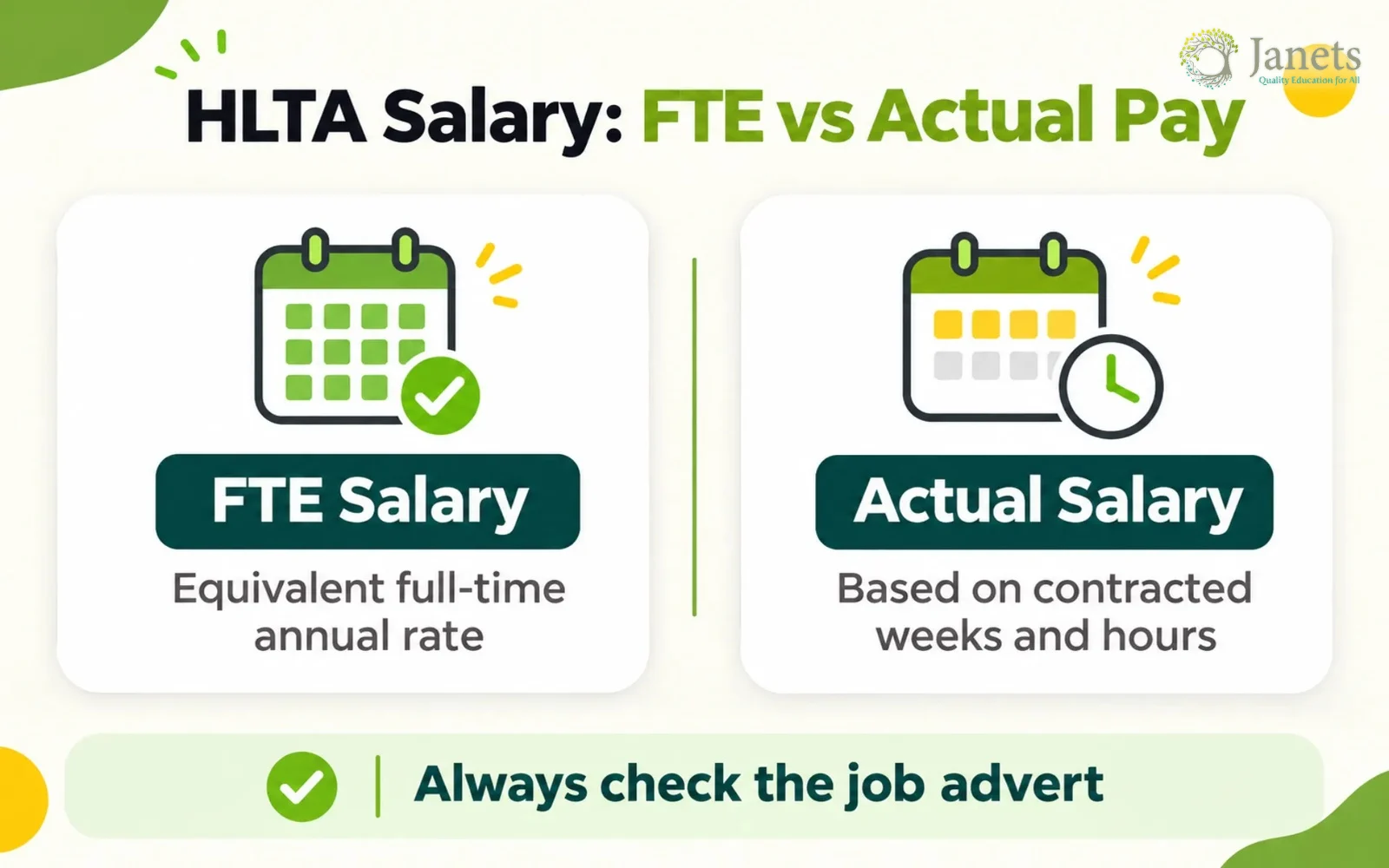
Many HLTAs work term-time-only contracts. Consequently, their actual annual earnings may be lower than the advertised full-time-equivalent salary.
Before applying, check the school’s pay grade, contracted hours, term-time arrangements and additional responsibilities.
HLTA Pay Calculator: FTE vs Actual Pay
Turn an advertised full-time-equivalent (FTE) salary into an estimate of what you would actually earn.
Estimated annual pay
£0
Per month (before tax)
£0
Share of FTE salary
0%
This is an estimate, not a pay offer. Schools and councils work out pro-rata pay in different ways, so always check the actual salary on the job advert or ask the school.
Next steps
- Building your classroom knowledge? See the Teaching Assistant Complete Course.
- Preparing for higher-level duties? Explore the Level 4 Certificate for Higher Level Teaching Assistants.
- Compare with standard TA pay in our Teaching Assistant Salary UK guide.
What Qualifications Do You Need to Be an HLTA?
Schools set their own recruitment criteria, so externally assessed HLTA status is not a universal statutory requirement for every position titled HLTA.
However, nationally recognised HLTA status has specific assessment requirements.
Experience and English and Maths Requirements
Candidates seeking recognised status generally need:
- Relevant classroom support experience.
- Opportunities to demonstrate the 33 HLTA standards.
- Support from their employing school or organisation.
- Accepted Level 2 or higher English and mathematics qualifications.
According to HNAP qualification guidance, accepted qualifications include GCSE grade 4/C or above and Functional Skills Level 2.
Individual employers may request additional qualifications or specialist experience.
What Is an HLTA Qualification, and Is It the Same as Status?
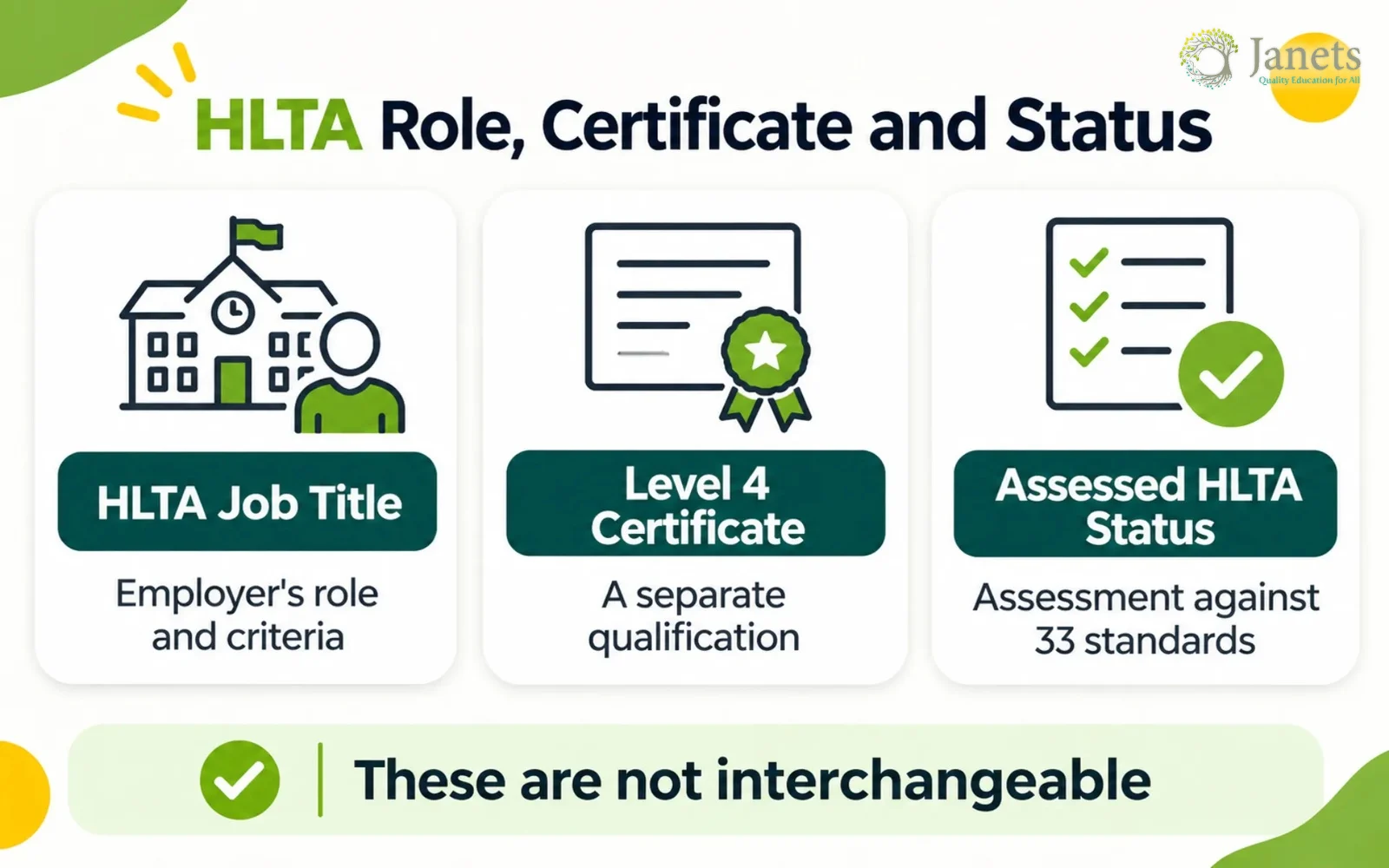
A Level 4 HLTA certificate and nationally assessed HLTA status are different.
The Level 4 qualification develops knowledge and skills relevant to higher-level classroom support. Recognised HLTA status, however, requires assessment against the professional standards.
Janets offers the Focus Awards Level 4 Certificate for Higher Level Teaching Assistants (RQF), covering child development, safeguarding, inclusive practice, behaviour management and curriculum support.
Completing this qualification does not automatically award HNAP-assessed HLTA status.
For broader qualification comparisons, see teaching assistant qualifications.
Preparing for Higher-Level Classroom Support?
Develop knowledge relevant to HLTA duties. Note: the certificate does not itself award HNAP-assessed HLTA status.
- ✓Child development and safeguarding
- ✓Inclusive practice and behaviour management
- ✓Curriculum support for higher-level roles
How Do You Become an HLTA in England?
The route depends on your existing experience, qualifications and whether you want an HLTA position or nationally assessed status.
Five Practical Steps Towards HLTA Status
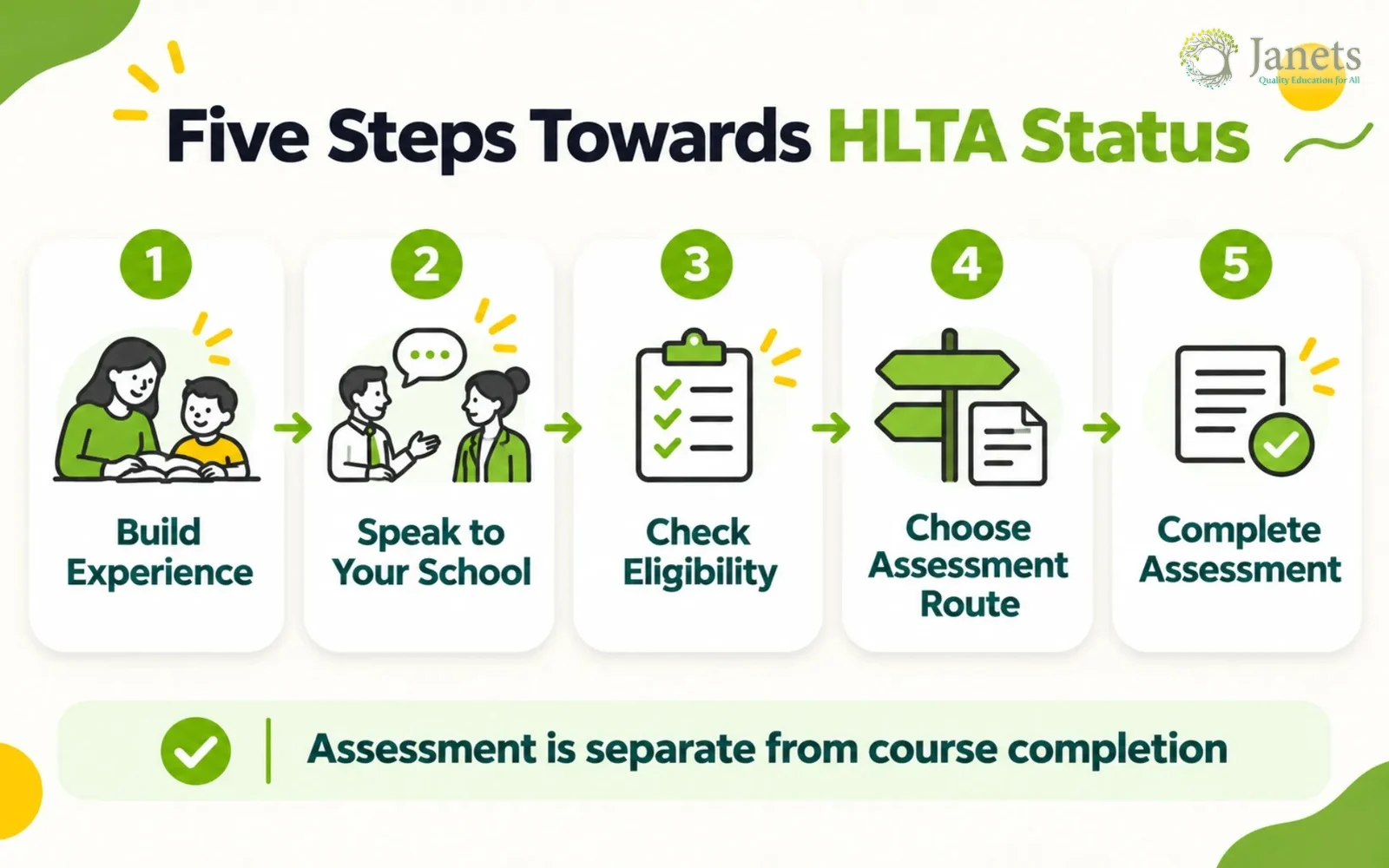
- Build Classroom Experience: Develop experience supporting lessons, managing learning activities and working with pupils with different educational needs.
- Discuss Progression With Your School: Speak with your headteacher or line manager about professional development, increased responsibilities and assessment support.
- Check Your Qualifications: Review your English and maths certificates and consider how your current practice demonstrates the HLTA standards.
- Investigate Recognised Assessment: Contact an appropriate HLTA National Assessment Partnership regional provider to understand eligibility and preparation arrangements.
- Prepare Evidence and Complete Assessment: Provide evidence of your professional practice and complete the required assessment. Candidates who successfully demonstrate the standards can achieve nationally recognised HLTA status.
What Is an HLTA Assessment?
HLTA assessment evaluates whether an experienced support professional meets the 33 standards through evidence of their everyday work, written tasks and professional discussion.
Assessment arrangements depend on the approved provider. Completing a general teaching assistant course does not automatically confer HLTA status.
For broader training expenses, see teaching assistant course cost.
Another progression option is the Level 5 Specialist Teaching Assistant apprenticeship. However, apprenticeship completion and nationally assessed HLTA status remain separate achievements.
Is Becoming an HLTA Worth It?
Becoming an HLTA can be worthwhile for experienced teaching assistants who enjoy classroom support and want greater responsibility.
However, professional progression should be considered alongside workload and employment conditions.
| Potential benefits | Things to consider |
|---|---|
| Greater classroom responsibility | Increased planning and preparation |
| Opportunities for higher pay | Salary increases are not automatic |
| Broader professional experience | Additional school expectations |
| Potential career progression | Training and assessment commitments |
Before progressing, ask whether the position offers a different pay grade, appropriate preparation time and sufficient professional support.
The value of HLTA progression depends on your career goals, workplace and preferred responsibilities.
Final Thoughts
Understanding what an HLTA is helps you assess whether higher-level classroom responsibilities suit your professional goals.
Consider your experience, qualifications and employer expectations before choosing a progression route.
Janets’ Teaching Assistant Complete Course (TA, SEN, Autism, ADHD & Dyslexia) – CPD Certified provides relevant professional-development knowledge to complement classroom experience, without replacing the recognised HLTA assessment process.
Frequently Asked Questions
Is an HLTA Equivalent to a Degree?
No. HLTA status is professional recognition based on meeting specified standards, not a university degree. A Level 4 HLTA certificate is also separate from degree-level study.
Can You Become an HLTA Without a Degree?
Yes. A university degree is not generally required for HLTA status assessment. Relevant experience, the professional standards and accepted English and maths qualifications are more important.
Can an HLTA Teach a Class Independently?
An HLTA may lead planned classroom activities without the supervising teacher being physically present. However, specified teaching work must remain under appropriate direction and supervision arrangements.
Does HLTA Status Guarantee a Pay Rise?
No. Achieving HLTA status does not automatically increase your salary. Pay depends on your employer, contracted position, responsibilities and school grading arrangements.
How Long Does It Take to Become an HLTA?
There is no fixed timeframe for becoming a Higher Level Teaching Assistant. It depends on your existing classroom experience, qualifications and readiness for assessment. Experienced teaching assistants may progress more quickly, while others need additional time to develop their skills and gather evidence against the 33 HLTA professional standards.
Get a FREE Course