- Home
- Career Guide
- How to Learn BSL at Home: A 30-Day Starter Plan
How to Learn BSL at Home: A 30-Day Starter Plan
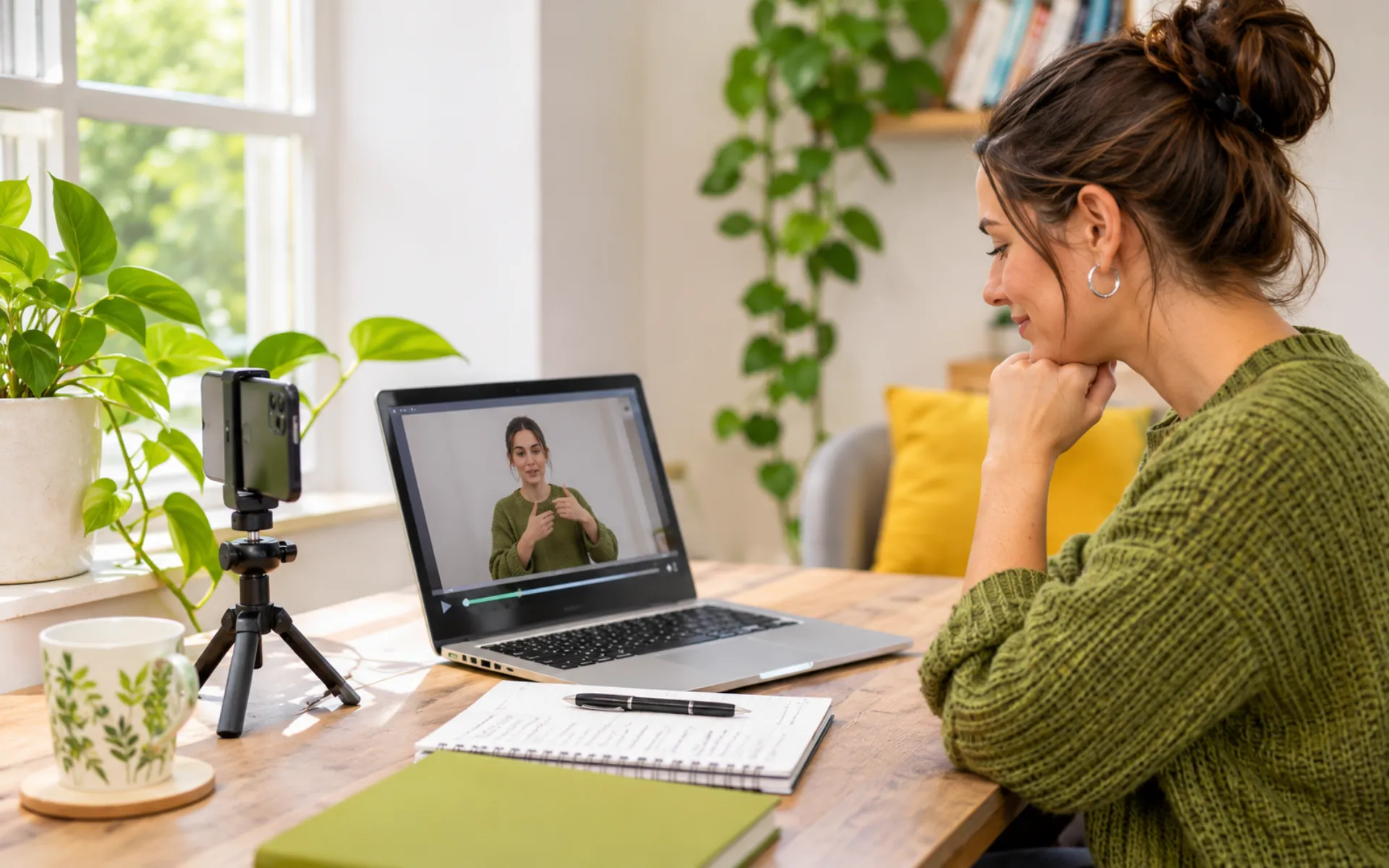
Want to learn British Sign Language (BSL) but don’t know where to start? You don’t need to attend a classroom to begin. With reliable video lessons, regular practice and a clear routine, you can start learning BSL at home.
This 30-day BSL starter plan takes you from basic fingerspelling to everyday signs and simple communication exercises. You’ll practise for around 15 minutes daily, review your progress and gradually build confidence.
If you’re completely new to signing, our guide on how to learn British Sign Language provides a useful introduction.
Can You Learn BSL at Home as a Complete Beginner?
Yes, you can learn the basics of BSL at home using videos, online resources and independent practice.
However, BSL isn’t simply English communicated through hand gestures. It has its own grammar and uses hand movements, facial expressions and body language to convey meaning, as explained by RNID.
Learning independently is a useful starting point, but practising with fluent signers and receiving feedback from qualified tutors can help you develop more accurate communication skills.
If you would prefer more structured learning, Janets offers a British Sign Language (BSL) Level 1 & 2 course covering fingerspelling, everyday vocabulary, conversations and deaf awareness through self-paced online training.
What Do You Need to Start Learning BSL at Home?
You don’t need expensive equipment. A few everyday resources are enough to get started:
Phone or laptop: Watch BSL lessons and video demonstrations.
Mirror or camera: Observe your hand movements and facial expressions.
Notebook: Record new vocabulary and track your progress.
BSL learning resources: Use reliable videos, dictionaries and practice exercises.
For checking individual signs, try UCL’s BSL SignBank dictionary. It includes documented British Sign Language vocabulary and regional variations.
Choose a quiet, well-lit space where you can move your hands comfortably and see video demonstrations clearly.
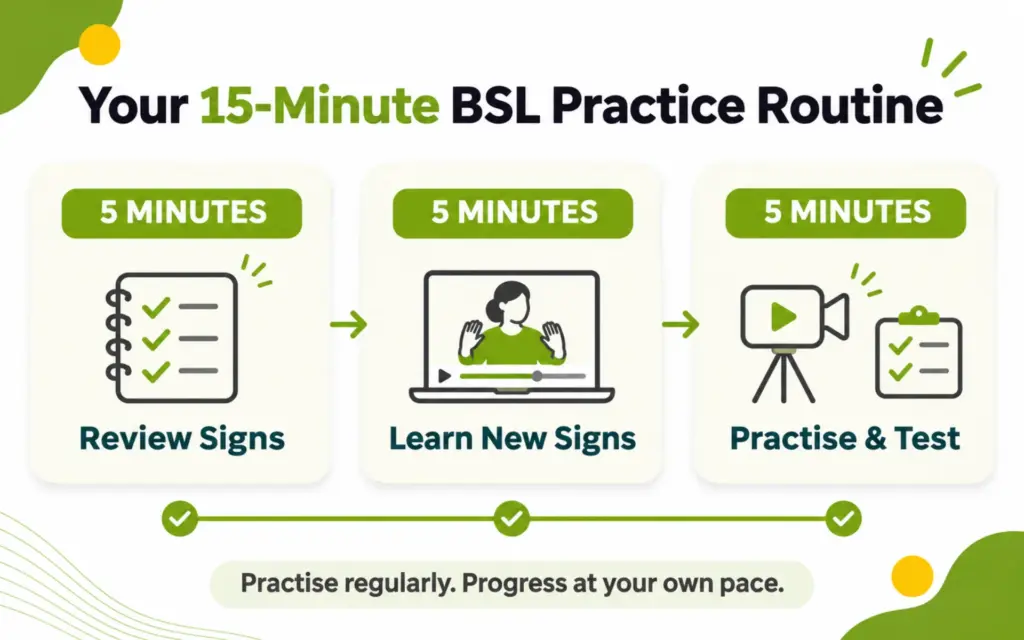
Your 15-Minute Daily BSL Practice Routine
You don’t need hours of study every day. Begin with a manageable routine and increase your practice time when you’re ready.
Try this simple approach:
| Time | Activity |
|---|---|
| 5 minutes | Review previously learned signs and fingerspelling. |
| 5 minutes | Watch demonstrations and practise new vocabulary. |
| 5 minutes | Test your memory, watch signing without captions or record yourself. |
Include both expressive practice (producing signs) and receptive practice (understanding someone else’s signing).
Remember, 15 minutes is a suggested starting routine, not a guaranteed route to proficiency.
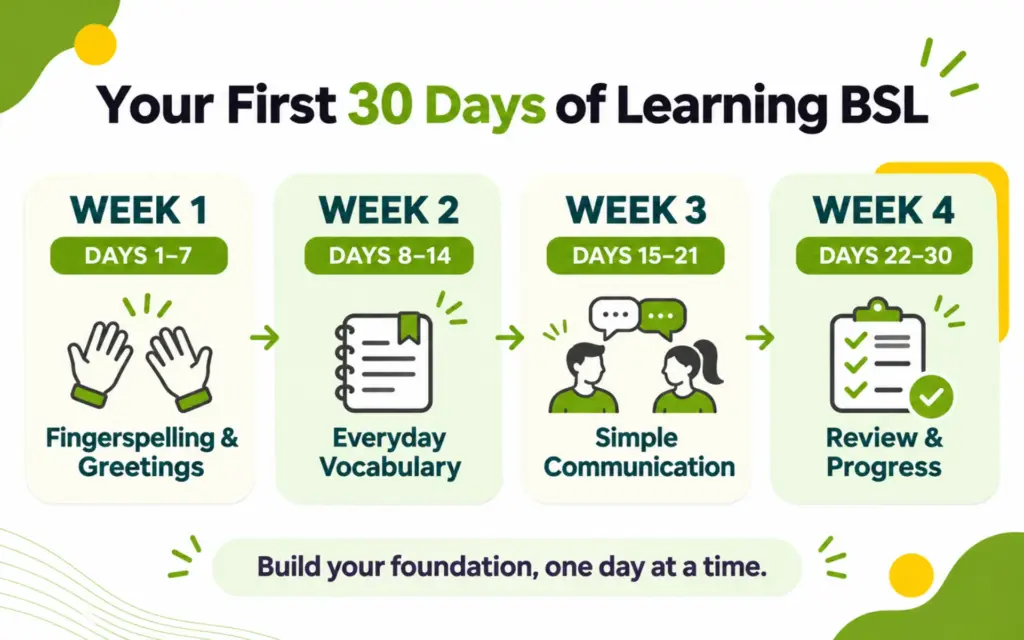
Your 30-Day BSL Learning Plan for Beginners
This plan introduces new skills gradually, with regular revision to help reinforce your learning. Use reliable BSL video demonstrations throughout rather than relying on written descriptions of hand movements.
Week 1 (Days 1–7): Learn Fingerspelling and Greetings
Start with the two-handed BSL fingerspelling alphabet, basic greetings and simple introductions.
| Day | Your learning task |
|---|---|
| Day 1 | Watch an introductory BSL video. Observe the signer's hands, face and body movements. |
| Day 2 | Learn fingerspelling letters A–M using a verified demonstration. |
| Day 3 | Practise letters N–Z, then review the complete alphabet. |
| Day 4 | Fingerspell your name and two familiar names. |
| Day 5 | Learn three common greetings from reliable BSL videos. |
| Day 6 | Follow a beginner lesson demonstrating a simple introduction. |
| Day 7 | Record yourself fingerspelling and test your recognition of familiar letters. |
Weekly checkpoint: Can you recognise familiar fingerspelled letters and reproduce the greetings you’ve practised?
Accuracy matters more than speed. Focus on clear movements before trying to sign faster.
Week 2 (Days 8–14): Build Everyday BSL Vocabulary
Now that you’ve explored fingerspelling, start building vocabulary for everyday situations.
Our guide to basic BSL signs can help you choose useful vocabulary for your daily practice.
| Day | Your learning task |
|---|---|
| Day 8 | Learn BSL numbers 1–5 from a reliable video demonstration. |
| Day 9 | Practise numbers 6–10 and revise all ten numbers. |
| Day 10 | Learn three family-related signs. |
| Day 11 | Review greetings, numbers and family vocabulary. |
| Day 12 | Choose three everyday signs relevant to your routine. |
| Day 13 | Watch short BSL videos and identify familiar signs without captions. |
| Day 14 | Test your vocabulary recall and record any signs you find difficult. |
Weekly checkpoint: Can you remember several everyday signs and recognise them when another person signs?
Don’t worry if you forget some vocabulary. Revisit difficult signs instead of learning more before you’re ready.
Week 3 (Days 15–21): Practise Simple BSL Communication
This week, move beyond individual signs and begin practising short, modelled exchanges.
| Day | Your learning task |
|---|---|
| Day 15 | Learn a few signs relating to days, dates or time. |
| Day 16 | Practise three useful food or drink signs. |
| Day 17 | Review your vocabulary without looking at your notes first. |
| Day 18 | Watch a short signed introduction and identify familiar vocabulary. |
| Day 19 | Follow a simple question-and-answer exchange demonstrated by a fluent signer. |
| Day 20 | Observe how facial expressions and body movements contribute to meaning. |
| Day 21 | Practise a short modelled exchange and record yourself for review. |

Weekly checkpoint: Can you understand parts of a familiar signed exchange and reproduce a short introduction?
Avoid translating English sentences word for word into BSL. Follow demonstrations that show how the language is naturally structured.
Week 4 (Days 22–30): Improve Confidence and Check Your Progress
Your final nine days focus on revision, recognising familiar signing and identifying areas for improvement.
| Day | Your learning task |
|---|---|
| Day 22 | Revise fingerspelling and check your handshapes against video examples. |
| Day 23 | Review numbers, greetings and everyday vocabulary. |
| Day 24 | Practise a familiar introduction without following the video simultaneously. |
| Day 25 | Use a BSL dictionary to check selected signs and observe regional variations. |
| Day 26 | Watch a fluent signer and identify signs you've already learned. |
| Day 27 | Practise with a signing partner or tutor if possible, or follow a guided video exercise. |
| Day 28 | Record a short introduction based on verified examples. |
| Day 29 | Test your fingerspelling, vocabulary recognition and familiar exchanges. |
| Day 30 | Compare your recordings, review difficult signs and set goals for your next month. |
Final checkpoint: Compare your latest recording with your first week’s practice. Notice improvements in recall, signing clarity and recognition.
You don’t need to remember every sign perfectly. Identify what you’ve learned and what needs more practice.
How Do You Know If Your BSL Is Improving?
Progress isn’t only about memorising vocabulary. You may notice that you can recognise familiar signs more easily, fingerspell names more comfortably or follow parts of a beginner conversation.
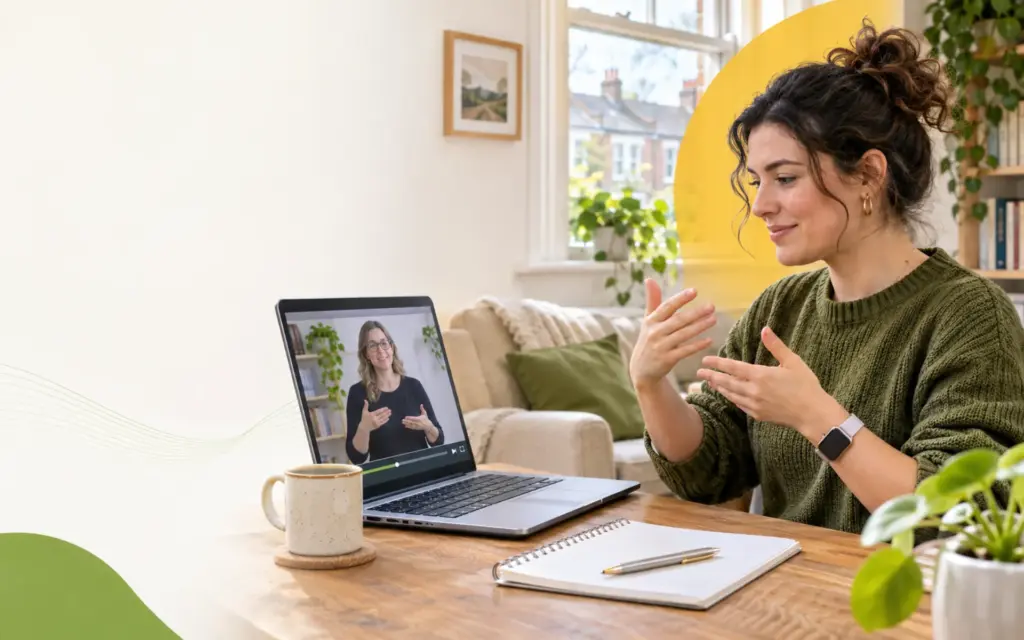
To check your progress:
Review recordings from different weeks.
Test whether you recognise signs without captions.
Practise familiar vocabulary without referring to notes.
Ask a qualified tutor or fluent signer for feedback when possible.
Self-assessment has limitations. The National Deaf Children’s Society’s guidance on learning BSL explains the value of learning with qualified teachers who can identify mistakes and help improve your signing.
What Should You Do After 30 Days of Learning BSL?
Once you’ve completed your starter plan, continue practising familiar vocabulary and gradually introduce new topics. Watching fluent Deaf signers and finding opportunities for real communication can help you develop further.
Progress varies between learners. For a clearer picture, read about how long it takes to learn BSL and what to expect as you develop your skills.
If you would prefer more structured learning, Janets offers a British Sign Language (BSL) Level 1 & 2 course covering fingerspelling, everyday vocabulary, conversations and deaf awareness through self-paced online training.
This can be a useful way to continue developing your knowledge alongside opportunities to practise with fluent signers.
Frequently Asked Questions
Can I Learn BSL at Home for Free?
Yes. Free BSL videos, fingerspelling charts and online dictionaries can help you begin learning. These resources are useful for introductory practice, although guidance from qualified teachers and fluent signers becomes increasingly valuable as you progress.
How Can I Practise BSL Without a Partner?
Use video demonstrations, practise fingerspelling, record yourself and test your recognition of signs without captions. You can also revisit familiar signed conversations and compare your movements with reliable examples.
Can I Become Fluent in BSL in 30 Days?
No, 30 days should not be treated as enough time to become fluent in BSL. However, consistent practice can help you develop introductory vocabulary, fingerspelling skills and useful learning habits. Fluency requires much more experience and interaction with other signers.
Start Your BSL Learning Journey at Home
Learning BSL at home becomes easier when you have a clear plan and realistic expectations.
Start with fingerspelling, practise everyday vocabulary and make time to review what you’ve learned. Your first 30 days are simply the beginning of a longer, rewarding learning journey.
Get a FREE Course