How to Support Dyslexic Students: 20 Classroom Adjustments
Knowing how to support dyslexic students matters in every classroom, because dyslexia is common. The British Dyslexia Association estimates that around one in 10 people in the UK is dyslexic, so in a typical class you are likely to be teaching several dyslexic pupils, whether or not they have been identified.
Official figures show only part of the picture. The Department for Education’s 2025/26 SEN statistics record 158,833 pupils on SEN support and 21,384 pupils with an EHC plan whose primary need is a specific learning difficulty (SpLD), the category that includes dyslexia. Many more dyslexic pupils have no formal record at all.
This guide gives you 20 practical classroom adjustments, grouped by task, so you can quickly find what helps with reading, writing, instructions, maths, exams and confidence. It also explains the 2025 expert definition of dyslexia, the teaching assistant’s role in interventions and how to support exam access arrangements in 2026.
How Can You Support Dyslexic Students?
You can support dyslexic students by reducing unnecessary reading and writing load, teaching literacy skills explicitly and giving them other ways to access and show learning. Practical adjustments include pre-teaching vocabulary, providing printed notes, using assistive technology, allowing extra time and protecting confidence. Most adjustments are low-cost and help other pupils too.
Two ideas sit behind every adjustment in this guide. First, separate the learning goal from the literacy barrier. If the lesson is about the water cycle, a pupil should not fail because they cannot copy a paragraph from the board. Second, keep teaching literacy. Adjustments should give access now while structured teaching builds reading and spelling skills over time.
What Is Dyslexia? The 2025 Definition
For many years, schools in England relied on the definition from the Rose Review in 2009. In 2025, a Delphi study led by Professor Julia Carroll and published in the Journal of Child Psychology and Psychiatry brought together academics, specialist teachers, educational psychologists and people with dyslexia to agree an updated definition. You can read the published study in full.
The panel agreed that difficulties with reading fluency and spelling are key markers of dyslexia across ages and languages. The proposed definition describes dyslexia as a set of processing difficulties that affect how a person learns to read and spell. The SpLD Assessment Standards Committee (SASC) has recommended that assessors use the new definition.
What this means in class:
- Dyslexia is about how the brain processes written language, not about intelligence or effort.
- Slow, effortful reading and persistent spelling difficulties are central, even in pupils who read accurately.
- Dyslexia often occurs alongside other needs, such as ADHD, developmental language disorder or dyspraxia.
Signs a Teaching Assistant Might Notice
It is not a TA’s job to diagnose dyslexia, but you often see the signs first. Share what you notice with the class teacher or SENCO.
- Primary: difficulty learning letter sounds, confusing similar letters, slow and laboured reading, spelling the same word differently on one page, avoiding reading aloud.
- Secondary: reading accurately but very slowly, poor spelling in written work, difficulty copying from the board, trouble organising extended writing, tiredness after reading-heavy lessons.
- At any age: a clear gap between what the pupil can say and what they can write, strong verbal reasoning, and frustration or avoidance around literacy tasks.
20 Classroom Adjustments for Dyslexic Pupils
Pick the adjustments that match the pupil’s biggest barriers and agree them with the teacher. You do not need all 20 at once.
Reading
1. Pre-teach key vocabulary. Introduce subject words before the lesson, with meanings and a picture, so the pupil can recognise them in the text.
2. Never cold-call reading aloud. Ask privately whether the pupil would like to read, and give them the passage in advance if they do.
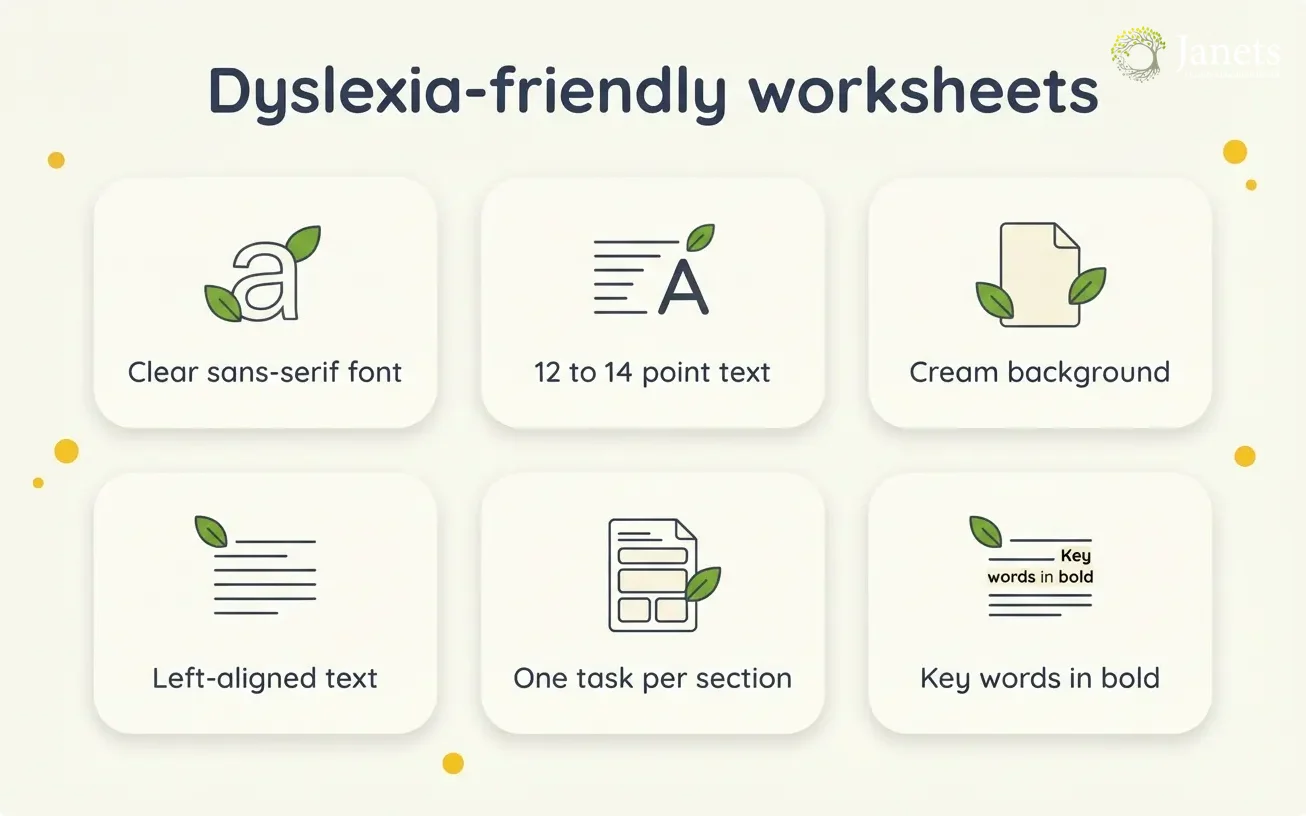
3. Make text readable. Use a clear sans-serif font, 12 to 14 point, good line spacing, left-aligned text and an off-white or cream background. The BDA’s guidance for educators is a useful reference on dyslexia-friendly materials.
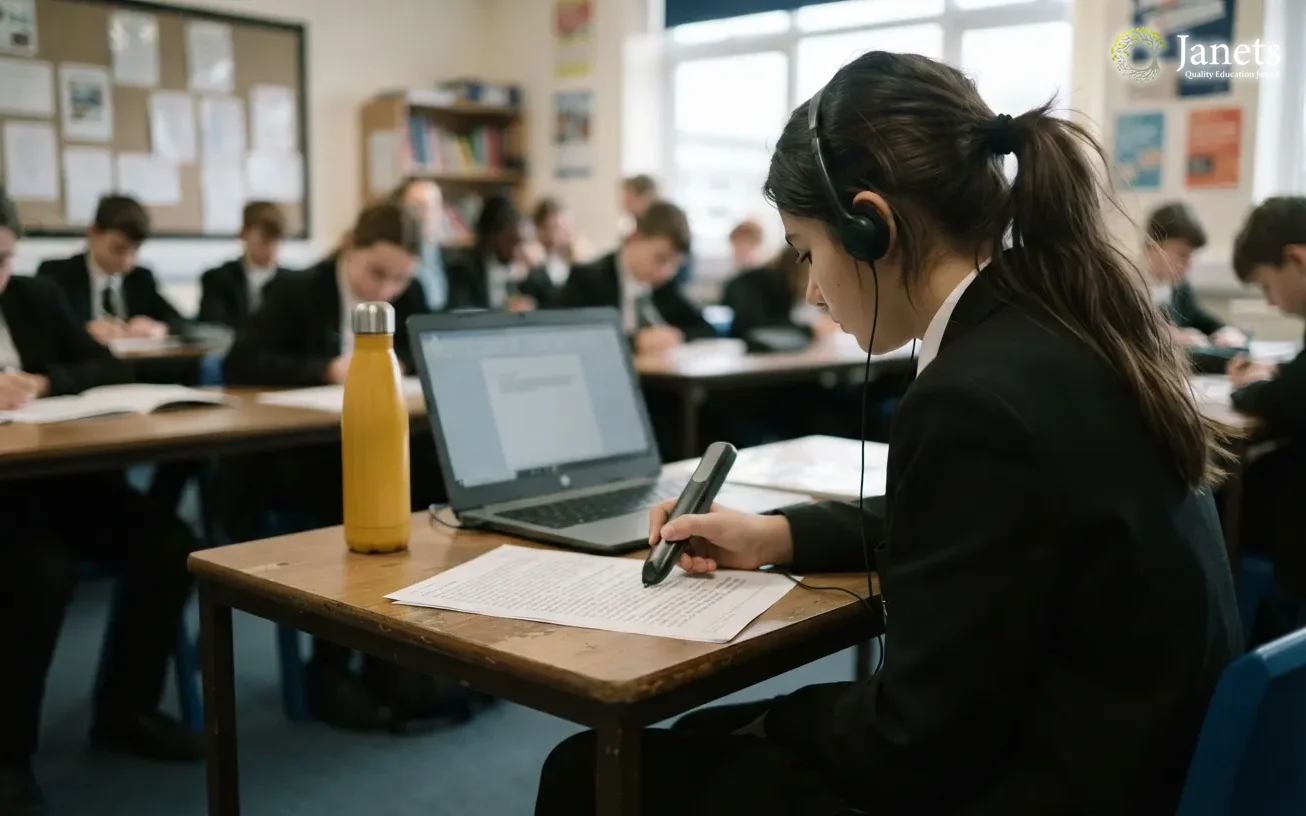
4. Use reading tools. Reading rulers, text-to-speech software or exam-approved reading pens let pupils access text at their thinking level.
5. Share the reading load. Paired reading, audio versions of class texts and summaries of long passages keep pupils in the lesson’s learning.
Writing and Spelling
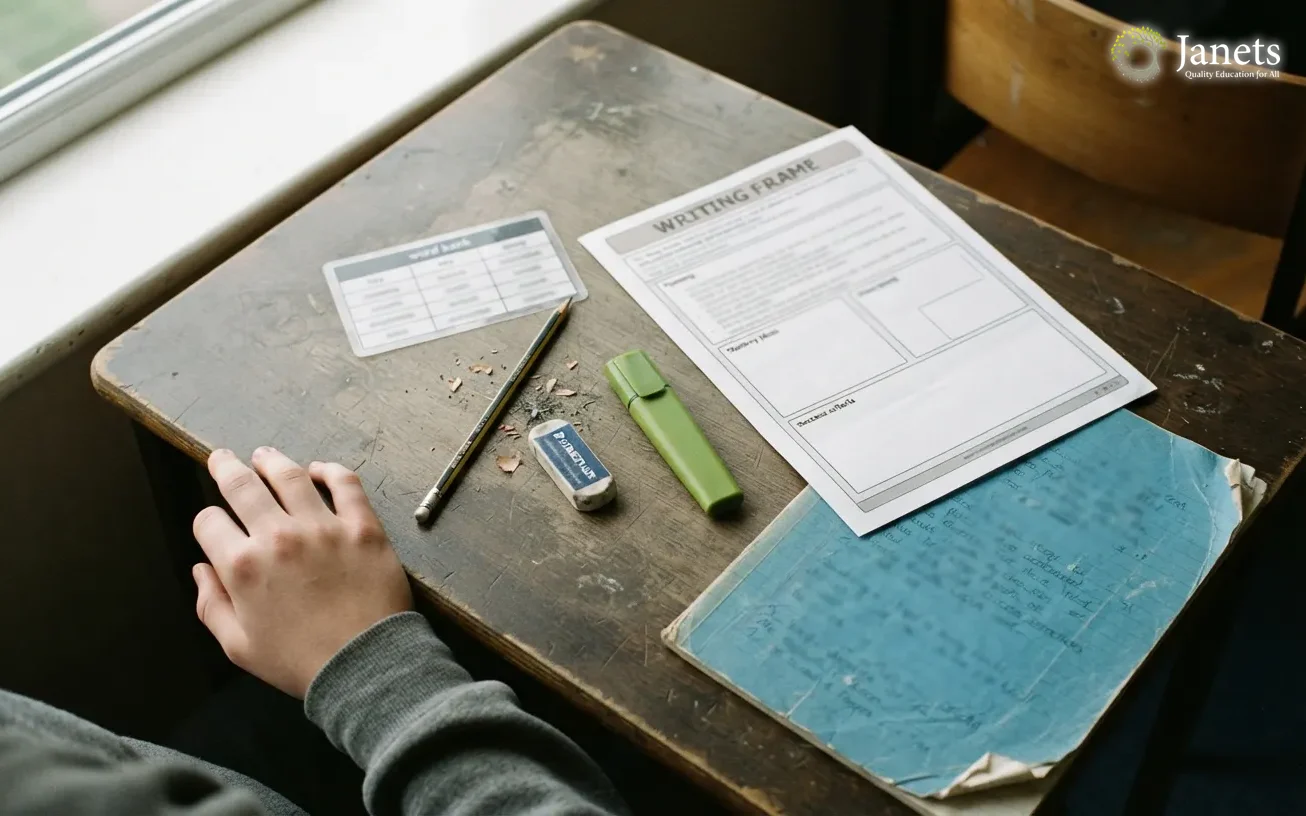
6. Provide writing frames and sentence starters. Structure reduces the load of planning and organising.
7. Give topic word banks. A small list of key spellings on the desk saves time and frustration.
8. Offer speech-to-text or typing. Many dyslexic pupils can express ideas far better when handwriting and spelling are not the bottleneck.
9. Mark content and spelling separately. Focus feedback on ideas and understanding, and choose two or three useful spellings to work on, not every error.
10. Teach spelling patterns explicitly. Short, regular, structured practice of patterns and high-frequency words works better than weekly lists to memorise.
Instructions and Memory
11. Give one instruction at a time, and write it down. Spoken instructions disappear; a sticky note or the board keeps them visible.
12. Don’t make pupils copy from the board. Provide printed notes, a photo of the board or a partly completed handout.
13. Use checklists for multi-step tasks. A short numbered list helps pupils keep their place and see their progress.
14. Allow extra processing time. Give time to read questions and think before expecting an answer.
Maths
15. Provide number supports. Multiplication grids, number lines and worked examples reduce memory load so pupils can focus on reasoning.
16. Read word problems aloud. Many dyslexic pupils understand the maths but are slowed down by the reading.
Assessment and Exams
17. Build the normal way of working. If a pupil needs a word processor, reader or extra time, make it part of everyday classwork so it is genuine and familiar by exam time.
18. Offer alternatives to written tests. Oral questioning, labelled diagrams or presentations can show what pupils know during ongoing assessment.
Confidence and Wellbeing
19. Correct privately and praise specifically. Public correction of reading or spelling quickly erodes confidence. Specific praise for ideas, effort and strategies builds it.
20. Help the pupil understand their dyslexia. Explain in simple terms what dyslexia is, what they are good at and which tools help. Pupils who understand their profile are more likely to ask for what they need.
Structured Literacy Interventions and the TA's Role
Classroom adjustments give access, but most dyslexic pupils also need structured, systematic teaching of reading and spelling. Teaching assistants often deliver these interventions, and they work best when:
- The intervention is structured and evidence-based, with clear sessions and progression.
- The TA is trained to deliver it and follows the programme faithfully.
- Sessions are short, frequent and consistent, such as several sessions a week rather than one long one.
- The intervention links back to class. Share what the pupil practised with the teacher so they can reinforce it in lessons.
- Timing is planned. Avoid always removing the pupil from the same subject, especially one they enjoy or are good at.
Keep a simple record of progress, such as words read correctly per minute or spelling patterns secured, and review it with the SENCO every half term.
How Dyslexia Support Changes From Primary to Secondary
The same pupil can need very different support at different ages. Planning ahead for these shifts prevents a confident primary pupil from struggling in Year 7.
| Stage | Main literacy demand | Most useful support |
|---|---|---|
| Key Stage 1 | Learning phonics and early decoding | Daily structured phonics, extra practice, multisensory letter-sound work |
| Key Stage 2 | Reading fluency and longer writing | Fluency practice, writing frames, word banks, early use of typing |
| Key Stage 3 | Reading across many subjects with different teachers | Shared pupil profile for every teacher, printed notes, pre-taught subject vocabulary |
| Key Stage 4 | Exam-length reading and writing under time pressure | Established normal way of working, assistive technology, exam technique practice |
The move to secondary school is a particular pinch point. A pupil may go from one familiar teacher to ten or more, each with different expectations. A one-page profile shared with every subject teacher, listing the pupil’s strengths, difficulties and the three adjustments that help most, gives every teacher the same starting point. TAs in Year 7 can check that the profile is being used and give feedback to the SENCO when it is not.
Assistive Technology That Helps
Assistive technology can transform access to learning. The table below shows common tools and practical tips.
| Tool | Helps with | TA tip |
|---|---|---|
| Text-to-speech software | Reading worksheets, websites and digital texts | Check the voice speed suits the pupil, and teach them to use it independently |
| Speech-to-text dictation | Getting ideas down without spelling barriers | Teach the pupil to plan first, then dictate, then edit |
| Reading pens | Reading printed text, including in some exams | Use regularly in class so it becomes the normal way of working |
| Word processors with spellcheck | Extended writing and editing | Check whether spellcheck is allowed in assessments before relying on it |
| Mind-mapping tools | Planning and organising ideas | Use templates for common tasks such as essays and reports |
| Audiobooks | Accessing class texts at full comprehension level | Pair with the printed text where possible |
Exam Access Arrangements in 2026
For GCSEs and A levels, access arrangements such as 25% extra time, a reader or computer reader, a scribe or a word processor follow the Joint Council for Qualifications’ Access Arrangements and Reasonable Adjustments regulations. JCQ amended the 2025/26 document in March 2026 and has said it will not publish a new version for 2026/27 while it reviews how it consults and communicates changes, so schools should check the current document on the JCQ website.
Arrangements must reflect the pupil’s normal way of working, and evidence matters. Teaching assistants can help by:
- recording which arrangements the pupil uses in class and how often
- noting whether extra time, a reader or a word processor actually improves the completeness or quality of work
- keeping marked mock papers that show the impact of arrangements
- making sure technology such as a word processor or reading pen is used routinely, not introduced just before exams
The SENCO manages applications, but the everyday evidence often comes from the adults who work alongside the pupil.
 92% OFF
Support Dyslexic Pupils With Confidence
One self-paced online course covering dyslexia, autism, ADHD and SEN support, plus curriculum, assessment and monitoring for teaching assistants.
What Not to Do
- Don’t ask pupils to read aloud without warning.
- Don’t make them copy long passages from the board.
- Don’t cover every spelling error in red pen.
- Don’t treat slow reading as lack of effort or say “try harder”.
- Don’t remove them from the same favourite lesson every time for an intervention.
- Don’t assume a single tool, such as a coloured overlay, will solve dyslexia. Some pupils find tinted overlays more comfortable, but they are not a treatment for the underlying difficulty.
Many dyslexic pupils also have attention difficulties. If focus and organisation are a big part of the picture, our guide to ADHD strategies in the classroom offers practical tools. For a wider view of inclusive practice across needs, see our main guide on how to support a child with autism in the classroom, which explains the graduated approach and school roles. If you are new to working in schools, our guide to becoming a classroom assistant explains the role.
Learn to Support Dyslexic Pupils With Confidence
If you want to develop these skills further, the TA, SEN, Autism, ADHD & Dyslexia course from Janets includes a dyslexia section covering learning difficulties, dyslexia in school, cognitive approaches and legal rights, alongside autism, ADHD and SEN support. It is self-paced, online and suitable for beginners and existing TAs.
Small Adjustments, Lasting Impact
Learning how to support dyslexic students is less about special equipment and more about thoughtful everyday choices: notes instead of copying, warned reading instead of cold-calling, feedback on ideas instead of red pen on every word. Combine a few well-chosen classroom adjustments with structured literacy teaching, record what works and keep the pupil’s confidence at the centre. That combination helps dyslexic pupils show what they really know.
Frequently Asked Questions
What Do Dyslexic Students Struggle With Most?
Dyslexic students most often struggle with reading fluency, spelling, copying text, remembering sequences of instructions and organising written work. Many also find reading aloud stressful and tire quickly in reading-heavy lessons. Their understanding and ideas are often much stronger than their written work suggests.
What Are the Strengths of Dyslexic Students?
Many dyslexic students show strengths in verbal reasoning, creativity, problem-solving, big-picture thinking and practical or visual tasks. Strengths vary between individuals, so notice and name them. Building on what a pupil does well boosts confidence and motivation in areas they find harder.
Is Dyslexia a Disability in the UK?
Dyslexia can count as a disability under the Equality Act 2010 if it has a substantial and long-term adverse effect on a person’s ability to carry out normal day-to-day activities. Where it does, schools must make reasonable adjustments. Dyslexic pupils may also receive SEN support whether or not they meet that definition.
What Is the Best Teaching Method for Dyslexia?
Structured, systematic and explicit teaching of reading and spelling, often described as structured literacy, is widely recommended. It teaches sound-letter links and spelling patterns step by step, with plenty of practice and review. Multisensory activities can make this teaching more engaging and memorable for many pupils.
Can Dyslexia Be Cured?
No. Dyslexia is a lifelong difference in how the brain processes written language, so it is not cured. With good teaching, practice and the right tools, dyslexic pupils can become confident, capable readers and writers and succeed in school, further study and work.
What Are the Five Pillars of Reading?
The five pillars of reading usually refer to phonemic awareness, phonics, fluency, vocabulary and comprehension, identified by the US National Reading Panel in 2000. Dyslexic pupils often need extra, explicit teaching in the first three, while their vocabulary and comprehension can be strong when text is read to them.
Get a FREE Course