- Home
- Career Guide
- What Qualifications Do You Need to Be a Senior Carer?
What Qualifications Do You Need to Be a Senior Carer?

Moving into a senior care role means making sound decisions, supporting colleagues and protecting people receiving care. So what qualifications do you need?
Senior care assistant qualifications depend on the employer, the responsibilities and where in the UK you work. A Level 3 Diploma in Adult Care is particularly relevant in England, but no single named Level 3 diploma is legally required for every senior care assistant job. Experience and competence also matter.
Not sure which route fits you? Try our Qualification Route Finder.
Do You Need Qualifications to Become a Senior Care Assistant?
In England, the law focuses on whether staff can carry out their duties safely and competently, rather than prescribing one diploma for everyone with the title senior care assistant.
Under CQC Regulation 18: Staffing, registered providers must employ suitably qualified, competent, skilled and experienced staff.
Employers may ask for Level 3, care experience or supervisory skills. Some accept applicants working towards Level 3; others require it before appointment.
When reviewing senior care assistant qualifications, distinguish between a legal obligation, an employer’s essential criteria and training that is simply desirable. The rules outside England may also include specific workforce registration requirements.
Which Senior Care Assistant Qualifications Are Relevant?
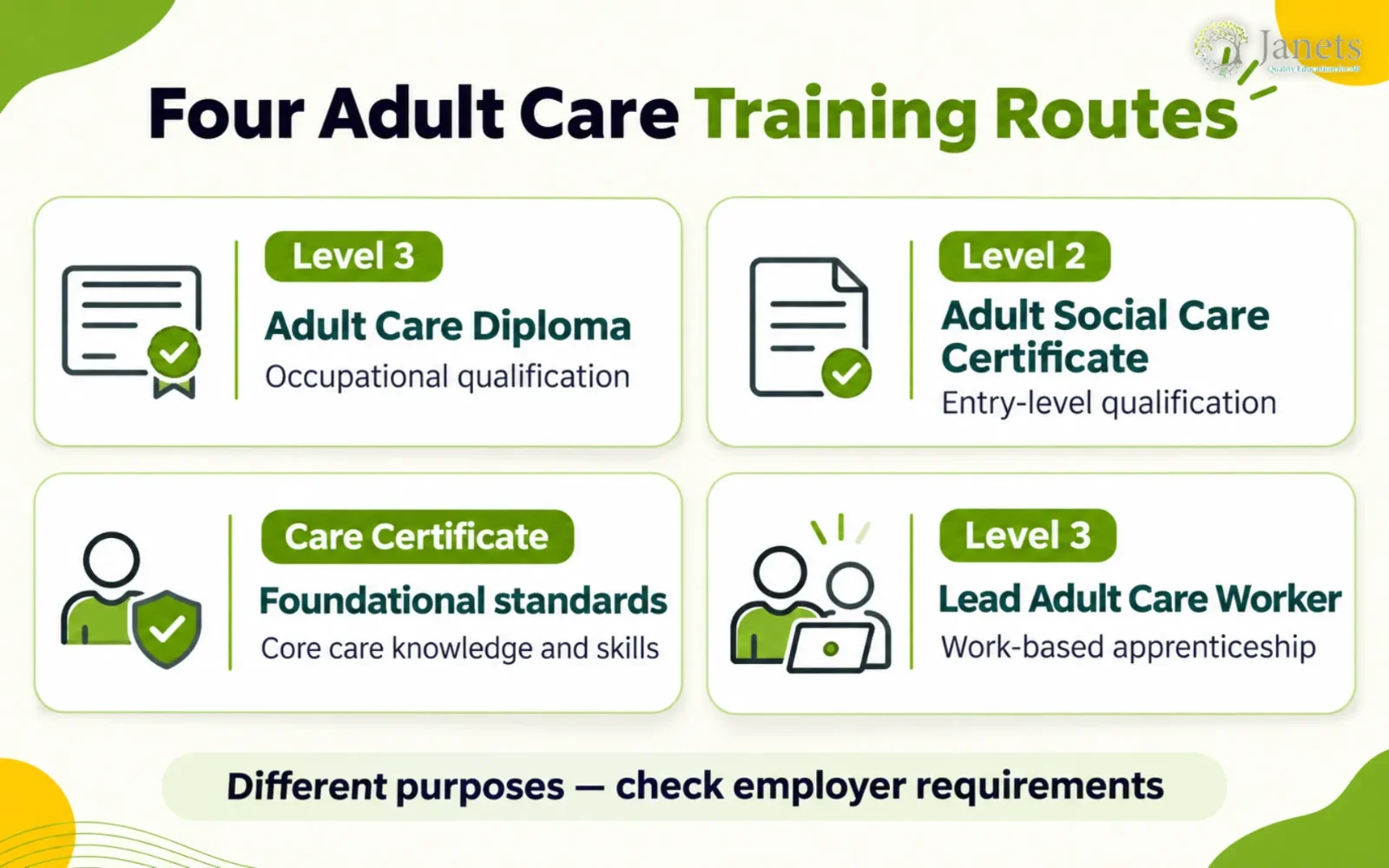
Adult social care offers several routes, differing in purpose and assessment.
Level 3 Diploma in Adult Care
The Level 3 Diploma in Adult Care is a relevant occupational qualification for experienced care workers in England. It covers person-centred support, safeguarding, communication and safe care.
The Skills for Care qualifications guidance identifies qualifications designed for England’s adult social care workforce.
An occupational diploma assesses knowledge and relevant workplace competence. This differs from knowledge-only online study. Check the awarding organisation and specification against employer requirements.
Level 2 Adult Social Care Certificate
The Level 2 Adult Social Care Certificate provides an entry-level occupational qualification in England. It helps care workers build a foundation in core practice before progressing into responsibilities that require greater independence and judgement.
An earlier Level 2 Diploma in Care may remain relevant. Level 2 alone does not automatically qualify someone for senior duties.
Care Certificate Standards
The Care Certificate supports introductory knowledge and workplace competence. The Care Certificate standards were updated in March 2025 and now contain 16 standards, including safeguarding, dignity and communication.
These standards are not a regulated Level 2 or 3 qualification or proof of supervisory readiness.
Lead Adult Care Worker Level 3 Apprenticeship
The Lead Adult Care Worker apprenticeship offers an employment-based Level 3 route in England. It combines training with practical responsibility and assessment, including supporting others and acting as a frontline leader.
Its published typical duration is 18 months, excluding end-point assessment. It suits workers wanting to develop skills while employed.
Find Your Senior Care Qualification Route
Answer 3 quick questions to see which training route matches where you are now.
Step 1 of 3
Is Level 3 Health and Social Care the Same as a Diploma in Adult Care?
No. A course labelled Level 3 is not necessarily equivalent to a regulated occupational diploma. The qualification title, awarding body, assessment and intended purpose all matter.
| Type of study | Main purpose | What to check |
|---|---|---|
| Regulated Level 3 Diploma in Adult Care | Demonstrates specified adult care knowledge and occupational competence | Awarding organisation and workplace assessment |
| Broader Level 3 Health and Social Care qualification | Provides education in health and social care subjects | Exact qualification title, regulated status and assessment |
| CPD-accredited online course | Supports ongoing professional knowledge | Certificate awarded and employer acceptance |
When comparing senior care assistant qualifications, check whether a vacancy requires an occupational award or supplementary training.
For example, Janets’ Health and Social Care – Level 3 course offers self-paced CPD-accredited study covering care principles, safeguarding and communication. Successful learners can receive a Certificate of Achievement. This is not the regulated Level 3 Diploma in Adult Care and should not be presented as its replacement.
Build Your Level 3 Care Knowledge Around Work
Self-paced Health and Social Care Level 3 study covering care principles, safeguarding and communication.
- ✓33 modules with 17 hrs 9 mins of learning and assessment
- ✓Safeguarding, communication and person-centred care
- ✓CPD-accredited Certificate of Achievement
Can You Become a Senior Carer Without Level 3 or Experience?
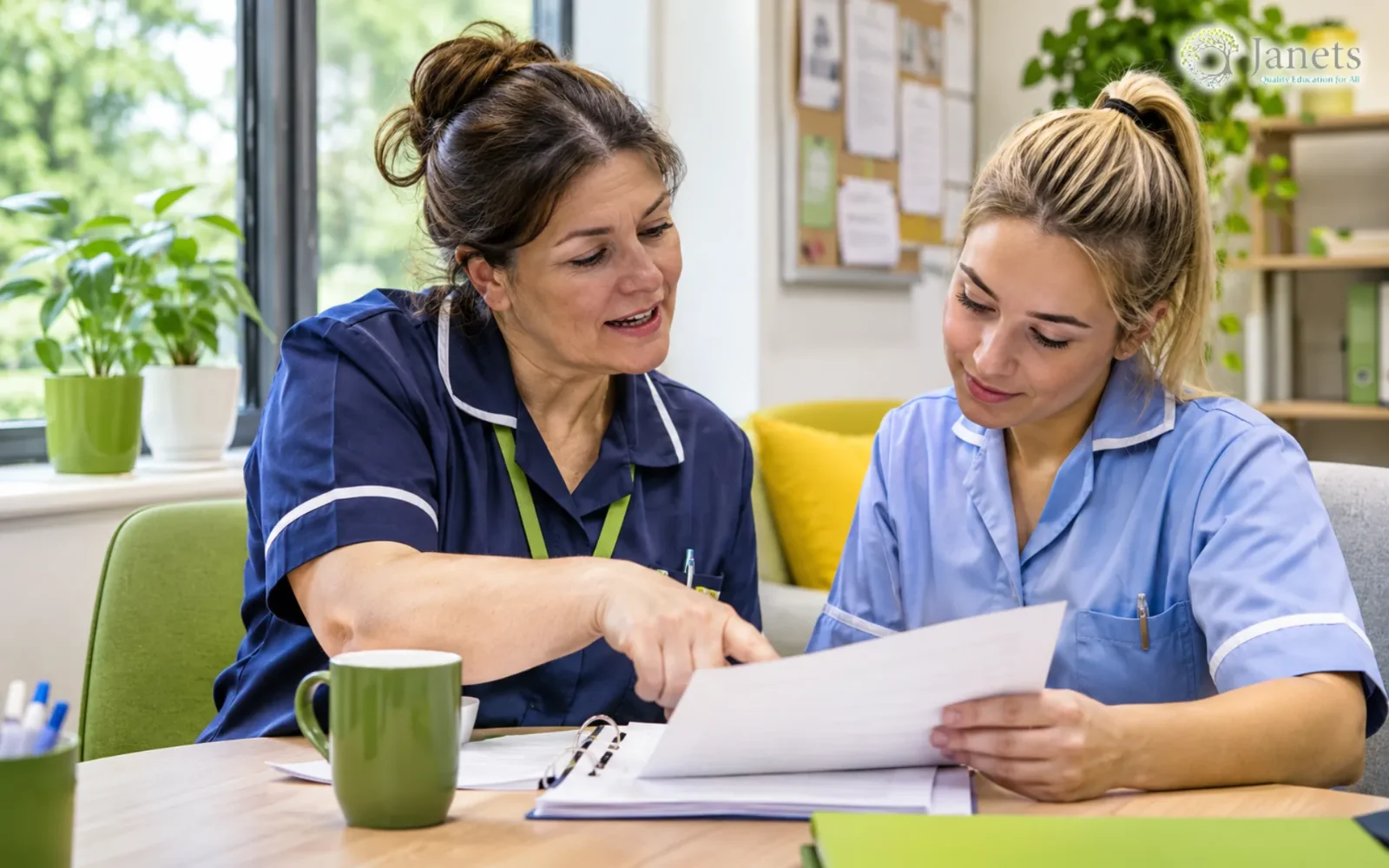
Some experienced care assistants progress into senior duties while working towards Level 3. Employers may consider a record of reliable care practice, relevant training and the ability to guide colleagues.
Entering a senior role without care experience can be difficult, given responsibilities for complex needs and care plans.
Imagine a care assistant who has supported residents for several years, mentored new staff and completed supervised training. That experience may strengthen an application, even if further study is still needed.
Because senior care assistant qualifications are only part of career progression, it is also important to understand the wider steps involved in moving into a senior role. Our guide to how to become a senior care assistant in the UK covers the career pathway, experience and progression opportunities.
What Skills and Workplace Training Do Senior Carers Need?
A certificate cannot replace the ability to carry out assigned duties safely. Senior carers need strong communication, accurate record-keeping, person-centred care and the judgement to raise safeguarding concerns. Supervisory responsibilities may include mentoring colleagues and coordinating daily support.
Medication tasks require appropriate training and demonstrated competence; online lessons alone do not authorise administration.
For additional knowledge of recognising abuse, UK safeguarding legislation, reporting and information sharing, Janets offers a Diploma in Safeguarding Vulnerable Adults. It is a CPD-accredited professional-development course, not a substitute for employer-led safeguarding procedures or practical competency assessment.
Do Senior Care Assistant Requirements Differ Across the UK?
Yes. The most suitable senior care assistant qualifications also depend on the country and the exact care role. Registration arrangements differ across the four nations.
| Nation | Important consideration |
|---|---|
| England | Employers must ensure staff meet applicable competence and staffing requirements. |
| Wales | Social Care Wales registration guidance applies to specified social care roles, including care home and domiciliary care workers. |
| Scotland | The Scottish Social Services Council requires registration for relevant social care roles and sets associated qualification expectations. |
| Northern Ireland | The Northern Ireland Social Care Council requires registration for specified social care workers. |
Registration differs from course-entry requirements. Check your regulator’s rules rather than assuming every qualification works UK-wide.
How to Check Whether Your Qualifications Meet Employer Requirements
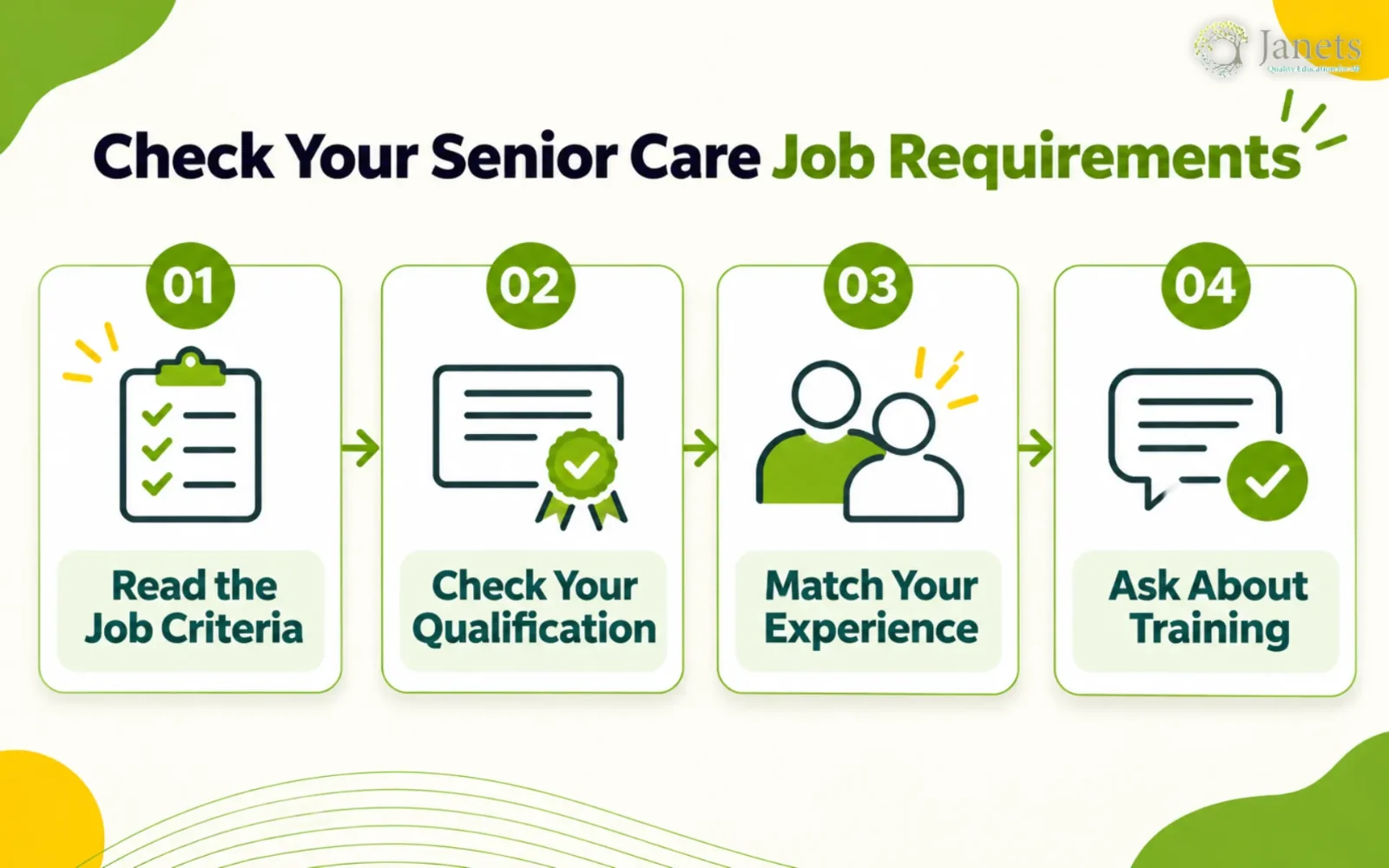
Before enrolling, compare your experience and certificates against a real vacancy:
- Read the essential criteria. Does the employer require Level 3 now, or accept someone working towards it?
- Check the exact award. Verify the awarding organisation, regulated status and whether workplace assessment is involved.
- Match your experience. Note examples of safeguarding practice, care planning, mentoring or other relevant duties.
- Ask about gaps. Find out what induction, additional training or supervised assessments the employer expects.
If you are considering other career opportunities alongside senior care, there are several health and social care roles worth researching. Our article on jobs you can get with Level 3 Health and Social Care covers the broader career options associated with this level of study.
Can Online Health and Social Care Training Help?
Online study can refresh care knowledge alongside work.

Janets’ Health and Social Care – Level 3 course has an advertised duration of 17 hours and 9 minutes, including assessments, and offers a CPD-accredited Certificate of Achievement following successful completion. It supports knowledge development but does not independently qualify you for a senior position.
For those interested in service delivery, safeguarding and professional responsibilities, Janets also offers Health and Social Care Management. Its QLS-endorsed and CPD-accredited certification relates to non-regulated training, not an Ofqual-regulated management qualification.
Ready to Refresh Your Care Knowledge?
Pair your workplace experience with flexible Level 3 health and social care training.
- ✓Instant access, study from any device
- ✓Covers care principles, safeguarding and communication
- ✓Digital and printed certificate options
Final Thoughts
Choosing senior care assistant qualifications starts with checking the duties and requirements of the role you want. A Level 3 Adult Care qualification can be particularly relevant, but workplace experience, competence and local registration rules also matter.
Use employer criteria to choose further study, recognising that online courses do not guarantee senior employment.
Frequently Asked Questions
What Is the Role of a Senior Care Assistant?
A senior care assistant supports daily needs, supervises colleagues, contributes to care plans and helps maintain standards. Duties vary by setting.
Do You Need Qualifications to Be a Care Assistant?
Not every entry-level care vacancy in England requires formal qualifications. Employers provide appropriate induction and training; senior roles bring extra responsibilities.
What Is the Difference Between a Care Assistant and a Senior Care Assistant?
Care assistants provide direct support. Senior staff may also mentor colleagues, coordinate tasks and help supervise complex care.
Do Senior Care Assistants Need a DBS Check?
Care roles commonly require DBS checks. Check levels and barred-list eligibility against actual duties and legal criteria.
What Is a Senior Care Assistant's Salary?
The National Careers Service senior care worker profile gives indicative annual earnings of £24,000 for starters and £29,000 for experienced workers. Actual pay varies by employer, region and responsibilities.
For a more detailed breakdown of senior care assistant earnings, including factors that influence pay, our Senior Care Assistant Salary UK (2026) article provides further information.
Get a FREE Course