- Home
- Career Guide
- Senior Care Assistant Salary UK: 2026 Earnings Guide
Senior Care Assistant Salary UK: 2026 Earnings Guide
The senior care assistant salary in the UK is listed at £24,000–£29,000 a year in National Careers Service guidance, but this is an indicative range, not a guaranteed 2026 offer. Actual pay must meet minimum-wage rules for paid hours. Here’s how to compare annual salaries, hourly rates and shift payments properly.
Average Senior Care Assistant Salary in the UK (2026)
The National Careers Service uses senior care assistant as an alternative title for senior care worker. It lists £24,000 for someone starting and £29,000 for an experienced worker, alongside typical hours of 40–45 a week. Those figures are broad career guidance, rather than a measured national average for 2026.
The Office for National Statistics (ONS) care worker earnings dataset offers a different type of evidence. Its 2026 provisional edition covers employee earnings for defined occupational groups, including senior care workers, with distinctions between working patterns and statistical measures. An exact occupation-specific 2026 median has not been independently confirmed for this article, so it would be misleading to insert a number attributed to that dataset.
| Measure | What it tells you |
|---|---|
| £24,000 starting; £29,000 experienced | National Careers Service indicative annual figures |
| 40–45 hours weekly | Typical hours described in the career profile |
| ONS annual or hourly earnings | Observed employee statistics, with defined populations and measures |
| Advertised job salary | One employer's proposed pay for a particular contract |
Check the 2026 Legal Minimum Before Comparing Salaries
A crucial detail is easily missed: the guidance range does not necessarily work as a lawful full-time salary at every stated working-hour arrangement. The National Living Wage from 1 April 2026 is £12.71 hourly for workers aged 21 and over, subject to the applicable minimum-wage rules.
For illustration, £24,000 divided by 52 weeks and 40 paid hours is £11.54 hourly; £29,000 divided by 45 paid hours is £12.39. Both fall below £12.71. At that minimum rate, 40 paid hours each week would equate to £26,436.80 annually; 45 would equate to £29,741.40. These are arithmetic illustrations, not estimates of senior carers’ market pay. Actual compliance depends on legally counted hours and pay components.
Senior Care Assistant Hourly, Monthly and Annual Pay
An annual figure tells you how much a contract may pay over a year. An hourly figure helps you see what you receive for your time. Always check whether an advertised amount includes regular enhancements or overtime.
What Is the Hourly Rate?
Calculate an equivalent hourly rate by dividing gross annual earnings by paid weekly hours multiplied by 52. For example, £29,000 for 40 paid hours weekly works out at about £13.94 an hour. That calculation assumes a consistent full-year schedule and is not a verified UK average hourly rate.
A salary advertised as “up to £32,000” deserves particular attention. The upper figure might depend on a specific rota, extra shifts or meeting other conditions. Ask the recruiter for the guaranteed basic salary and the written breakdown of any enhancements. This makes it easier to budget realistically and avoids treating the best possible earnings as your regular income.
Care employers may advertise hourly rather than annual wages, especially for shift-based vacancies. Compare those rates using the same assumptions about paid hours, unpaid breaks and any additional payments. An attractive annual headline can conceal a longer working week.
How Much Is That Per Month?
Gross monthly salary is annual salary divided by 12. This gives a useful budgeting starting point, but not what arrives in your bank account. Income Tax, National Insurance and pension contributions may reduce take-home pay, depending on your circumstances.
| Illustrative annual gross pay | Monthly gross equivalent |
|---|---|
| £27,000 | £2,250 |
| £29,000 | £2,416.67 |
| £32,000 | £2,666.67 |
These three salaries illustrate the calculation; they are not observed national averages. If a vacancy is part-time, check whether the quoted annual sum is the full-time equivalent or the amount actually payable for your contracted hours.
Also ask whether a quoted hourly rate reflects paid working time only. Unpaid meal breaks change the number of paid hours in a week, and some workplaces use different arrangements for handovers or training. These details affect a useful comparison even when two adverts advertise identical hourly wages. Keep the answer in writing when possible, especially if you are deciding between offers.
Compare Two Job Offers, Not Just Their Headlines
Suppose two hypothetical senior care assistant vacancies both advertise £30,000 gross annually. Job A requires 37.5 paid hours weekly, equivalent to about £15.38 hourly. Job B requires 42 paid hours weekly, equivalent to about £13.74 hourly. Both calculations assume 52 paid weeks.
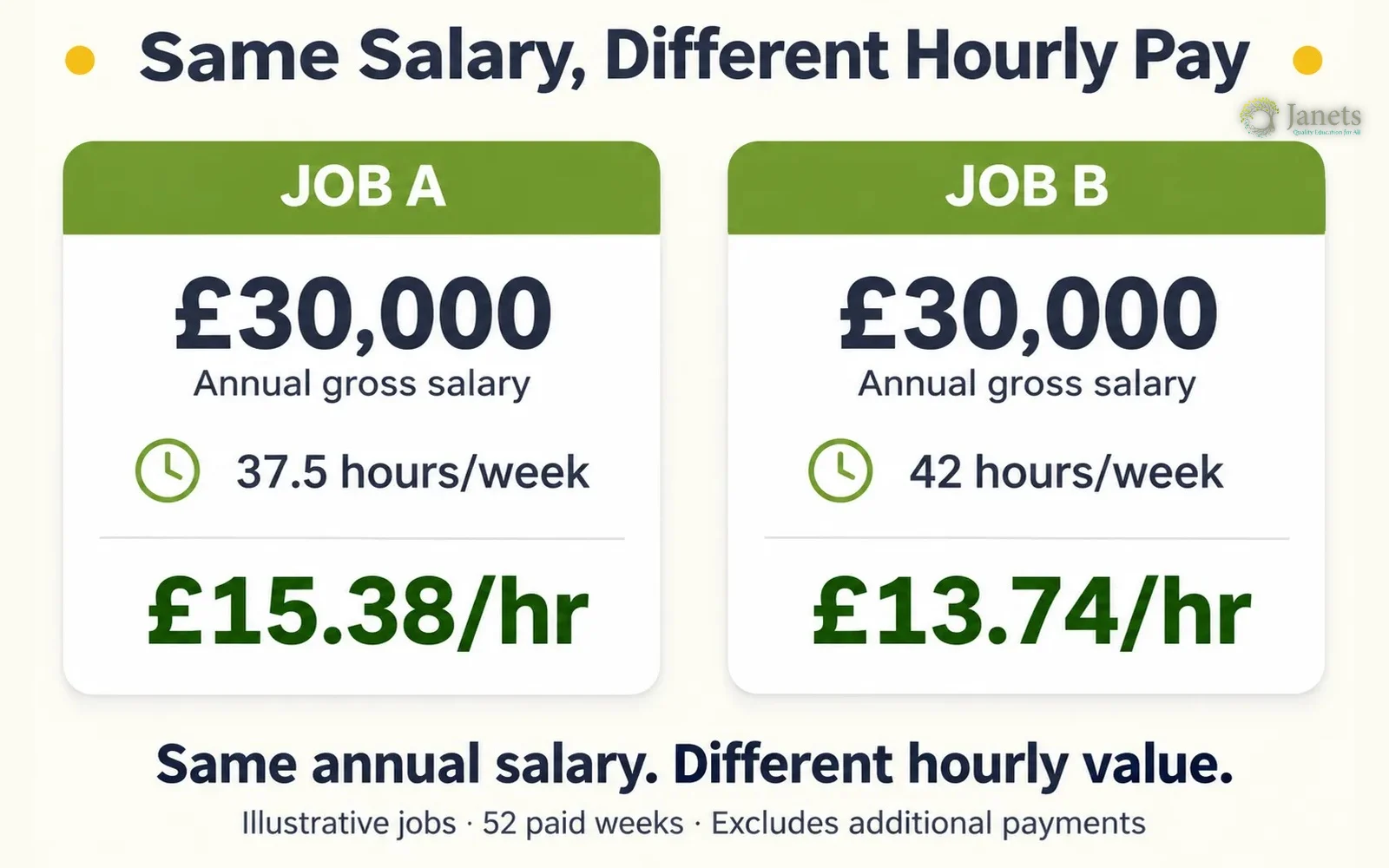
Job A has the stronger basic hourly equivalent, although that does not establish which total package is better. Ask whether either salary includes night enhancements, weekend payments or regular overtime. Check paid breaks, holiday entitlement, pension terms, contractual hours and whether a quoted salary is pro rata. These details often matter more than a small difference in headline pay.
What Affects a Senior Care Assistant's Salary?
Experience, employer arrangements and responsibilities can all influence an offer. There is no UK-wide senior care assistant salary scale that every independent provider must follow.
Experience and Senior Responsibilities
A senior carer may supervise colleagues, help coordinate shifts, contribute to care plans and support safe daily practice. Employers can consider this experience when deciding what to offer, although seniority does not create an automatic right to a particular pay rise.

If you’re moving up from a care assistant position, consider the expectations of the senior role rather than focusing on the title alone. Relevant experience, confidence communicating with colleagues and the ability to handle extra responsibility may all matter during recruitment. The wider route into senior care work is a separate career topic, rather than something a salary comparison needs to explain in full.
Residential Homes, Nursing Homes and Homecare
The same title can cover different working arrangements. Residential homes, nursing homes, supported living services, domiciliary care providers and agencies may set different rates. A nursing home role can involve supporting people with complex needs, but that does not establish a guaranteed nursing-home pay premium.
In homecare, look carefully at travel between appointments and which time is paid. In agency roles, check the availability of shifts and whether the advertised rate includes or excludes particular benefits. The Skills for Care workforce research provides useful background on employment and pay in England’s adult social care sector; England-only findings should not be presented as UK-wide averages.
Location and Recruitment Conditions
Local recruitment needs and individual employer budgets can also influence advertised salaries. A position in a more expensive city may offer higher gross pay, yet leave less disposable income after commuting or other costs. Compare jobs on equivalent hours before drawing conclusions about which area pays best.
Build the Care Knowledge Senior Roles Ask For
Self-paced Health and Social Care Level 3 study covering communication, safeguarding and care responsibilities.
- ✓33 modules with 17 hrs 9 mins of learning and assessment
- ✓Safeguarding, communication and person-centred care
- ✓CPD-accredited Certificate of Achievement
Does Senior Care Assistant Pay Vary Across the UK?
Yes, rates can vary across employers and locations, including England, Scotland, Wales and Northern Ireland. But a reliable regional salary ranking needs comparable senior-care-specific statistics. Mixing a few live vacancies with averages for broader care occupations would create a misleading picture.
When comparing jobs in two places, start with the basic hourly equivalent. Then ask about contracted hours, travel, unsocial-hours payments and staff benefits. Also check whether an advertised salary reflects a full-time contract or a shorter pro-rata arrangement.
A London vacancy should not automatically be described as better paid than a Scottish or Welsh role simply because the annual number is higher. What matters is the complete offer and the work you are expected to provide. Where reliable like-for-like regional figures are unavailable, a transparent comparison method is more useful than a made-up table.
Senior Care Assistant vs Care Assistant and NHS Pay
Senior care assistants often carry additional coordination or supervisory responsibilities compared with care assistants. This may support higher pay, but actual wages overlap across employers and contracts. A care assistant undertaking more paid shifts could earn more annually than a senior colleague working fewer hours.
How Does NHS Healthcare Assistant Pay Compare?
A senior care assistant employed in a care home is not necessarily doing the same job as an NHS senior healthcare support worker. NHS posts covered by Agenda for Change are assigned bands according to the specific role, not because a job title contains the word senior.
For England, the NHS 2026/27 Agenda for Change pay scales list Band 3 basic annual pay at £25,760–£27,476. That is an NHS Band 3 scale, not a national salary range for care-home senior assistants. Other UK nations can have different arrangements, and not every healthcare support position is Band 3.
When comparing NHS and independent-sector vacancies, consider the duties, weekly hours, pension arrangements, progression rules and shift enhancements. Do not treat superficially similar job titles as proof of equivalent work or grading.
Do Senior Care Assistants Earn More on Nights and Weekends?
Some care providers pay more for nights, weekends or bank holidays; others use the same basic hourly rate. Any enhanced rate should be clear in the contract or written offer.
Night-Shift and Weekend Enhancements
UK law does not impose a universal higher minimum hourly rate merely because work happens at night. The GOV.UK night-working guidance explains the relevant working-time rules and confirms that night workers remain entitled to the applicable minimum wage.
For example, a provider might offer a separately specified night enhancement. Another could advertise a flat rate covering different shifts. Neither description tells you the final weekly earnings until you know how many paid hours you will actually work. Bank holiday arrangements also vary, so ask rather than assume an enhanced rate.
Overtime and Variable Hours
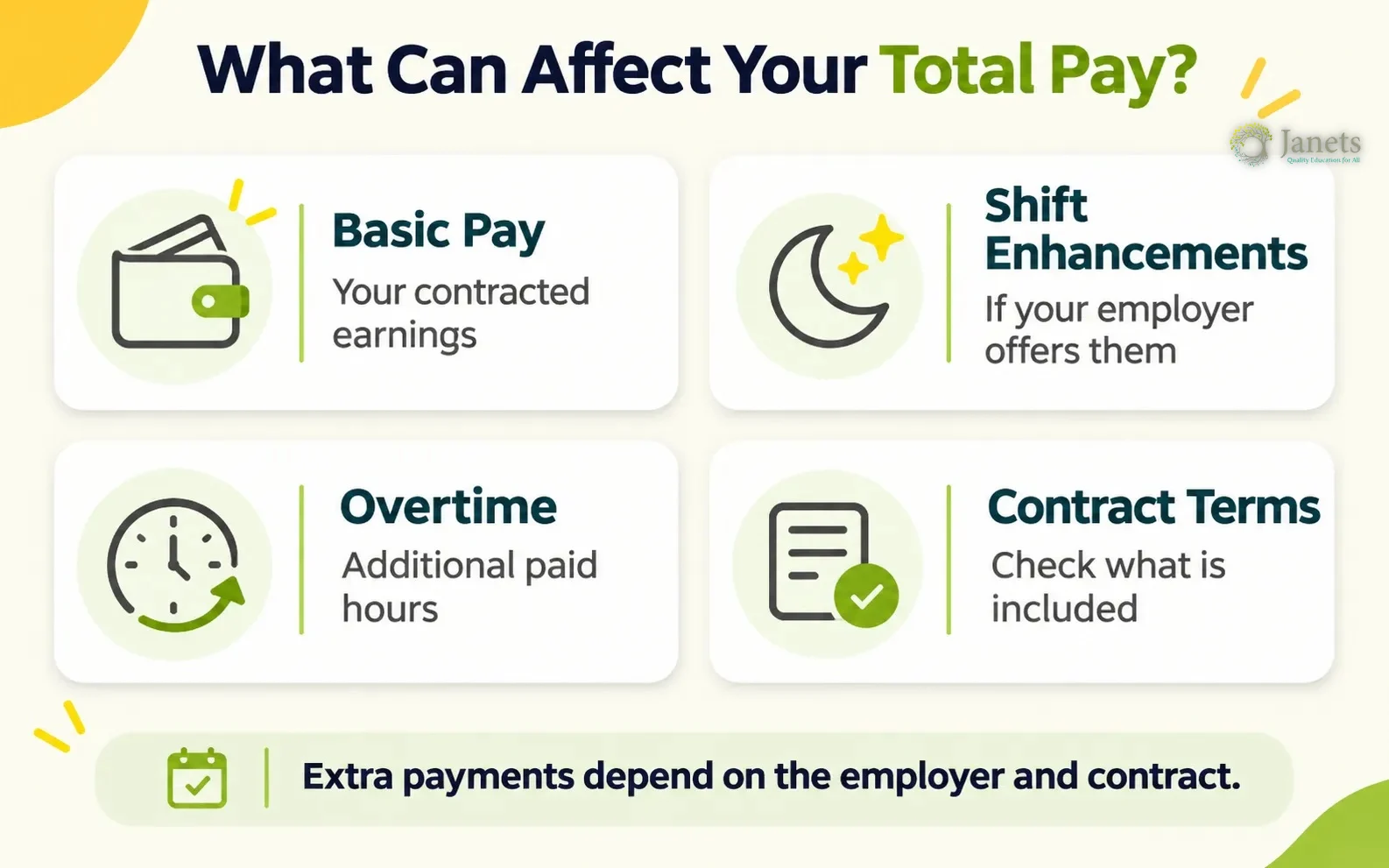
Additional shifts can raise annual earnings, but they are not necessarily guaranteed. As a hypothetical example, eight overtime hours paid at £17.50 would produce £140 gross. That is extra money for extra time, not a higher basic salary.
Check whether overtime is optional, whether enhanced rates apply and how reliably extra shifts are available. If you’re considering an agency position, occasional high-rate assignments should not be mistaken for a guaranteed year-round income. A salary comparison is strongest when it separates regular contractual pay from variable extras.
How Can Senior Care Assistants Improve Their Earning Potential?
A sensible starting point is to identify the experience and skills employers want for better-paid positions. Senior responsibilities may involve mentoring staff, communicating concerns, supporting safeguarding practice or coordinating care. Improving these abilities may strengthen applications, although additional training never guarantees promotion.
Professional Development and Qualifications
Before choosing training, it is useful to understand the qualifications needed to become a senior carer and what employers may require.
Before enrolling on a course, check the requirements of actual jobs you want to pursue. Employers may ask for particular regulated qualifications, workplace learning or experience. A short professional-development course can be useful without satisfying those requirements automatically.
Janets’ Health and Social Care Level 3 course covers communication, safeguarding, care responsibilities and individual wellbeing. Its assessment leads to a CPD-accredited Certificate of Achievement. The Level 3 Diploma in Adult Care introduces adult care principles and person-centred support; its advertised certification is also a CPD-accredited Certificate of Achievement.
These are options for expanding knowledge, not verified regulated RQF Level 3 qualifications or promises of a senior role. Compare each course’s learning outcomes with job requirements before deciding what fits. Qualifications are important, but this salary article deliberately leaves detailed entry-route comparisons to dedicated career and training guidance.

Discussing Pay and Progression at Work
If you already work in care, prepare concrete examples of additional duties and skills before a pay discussion. Ask how your employer defines senior responsibilities, what evidence it considers for progression and whether a higher-paid vacancy is available. A clear conversation about responsibilities and pay arrangements is more constructive than assuming a certificate automatically changes your wage.
Strengthen Your Adult Care Knowledge Alongside Work
Learn adult care principles and person-centred support with the flexible Level 3 Diploma in Adult Care course.
- ✓Around 9 hours of self-paced learning
- ✓Adult care principles and person-centred support
- ✓CPD-accredited Certificate of Achievement
Understanding Your Senior Care Assistant Pay
The best way to judge a senior care assistant salary is to compare legally compliant basic pay, equivalent hourly earnings and the full employment package. Use official career guidance for context, check what each vacancy actually promises and treat variable overtime as separate income. That gives you a fairer, clearer, more realistic basis for choosing your next role and making future decisions.
Frequently Asked Questions About Senior Care Assistant Pay
What Is a Good Hourly Rate for a Senior Care Assistant in 2026?
There is no single universally competitive hourly rate. For workers aged 21 and over, £12.71 is the statutory National Living Wage from April 2026, not a senior-care market average. The National Careers Service’s £29,000 experienced guidance equates to about £13.94 hourly at 40 paid hours, or £12.39 at 45 hours; the latter illustrates why you must check minimum-wage compliance. Compare current vacancies with matching hours and responsibilities.
How Much Can an Experienced Senior Care Assistant Earn?
The National Careers Service provides £29,000 as an indicative experienced annual figure. It is not a maximum or a guaranteed salary. Actual offers depend on paid working hours, experience, location and the employer’s terms. Ensure that any proposed pay meets minimum-wage requirements.
Do Senior Care Assistants Get Paid More in Nursing Homes?
Not automatically. Nursing homes may require different experience or responsibilities, but providers set pay according to their roles and arrangements. Compare specific offers rather than assuming the care setting determines a higher hourly wage.
Can Senior Care Assistants Earn More Through Agency Work?
Agency assignments can carry different hourly rates, but available shifts, employment status, paid holiday arrangements and pension terms affect overall value. A high advertised hourly rate does not necessarily produce stable or higher annual earnings.
Does a Level 3 Qualification Automatically Increase Your Salary?
Get a FREE Course