- Home
- Career Guide
- Jobs You Can Get With Level 3 Health and Social Care
Jobs You Can Get With Level 3 Health and Social Care
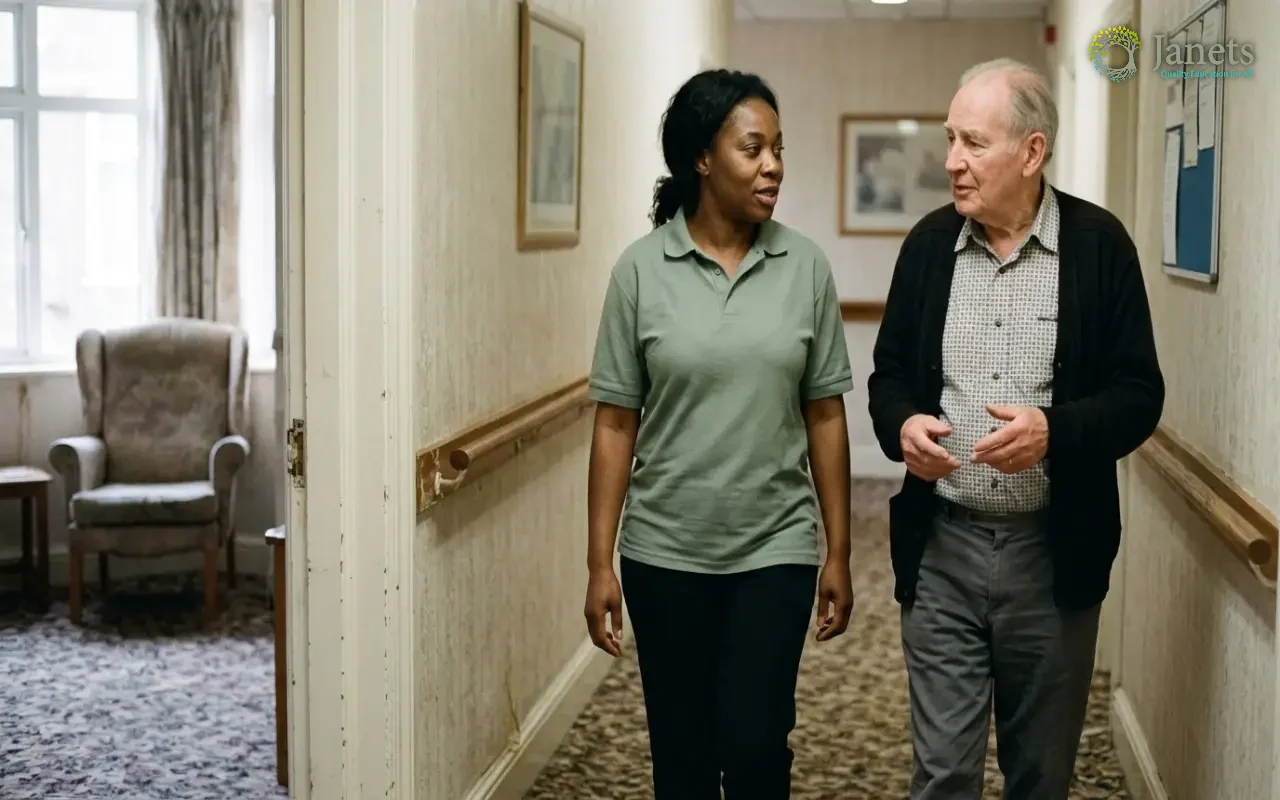
A Level 3 Health and Social Care course can introduce you to several career opportunities, but which jobs can you realistically apply for?
Level 3 health and social care jobs include care assistant, support worker, healthcare assistant, domiciliary care worker and residential care worker. With relevant experience and suitable qualifications, you may also progress towards senior care assistant, senior support worker or care coordination positions.
However, not every Level 3 course provides the same qualification. Some develop professional knowledge, while regulated occupational qualifications assess workplace competence.
Whether you’re entering the care sector or considering your next career move, this guide explains eight UK job options, what employers may expect and how to take the next step.
Not sure where you’d fit? Take our 1-minute care job quiz →
What Jobs Can You Get With Level 3 Health and Social Care?
Health and social care workers support people in hospitals, care homes, supported living services and their own homes. The responsibilities vary considerably between roles.
Here are eight careers worth considering.
| Job role | Typical workplace | Entry-level or experienced? |
|---|---|---|
| Care Assistant | Residential and nursing care homes | Often entry-level |
| Support Worker | Supported living and community services | Entry-level or experienced |
| Healthcare Assistant | NHS hospitals and clinics | Varies by employer |
| Domiciliary Care Worker | People's homes | Often entry-level |
| Residential Care Worker | Residential care settings | Varies by service |
| Senior Care Assistant | Care homes and care services | Usually experienced |
| Care Coordinator | Home care agencies | Usually experienced |
| Personal Assistant in Social Care | Private homes and community settings | Varies by employer |
These are potential career routes, not jobs guaranteed by completing a particular course.
If you’re new to the sector, Janet’s Health and Social Care Level 3 course offers CPD-accredited learning covering communication, safeguarding, care planning and professional responsibilities. It can help develop relevant knowledge before or alongside workplace training.
1. Care Assistant / Care Worker
Care assistants help people with everyday activities while encouraging independence, comfort and dignity.
Depending on the setting, responsibilities may include personal care, mealtime support, mobility assistance, social activities and maintaining care records.
You could work in a residential care home, nursing home or community care service.
Can beginners apply? Yes. Some employers recruit people without previous care experience and provide training after they join.
The National Careers Service care worker profile explains that applicants can enter through different routes, including direct applications and apprenticeships.
2. Support Worker
Support workers assist people who need additional help with daily activities, independent living or accessing community services.
You might support adults with learning disabilities, physical disabilities or mental health needs.
Responsibilities can include:
- Helping individuals develop everyday living skills.
- Supporting appointments and community activities.
- Following individual support plans.
- Encouraging independence and personal choice.

Some support worker positions welcome beginners, while more specialised services expect previous experience.
If you’re particularly interested in mental health services, Janets’ Mental Health Support Worker course introduces mental health conditions, support responsibilities and community services. It offers professional-development learning rather than registration or authorisation to practise in a regulated profession.
3. Healthcare Assistant
Healthcare assistants, sometimes called healthcare support workers, help clinical teams provide day-to-day patient care.
They may work in NHS hospitals, outpatient departments, community healthcare services or independent healthcare facilities.
Depending on training and responsibilities, duties can include supporting patients with personal care, preparing equipment, recording observations and assisting nurses with routine tasks.

Is Level 3 compulsory? Not for every vacancy. Employers set their own essential qualifications and experience requirements.
Some healthcare assistant positions provide workplace training, while others require specific certificates, experience or demonstrated competence.
The National Careers Service healthcare assistant profile provides further information about entry routes and responsibilities.
4. Domiciliary Care Worker
Domiciliary care workers support people in their own homes rather than residential facilities.
You might help someone prepare meals, maintain personal hygiene, attend appointments or manage their daily routine.
The work often involves travelling between people’s homes. Some vacancies therefore require a driving licence or access to suitable transport.
Domiciliary care can suit people who enjoy independent working while maintaining regular contact with individuals and their families.
Many employers provide induction training, although applicants must still meet the requirements of the particular position.
5. Residential Care Worker
Residential care workers support people living in care facilities who need regular assistance.
Responsibilities may include helping residents with daily activities, supporting wellbeing, following care plans and communicating with colleagues and families.
Some settings specialise in older people’s care, dementia support or disability services.
If you’re interested in supporting older adults, Janets’ Dementia Care Skills for Caregivers course introduces dementia awareness, communication techniques and person-centred support. It can complement workplace learning but does not replace practical competency requirements.
Remember that children’s residential care services have different responsibilities and may require specific qualifications.
6. Senior Care Assistant / Senior Support Worker
Senior care assistants generally have more responsibility than entry-level care workers.
Alongside providing care, they may support junior colleagues, contribute to care planning, maintain records and coordinate daily activities.
Some roles involve medication-related responsibilities, but these depend on appropriate training, competence and workplace procedures.
The National Careers Service senior care worker profile confirms that experience, relevant qualifications and workplace progression can support entry into senior positions.
A regulated Level 3 occupational qualification may be particularly relevant, depending on the employer.
If this role interests you, our guide to becoming a senior care assistant in the UK explains the career pathway in more detail.
7. Care Coordinator
Care coordinators help organise care services and maintain communication between care workers, service users and other professionals.
In a home care agency, responsibilities might include arranging visits, updating schedules, handling enquiries and supporting care planning.
Strong organisation, communication and record-keeping skills are particularly important.
These positions frequently suit people who already understand how care services operate.
Although Level 3 learning may provide useful background knowledge, employers may also expect practical experience and familiarity with care coordination systems.
8. Personal Assistant in Social Care
A personal assistant in social care provides individual support, often directly for someone who wants to maintain independence at home or in the community.
The work is shaped by the person’s circumstances and preferences.
Responsibilities might include assistance with daily activities, mobility, appointments or social participation.
Some personal assistant positions are suitable for people with transferable skills and limited formal care experience. Others require specialised training.
Always check the duties and conditions of the individual vacancy.
Quiz: Which Level 3 Care Job Suits You?
Answer 6 quick questions to see which role could fit you best.
Is Level 3 Health and Social Care Enough to Get a Job?
Level 3 learning can support a care job application, but it does not automatically qualify someone for every care role.
The important question is which Level 3 course or qualification you have completed.
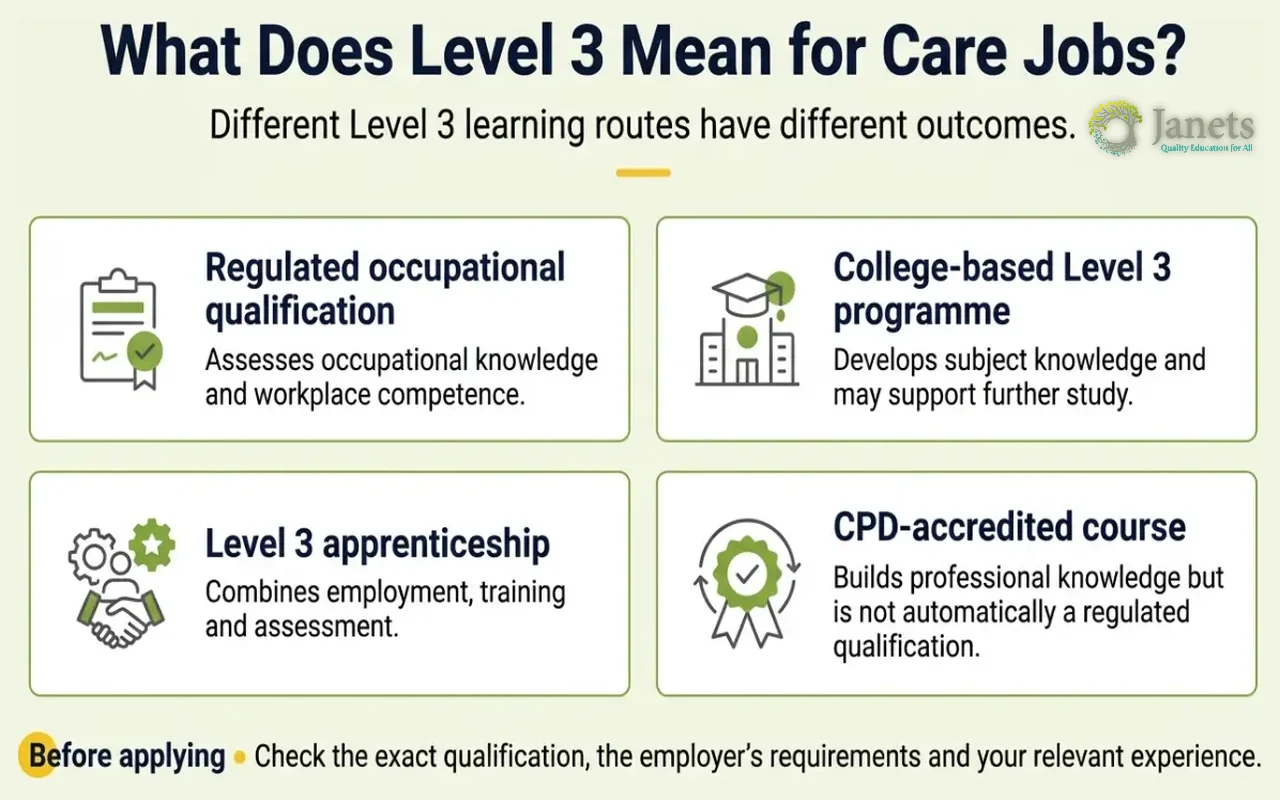
A regulated Level 3 Diploma in Adult Care assesses occupational knowledge and competence. Other Level 3 programmes may focus on academic preparation, while CPD courses concentrate on professional development.
The qualification framework and employer requirements should not be confused.
According to Skills for Care’s guidance on care qualifications, some people enter social care without formal qualifications and complete vocational learning while employed.
Skills for Care also identifies the updated Level 3 Diploma in Adult Care, introduced in August 2025, as a relevant qualification for developing adult care competence.
Janets’ Health and Social Care Level 3 course is CPD-accredited and awards a Certificate of Achievement after successful completion. It is not an Ofqual-regulated occupational diploma.
For senior positions, the precise qualification requirements for senior care work deserve closer attention.
Build care knowledge before you apply
Can You Work in the NHS With Level 3 Health and Social Care?
Yes, you may be eligible to apply for certain NHS support positions, depending on your qualifications, experience and the vacancy requirements.
Healthcare assistants and healthcare support workers are examples of roles worth investigating.
You could encounter opportunities in hospital wards, outpatient services and community healthcare teams.
However, NHS employers may ask for particular qualifications, relevant experience or role-specific training. A course described as Level 3 does not automatically meet those requirements.
If you’re comparing vacancies, pay attention to whether qualifications are listed as essential or desirable.
You should also distinguish healthcare support work from regulated clinical professions. Becoming a registered nurse or nursing associate requires a separate approved education and registration pathway.
How Much Do Level 3 Health and Social Care Jobs Pay in the UK?
Pay depends on your role, employer, location, experience and working arrangements.
For example, NHS healthcare support positions may fall within different Agenda for Change pay bands.
In England, NHS Band 3 pays £25,760–£27,476 annually in 2026/27, according to the official NHS pay scales.
This figure applies to Band 3 positions, not every healthcare assistant or Level 3 care job.
Private care providers may advertise hourly rates, while shift patterns and additional responsibilities can affect earnings.
If you’re considering experienced positions, our breakdown of senior care assistant salaries in the UK covers pay in more detail.
How to Find and Apply for Level 3 Health and Social Care Jobs
Once you’ve identified suitable roles, focus on what employers actually require.

1. Search using several job titles. Try care assistant, support worker, healthcare assistant and domiciliary care worker. Search NHS Jobs, GOV.UK Find a Job and employer career pages.
2. Check essential requirements. Look for specific qualifications, experience, availability, transport requirements and any mandatory workplace training.
3. Tailor your CV. Highlight communication, reliability, teamwork and relevant care knowledge. Include transferable experience from previous employment, volunteering or unpaid caring responsibilities where relevant.
4. Prepare for recruitment checks. Some positions require criminal record checks. The GOV.UK guidance on DBS checks for adult social care roles explains that eligibility depends on the activities involved.
5. Develop relevant knowledge. Safeguarding awareness is valuable across care settings. Janet’s Diploma in Safeguarding Vulnerable Adults introduces safeguarding responsibilities, recognising abuse and neglect, information sharing and reporting concerns.
This learning complements, rather than replaces, employer safeguarding procedures.
Add safeguarding to your CV
Diploma in Safeguarding Vulnerable Adults · self-paced · lifetime access
How Can You Progress After Level 3 Health and Social Care?
Career progression in social care often combines practical experience, further learning and increased responsibility.
One possible route is:
Care Assistant → Experienced Care Worker → Senior Care Assistant → Team Leader or Management Role
This is an example, not a compulsory pathway. Progression depends on workplace experience, additional competence, employer requirements and available opportunities.
Skills for Care’s career progression guidance explains how vocational qualifications can support development within adult social care.
Final Thoughts
Level 3 health and social care jobs cover a range of opportunities, from care assistant and support worker positions to experienced roles involving greater responsibility.
The right starting point depends on your existing skills, the qualification you’ve completed and the requirements of your chosen employer.
Rather than applying for every role carrying a Level 3 label, compare job descriptions carefully and identify where your current knowledge and experience fit.
With suitable training and practical development, you can make informed decisions about your next step in health and social care.
Frequently Asked Questions
Can I Get a Health and Social Care Job Without Experience?
Yes. Some employers recruit entry-level care assistants and support workers without previous professional care experience.
Strong communication, patience, reliability and willingness to complete workplace training can be valuable. However, you still need to satisfy the requirements of each vacancy.
Can I Become a Senior Care Assistant With Level 3 Health and Social Care?
Possibly, depending on the exact qualification, your care experience and the employer’s expectations.
Senior care positions generally involve additional responsibilities and require evidence of relevant skills and competence.
Can I Become a Nurse With Level 3 Health and Social Care?
Not directly. Completing a Level 3 health and social care course does not qualify you to practise as a registered nurse.
You must complete an approved nursing programme and meet the requirements for professional registration. The Nursing and Midwifery Council’s approved programmes provide information about recognised education routes.
Where Can Level 3 Health and Social Care Take You?
Depending on your qualification and experience, Level 3 learning may support applications for care and support roles, further occupational training or progression towards more senior responsibilities.
Get a FREE Course