


Course Library View the full range of courses
-
Accounting (145 courses)
- Xero Accounting and Bookkeeping Online
- Sage 50 Accounting & Payroll
- Project Finance
- Financial Modelling Training
- Tax Accounting
- Introduction to VAT
- Accounting and Finance Course for Managers
- Internal Compliance Auditor
- Financial Statement Analysis
- Payroll Administrator Level 3 Diploma
- View all Accounting courses
-
Language (67 courses)
- British Sign Language (BSL) Level 1 & 2
- Speech and Language Therapy Diploma
- TEFL (TESOL) Course
- English Spelling, Punctuation, and Grammar
- Child & Adult Speech & Language Disorders Training
- Teaching English as Foreign Language (TEFL) Certificate
- Mastering Spanish Language
- French Course for Beginners
- German Course for Beginners
- Body Language and Gesture Training
- View all Language courses
-
Teaching & Education (37 courses)
- Teaching Assistant Complete Course (TA, SEN, Autism, ADHD & Dyslexia) – CPD Certified
- EYFS Teaching Assistant Training Course
- Advanced Diploma in Coaching and Mentoring
- Level 3 Diploma in Teaching and Classroom Management
- Remote Teaching
- SENCO – Special Educational Needs Coordination
- Teaching English as Foreign Language (TEFL)
- Life Coaching
- Phonics Teaching Diploma
- View all Teaching & Education courses
-
Health and Social Care (138 courses)
- Health and Social Care Management
- Paediatric Nursing Assistant
- Mental Health Awareness Training
- Emergency Medicine – Paramedicine
- Level 3 Diploma in Adult Care
- Paediatric First Aid Training
- Safeguarding Children Level 3
- Level 3 Diploma in Anatomy and Physiology of Human Body
- Play Therapy
- The Care Certificate Preparation – Standards (1 to 15)
- View all Health and Social Care courses
-
Management (539 courses)
- Office Admin, Secretarial and PA Diploma
- Estate Agent and Property Management Training
- Diploma in Data Analysis Fundamentals
- Advanced Diploma in Stress & Anxiety Management
- Good Manufacturing Practice (GMP)
- Property Development and Management Course
- Diploma in Hotel Management
- Supply Chain Management
- Quality Assurance (QA) Manager
- Compliance and Risk Management
- View all Management courses
-
IT & Software (127 courses)
- Coding with Python 3
- Search Engine Optimisation (SEO) Training
- Cyber Security
- Motion Graphics with After Effects
- CompTIA A+ Core 1 (220-1101) Course
- Machine Learning for Aspiring Data Scientists
- Next.js Web Dev: Master this Powerful React Framework
- Learn 2D Animation with Adobe Animate
- GDPR Challenges in Education
- View all IT & Software courses
-
Employability (1043 courses)
- Office Administrator Skills
- Presentation Skills
- Legal Secretary and Office Skills
- Hospitality Management
- Estate Agent Diploma
- Hairdressing and Barbering
- Diploma in UK Employment Law
- Diploma in Data Analysis Fundamentals
- Building Surveyor Training
- Emotional Intelligence Training
- View all Employability courses
-
Personal Development (1439 courses)
- Productivity Habits
- Minute Taking Course
- Presentation Skills
- Excel: Top 50 Microsoft Excel Formulas in 50 Minutes!
- Critical Thinking and Problem Solving Skills
- Time Management
- Self Esteem and Confidence Building Course
- Essential IT Skills
- Legal Secretary and Office Skills
- Personality Development
- View all Personal Development courses


Bookkeeping - Accounting and Bookkeeping Skills
171 Students (9 Reviews)
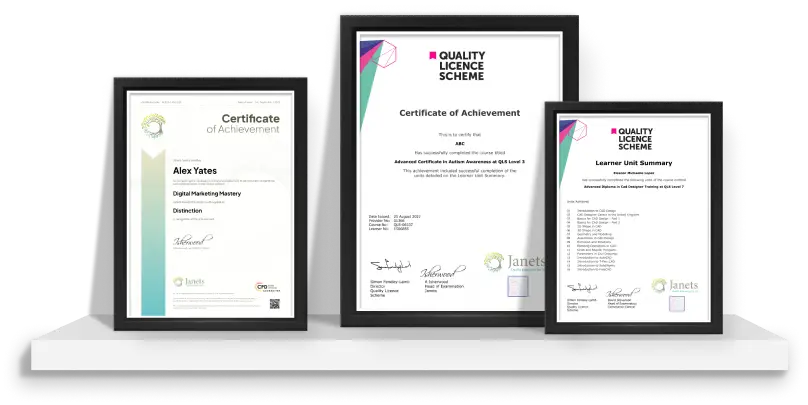
Build a strong foundation in finance! Our QLS endorsed Level 4 Bookkeeping course equips you with the skills to handle financial records, prepare accurate reports, and launch a successful bookkeeping career.

Course Curriculum
| **Bookkeeping Skills** | |||
| Introduction to the course | |||
| Introduction | 00:02:00 | ||
| Bookkeeping systems | |||
| Manual System | 00:08:00 | ||
| Computerised Systems | 00:10:00 | ||
| How it Fits Together | 00:08:00 | ||
| The functionality of bookkeeping | |||
| Ledgers | 00:10:00 | ||
| Trial Balance and Coding | 00:10:00 | ||
| PNL Account and Balance Sheet | 00:04:00 | ||
| On a personal note | |||
| AILE Personal | 00:05:00 | ||
| **Accounting Skills ** | |||
| Course Overview | 00:05:00 | ||
| Getting the Facts Straight | 00:30:00 | ||
| The Accounting Cycle | 00:30:00 | ||
| The Key Reports | 00:30:00 | ||
| A Review of Financial Terms | 00:30:00 | ||
| Understanding Debits and Credits | 00:15:00 | ||
| Your Financial Analysis Toolbox | 00:30:00 | ||
| Identifying High and Low Risk Companies | 00:30:00 | ||
| The Basics of Budgeting | 00:30:00 | ||
| Working Smarter | 00:10:00 | ||
| Recommended Materials | |||
| Workbook – Bookkeeping – Accounting and Bookkeeping Skills | 1 week, 2 days | ||
| Assignment | |||
| Assignment – Bookkeeping – Accounting and Bookkeeping Skills | 6 days, 10 hours | ||
| Order your Certificates & Transcripts | |||
| Order your Certificates & Transcripts | 00:00:00 | ||

Original price was: £319.£25Current price is: £25. ex Vat
SAVE 92% - OFFER ENDS IN

 14-Day Money-Back Guarantee
- Personal
- Team
Quantity:
Total:
50% discount for orders of 10+ courses
60% discount for orders of 50+ courses
70% discount for orders of 100+ courses
For more personalised package, contact us

Frequently asked questions
Can’t find the anwser you’re looking for ? Reach out to customer support team.
Bookkeeping skills include proficiency in managing financial records, maintaining accurate ledgers, reconciling accounts, and understanding financial statements. Good bookkeepers are also adept in using accounting software, possess strong attention to detail, and have solid numerical skills.
A bookkeeping skills test is designed to assess a candidate's ability to manage financial records, perform calculations, understand accounting principles, and utilise accounting software. It typically includes practical and theoretical questions to evaluate the proficiency required for bookkeeping roles.
Yes, bookkeeping is considered a hard skill as it involves specific technical knowledge and abilities related to accounting and finance, including the use of specific software tools and understanding of financial principles.
The four essential qualities include accuracy, attention to detail, integrity, and proficiency in accounting software. These qualities ensure that a bookkeeper can manage financial data precisely and ethically.
The golden rule of bookkeeping refers to three main principles: Debit the receiver, credit the giver (for personal accounts), Debit what comes in, credit what goes out (for real accounts), Debit all expenses and losses, credit all incomes and gains (for nominal accounts).
An excellent bookkeeper not only has strong technical skills but also demonstrates reliability, organisational skills, effective communication, and the ability to handle confidentiality. They are proactive and can manage time well to meet deadlines.
Bookkeeping can be considered easier than accounting as it primarily involves recording financial transactions, which is generally more straightforward than performing the analysis, forecasting, and strategic planning required in accounting.
Yes, bookkeeping can be self-taught using online courses, textbooks, and software tutorials. Many resources are available for those who wish to learn at their own pace outside of traditional classroom settings.
Bookkeeping can be stressful due to tight deadlines and the need for precision in financial record management. Stress levels may also rise during busy periods like tax season or end-of-year closing.
Beginners can learn bookkeeping by taking introductory courses online or at community colleges, studying books on bookkeeping basics, and practising with accounting software. Practical experience, even on a voluntary basis, can be very beneficial.
Qualifications for a bookkeeper typically include a high school diploma at minimum, but many employers prefer candidates with some postsecondary education or an associate’s degree in business or accounting. Proficiency in accounting software and understanding of basic accounting principles are also important.
Being a qualified bookkeeper generally involves having formal education in bookkeeping or accounting, practical experience, proficiency with accounting software, and often, certification from a recognized professional body.
Basic bookkeeping knowledge includes understanding how to record financial transactions, manage accounts receivable and payable, reconcile bank statements, and prepare simple financial statements.
If you have strong organisational skills, attention to detail, a knack for numbers, and integrity, you might be well-suited to be a good bookkeeper. Evaluating your comfort with repetitive tasks and data entry is also important.
Common weaknesses for accountants can include challenges with time management, difficulty with client interaction, overemphasis on details, reluctance to delegate tasks, or resistance to technological changes. Identifying and addressing these weaknesses can lead to better performance and career advancement.