


Course Library View the full range of courses
-
Accounting (145 courses)
- Xero Accounting and Bookkeeping Online
- Sage 50 Accounting & Payroll
- Project Finance
- Financial Modelling Training
- Tax Accounting
- Introduction to VAT
- Accounting and Finance Course for Managers
- Internal Compliance Auditor
- Financial Statement Analysis
- Payroll Administrator Level 3 Diploma
- View all Accounting courses
-
Language (67 courses)
- British Sign Language (BSL) Level 1 & 2
- Speech and Language Therapy Diploma
- TEFL (TESOL) Course
- English Spelling, Punctuation, and Grammar
- Child & Adult Speech & Language Disorders Training
- Teaching English as Foreign Language (TEFL) Certificate
- Mastering Spanish Language
- French Course for Beginners
- German Course for Beginners
- Body Language and Gesture Training
- View all Language courses
-
Teaching & Education (37 courses)
- Teaching Assistant Complete Course (TA, SEN, Autism, ADHD & Dyslexia) – CPD Certified
- EYFS Teaching Assistant Training Course
- Advanced Diploma in Coaching and Mentoring
- Level 3 Diploma in Teaching and Classroom Management
- Remote Teaching
- SENCO – Special Educational Needs Coordination
- Teaching English as Foreign Language (TEFL)
- Life Coaching
- Phonics Teaching Diploma
- View all Teaching & Education courses
-
Health and Social Care (138 courses)
- Health and Social Care Management
- Paediatric Nursing Assistant
- Mental Health Awareness Training
- Emergency Medicine – Paramedicine
- Level 3 Diploma in Adult Care
- Paediatric First Aid Training
- Safeguarding Children Level 3
- Level 3 Diploma in Anatomy and Physiology of Human Body
- Play Therapy
- The Care Certificate Preparation – Standards (1 to 15)
- View all Health and Social Care courses
-
Management (539 courses)
- Office Admin, Secretarial and PA Diploma
- Estate Agent and Property Management Training
- Diploma in Data Analysis Fundamentals
- Advanced Diploma in Stress & Anxiety Management
- Good Manufacturing Practice (GMP)
- Property Development and Management Course
- Diploma in Hotel Management
- Supply Chain Management
- Quality Assurance (QA) Manager
- Compliance and Risk Management
- View all Management courses
-
IT & Software (127 courses)
- Coding with Python 3
- Search Engine Optimisation (SEO) Training
- Cyber Security
- Motion Graphics with After Effects
- CompTIA A+ Core 1 (220-1101) Course
- Machine Learning for Aspiring Data Scientists
- Next.js Web Dev: Master this Powerful React Framework
- Learn 2D Animation with Adobe Animate
- GDPR Challenges in Education
- View all IT & Software courses
-
Employability (1043 courses)
- Office Administrator Skills
- Presentation Skills
- Legal Secretary and Office Skills
- Hospitality Management
- Estate Agent Diploma
- Hairdressing and Barbering
- Diploma in UK Employment Law
- Diploma in Data Analysis Fundamentals
- Building Surveyor Training
- Emotional Intelligence Training
- View all Employability courses
-
Personal Development (1439 courses)
- Productivity Habits
- Minute Taking Course
- Presentation Skills
- Excel: Top 50 Microsoft Excel Formulas in 50 Minutes!
- Critical Thinking and Problem Solving Skills
- Time Management
- Self Esteem and Confidence Building Course
- Essential IT Skills
- Legal Secretary and Office Skills
- Personality Development
- View all Personal Development courses


Cleaning Level 7
157 Students (12 Reviews)
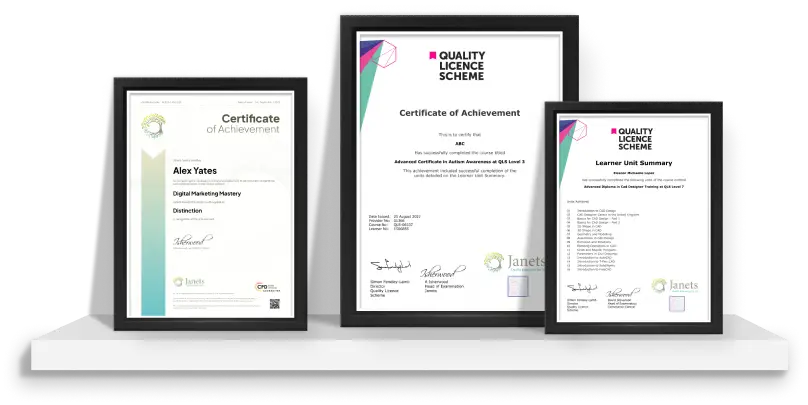
Become a cleaning leader! The QLS endorsed Diploma in Cleaning Level 7 equips you with advanced cleaning skills and leadership expertise. Master specialized techniques, manage cleaning teams, and gain a competitive edge in the cleaning industry!
Course Curriculum
| Module 1: An Introduction to the Cleaning Job | |||
| An Introduction to the Cleaning Job | 00:17:00 | ||
| Module 2: The Diversity of Cleaning Jobs | |||
| The Diversity of Cleaning Jobs | 00:23:00 | ||
| Module 3: Cleaning Equipment, Products and Clothing | |||
| Cleaning Equipment, Products and Clothing | 00:22:00 | ||
| Module 4: House Cleaning | |||
| House Cleaning | 00:19:00 | ||
| Module 5: Food Kitchen and Commercial Kitchen Cleaning | |||
| Food Kitchen and Commercial Kitchen Cleaning | 00:20:00 | ||
| Module 6: Bathrooms and Toilets | |||
| Bathrooms and Toilets | 00:19:00 | ||
| Module 7: Office Cleaning | |||
| Office Cleaning | 00:16:00 | ||
| Module 8: Cleaning External Surfaces and Areas | |||
| Cleaning External Surfaces and Areas | 00:15:00 | ||
| Module 9: Dealing with Non-Routine Waste | |||
| Dealing with Non-Routine Waste | 00:18:00 | ||
| Module 10: Chemical Safety, Keyholding and Alarm Codes for Cleaners | |||
| Chemical Safety, Keyholding and Alarm Codes for Cleaners | 00:18:00 | ||
| Module 11: Starting a Cleaning Business and Planning for it | |||
| Planning and Starting a Cleaning Business | 00:14:00 | ||
| Module 12: Running the Business with Quality Service | |||
| Running the Business with Quality Service | 00:19:00 | ||
| Module 13: Customer Satisfaction | |||
| Customer Satisfaction | 00:20:00 | ||
| Module 14: Management of Staff | |||
| Management of Staff | 00:19:00 | ||
| Module 15: Marketing, Advertising and Sales | |||
| Marketing, Advertising and Sales | 00:21:00 | ||
| Module 16: Expansion Management | |||
| Expanding Your Business | 00:15:00 | ||
| Module 17: Business Insurance, Tax and Additional Equipment | |||
| Business Insurance, Tax and Additional Equipment | 00:21:00 | ||
| Mock Exam | |||
| Mock Exam – Cleaning Level 7 | 00:20:00 | ||
| Final Exam | |||
| Final Exam – Cleaning Level 7 | 00:20:00 | ||
| Assignment | |||
| Assignment – Cleaning Level 7 | 3 weeks, 4 days | ||
| Order Your Certificate | |||
| Order your Certificate QLS | 00:00:00 | ||

Original price was: £319.£25Current price is: £25. ex Vat
SAVE 92% - OFFER ENDS IN

 14-Day Money-Back Guarantee
- Personal
- Team
Quantity:
Total:
50% discount for orders of 10+ courses
60% discount for orders of 50+ courses
70% discount for orders of 100+ courses
For more personalised package, contact us

Frequently asked questions
Can’t find the anwser you’re looking for ? Reach out to customer support team.
The 7 steps in the cleaning process typically include: Preparation: Gather all necessary cleaning supplies and equipment. Pre-Cleaning: Remove loose debris, dust, and dirt from surfaces. Main Cleaning: Apply cleaning agents and scrub or wipe surfaces to remove grime. Rinsing: Wash away the cleaning agents and loosened dirt with water. Disinfecting: Apply disinfectant to kill germs and bacteria on the cleaned surfaces. Drying: Allow surfaces to air dry or use drying equipment to prevent moisture build-up. Inspection: Check to ensure that all areas are thoroughly cleaned and meet the required standards.
To be a cleaner, you may need the following training: Basic Cleaning Techniques: Understanding different cleaning methods and when to use them. Use of Cleaning Equipment: Training on how to safely operate cleaning machines and tools. Chemical Safety: Knowledge of safe handling and storage of cleaning chemicals. Health and Safety: Understanding of workplace safety regulations and personal protective equipment (PPE). Specialized Training: Depending on the environment (e.g., hospitals, schools, commercial spaces), additional specific training may be required.
Cleaning can be physically demanding and requires attention to detail, good organizational skills, and the ability to follow safety procedures. The job can involve repetitive tasks and working with potentially hazardous chemicals, but it can also be rewarding and provides flexibility in work hours.
Yes, you can be a cleaner with no prior experience. Many cleaning jobs offer on-the-job training to teach new employees the necessary skills and procedures
There are generally three levels of cleaning: Routine Cleaning: Regular cleaning to maintain a certain level of cleanliness (e.g., daily tasks like dusting and vacuuming). Deep Cleaning: More intensive cleaning that reaches deeper dirt and grime (e.g., scrubbing floors, cleaning behind appliances). Specialized Cleaning: Cleaning that requires specific skills or equipment (e.g., industrial cleaning, hazardous material cleaning).
The 6 stages of cleaning are: Pre-Cleaning: Removing loose debris and dust. Main Cleaning: Applying cleaning agents and scrubbing surfaces. Rinsing: Removing cleaning agents and dirt. Disinfecting: Using disinfectants to kill germs. Drying: Allowing surfaces to air dry or using drying equipment. Inspection: Checking that all areas meet cleanliness standards.
The 7 steps to housekeeping are: Declutter: Remove unnecessary items from the area. Dust and Vacuum: Clean dust from surfaces and vacuum floors. Clean Surfaces: Wipe down all surfaces with appropriate cleaning agents. Clean Mirrors and Glass: Use glass cleaner for streak-free windows and mirrors. Clean Bathrooms: Scrub toilets, sinks, and bathtubs; disinfect surfaces. Mop Floors: Use a mop to clean hard floors. Final Touches: Replace items, empty trash, and do a final check.
The highest level of cleaning is often referred to as terminal cleaning. This is a thorough and detailed cleaning process typically used in healthcare settings to prevent infection. It involves meticulous disinfection and sterilization of all surfaces.
The "Rule of 5" in cleaning is a simplified checklist for maintaining cleanliness. It typically includes: Dusting: Regularly dust all surfaces. Vacuuming: Vacuum floors and carpets frequently. Sanitizing: Regularly sanitize high-touch areas. Decluttering: Keep areas free of clutter. Mopping: Mop hard floors regularly.
The five golden rules of cleaning are: Clean from Top to Bottom: Start high (e.g., dusting shelves) and work your way down to the floor. Clean from Dry to Wet: Start with dry cleaning tasks (e.g., dusting) before moving to wet cleaning tasks (e.g., mopping). Use the Right Tools and Products: Ensure you use appropriate cleaning agents and equipment for each task. Follow a Routine: Establish and stick to a regular cleaning schedule. Practice Safety: Always follow safety guidelines, especially when handling chemicals.
To train yourself to be cleaner: Establish a Routine: Set a regular cleaning schedule. Declutter Regularly: Keep your living and working spaces organized. Learn Proper Techniques: Research or take courses on effective cleaning methods. Invest in Quality Supplies: Use good-quality cleaning tools and products. Set Goals: Create specific cleaning goals and track your progress.
A professional name for a cleaner can be: Custodian Janitor Housekeeper Cleaning Technician Sanitation Worker Maintenance Worker
The hourly wage for a cleaner in the UK varies based on location, experience, and the employer. On average, cleaners earn between £8 and £12 per hour. In London and other high-cost areas, the rate may be higher.