


Course Library View the full range of courses
-
Accounting (145 courses)
- Xero Accounting and Bookkeeping Online
- Sage 50 Accounting & Payroll
- Project Finance
- Financial Modelling Training
- Tax Accounting
- Introduction to VAT
- Accounting and Finance Course for Managers
- Internal Compliance Auditor
- Financial Statement Analysis
- Payroll Administrator Level 3 Diploma
- View all Accounting courses
-
Language (67 courses)
- British Sign Language (BSL) Level 1 & 2
- Speech and Language Therapy Diploma
- TEFL (TESOL) Course
- English Spelling, Punctuation, and Grammar
- Child & Adult Speech & Language Disorders Training
- Teaching English as Foreign Language (TEFL) Certificate
- Mastering Spanish Language
- French Course for Beginners
- German Course for Beginners
- Body Language and Gesture Training
- View all Language courses
-
Teaching & Education (37 courses)
- Teaching Assistant Complete Course (TA, SEN, Autism, ADHD & Dyslexia) – CPD Certified
- EYFS Teaching Assistant Training Course
- Advanced Diploma in Coaching and Mentoring
- Level 3 Diploma in Teaching and Classroom Management
- Remote Teaching
- SENCO – Special Educational Needs Coordination
- Teaching English as Foreign Language (TEFL)
- Life Coaching
- Phonics Teaching Diploma
- View all Teaching & Education courses
-
Health and Social Care (138 courses)
- Health and Social Care Management
- Paediatric Nursing Assistant
- Mental Health Awareness Training
- Emergency Medicine – Paramedicine
- Level 3 Diploma in Adult Care
- Paediatric First Aid Training
- Safeguarding Children Level 3
- Level 3 Diploma in Anatomy and Physiology of Human Body
- Play Therapy
- The Care Certificate Preparation – Standards (1 to 15)
- View all Health and Social Care courses
-
Management (539 courses)
- Office Admin, Secretarial and PA Diploma
- Estate Agent and Property Management Training
- Diploma in Data Analysis Fundamentals
- Advanced Diploma in Stress & Anxiety Management
- Good Manufacturing Practice (GMP)
- Property Development and Management Course
- Diploma in Hotel Management
- Supply Chain Management
- Quality Assurance (QA) Manager
- Compliance and Risk Management
- View all Management courses
-
IT & Software (123 courses)
- Coding with Python 3
- Search Engine Optimisation (SEO) Training
- Cyber Security
- Motion Graphics with After Effects
- CompTIA A+ Core 1 (220-1101) Course
- Machine Learning for Aspiring Data Scientists
- Next.js Web Dev: Master this Powerful React Framework
- Learn 2D Animation with Adobe Animate
- GDPR Challenges in Education
- View all IT & Software courses
-
Employability (1043 courses)
- Office Administrator Skills
- Presentation Skills
- Legal Secretary and Office Skills
- Hospitality Management
- Estate Agent Diploma
- Hairdressing and Barbering
- Diploma in UK Employment Law
- Diploma in Data Analysis Fundamentals
- Building Surveyor Training
- Emotional Intelligence Training
- View all Employability courses
-
Personal Development (1439 courses)
- Productivity Habits
- Minute Taking Course
- Presentation Skills
- Excel: Top 50 Microsoft Excel Formulas in 50 Minutes!
- Critical Thinking and Problem Solving Skills
- Time Management
- Self Esteem and Confidence Building Course
- Essential IT Skills
- Legal Secretary and Office Skills
- Personality Development
- View all Personal Development courses


Deep Learning & Neural Networks Python - Keras
677 Students (30 Reviews)
Learn deep learning with Python and Keras, build neural networks, train models, analyse performance, and develop essential skills for AI and machine learning careers.
Course Curriculum
| Course Introduction And Table Of Contents | |||
| Course Introduction and Table of Contents | 00:11:00 | ||
| Deep Learning Overview | |||
| Deep Learning Overview – Theory Session – Part 1 | 00:06:00 | ||
| Deep Learning Overview – Theory Session – Part 2 | 00:07:00 | ||
| Choosing Between ML Or DL For The Next AI Project - Quick Theory Session | |||
| Choosing Between ML or DL for the next AI project – Quick Theory Session | 00:09:00 | ||
| Preparing Your Computer | |||
| Preparing Your Computer – Part 1 | 00:07:00 | ||
| Preparing Your Computer – Part 2 | 00:06:00 | ||
| Python Basics | |||
| Python Basics – Assignment | 00:09:00 | ||
| Python Basics – Flow Control | 00:09:00 | ||
| Python Basics – Functions | 00:04:00 | ||
| Python Basics – Data Structures | 00:12:00 | ||
| Theano Library Installation And Sample Program To Test | |||
| Theano Library Installation and Sample Program to Test | 00:11:00 | ||
| TensorFlow Library Installation And Sample Program To Test | |||
| TensorFlow library Installation and Sample Program to Test | 00:09:00 | ||
| Keras Installation And Switching Theano And TensorFlow Backends | |||
| Keras Installation and Switching Theano and TensorFlow Backends | 00:10:00 | ||
| Explaining Multi-Layer Perceptron Concepts | |||
| Explaining Multi-Layer Perceptron Concepts | 00:03:00 | ||
| Explaining Neural Networks Steps And Terminology | |||
| Explaining Neural Networks Steps and Terminology | 00:10:00 | ||
| First Neural Network With Keras - Understanding Pima Indian Diabetes Dataset | |||
| First Neural Network with Keras – Understanding Pima Indian Diabetes Dataset | 00:07:00 | ||
| Explaining Training And Evaluation Concepts | |||
| Explaining Training and Evaluation Concepts | 00:11:00 | ||
| Pima Indian Model - Steps Explained | |||
| Pima Indian Model – Steps Explained – Part 1 | 00:09:00 | ||
| Pima Indian Model – Steps Explained – Part 2 | 00:07:00 | ||
| Coding The Pima Indian Model | |||
| Coding the Pima Indian Model – Part 1 | 00:11:00 | ||
| Coding the Pima Indian Model – Part 2 | 00:09:00 | ||
| Pima Indian Model - Performance Evaluation | |||
| Pima Indian Model – Performance Evaluation – Automatic Verification | 00:06:00 | ||
| Pima Indian Model – Performance Evaluation – Manual Verification | 00:08:00 | ||
| Pima Indian Model - Performance Evaluation - K-Fold Validation - Keras | |||
| Pima Indian Model – Performance Evaluation – k-fold Validation – Keras | 00:10:00 | ||
| Pima Indian Model - Performance Evaluation - Hyper Parameters | |||
| Pima Indian Model – Performance Evaluation – Hyper Parameters | 00:12:00 | ||
| Understanding Iris Flower Multi-Class Dataset | |||
| Understanding Iris Flower Multi-Class Dataset | 00:08:00 | ||
| Developing The Iris Flower Multi-Class Model | |||
| Developing the Iris Flower Multi-Class Model – Part 1 | 00:09:00 | ||
| Developing the Iris Flower Multi-Class Model – Part 2 | 00:06:00 | ||
| Developing the Iris Flower Multi-Class Model – Part 3 | 00:09:00 | ||
| Understanding The Sonar Returns Dataset | |||
| Understanding the Sonar Returns Dataset | 00:07:00 | ||
| Developing The Sonar Returns Model | |||
| Developing the Sonar Returns Model | 00:10:00 | ||
| Sonar Performance Improvement - Data Preparation - Standardization | |||
| Sonar Performance Improvement – Data Preparation – Standardization | 00:15:00 | ||
| Sonar Performance Improvement - Data Preparation - Standardization | |||
| Sonar Performance Improvement – Layer Tuning for Smaller Network | 00:07:00 | ||
| Sonar Performance Improvement - Layer Tuning For Larger Network | |||
| Sonar Performance Improvement – Layer Tuning for Larger Network | 00:06:00 | ||
| Understanding The Boston Housing Regression Dataset | |||
| Understanding the Boston Housing Regression Dataset | 00:07:00 | ||
| Developing The Boston Housing Baseline Model | |||
| Developing the Boston Housing Baseline Model | 00:08:00 | ||
| Boston Performance Improvement By Standardization | |||
| Boston Performance Improvement by Standardization | 00:07:00 | ||
| Boston Performance Improvement By Deeper Network Tuning | |||
| Boston Performance Improvement by Deeper Network Tuning | 00:05:00 | ||
| Boston Performance Improvement By Wider Network Tuning | |||
| Boston Performance Improvement by Wider Network Tuning | 00:04:00 | ||
| Save & Load The Trained Model As JSON File (Pima Indian Dataset) | |||
| Save & Load the Trained Model as JSON File (Pima Indian Dataset) – Part 1 | 00:09:00 | ||
| Save & Load the Trained Model as JSON File (Pima Indian Dataset) – Part 2 | 00:08:00 | ||
| Save And Load Model As YAML File - Pima Indian Dataset | |||
| Save and Load Model as YAML File – Pima Indian Dataset | 00:05:00 | ||
| Load And Predict Using The Pima Indian Diabetes Model | |||
| Load and Predict using the Pima Indian Diabetes Model | 00:09:00 | ||
| Load And Predict Using The Iris Flower Multi-Class Model | |||
| Load and Predict using the Iris Flower Multi-Class Model | 00:08:00 | ||
| Load And Predict Using The Sonar Returns Model | |||
| Load and Predict using the Sonar Returns Model | 00:10:00 | ||
| Load And Predict Using The Boston Housing Regression Model | |||
| Load and Predict using the Boston Housing Regression Model | 00:08:00 | ||
| An Introduction To Checkpointing | |||
| An Introduction to Checkpointing | 00:06:00 | ||
| Checkpoint Neural Network Model Improvements | |||
| Checkpoint Neural Network Model Improvements | 00:10:00 | ||
| Checkpoint Neural Network Best Model | |||
| Checkpoint Neural Network Best Model | 00:04:00 | ||
| Loading The Saved Checkpoint | |||
| Loading the Saved Checkpoint | 00:05:00 | ||
| Plotting Model Behavior History | |||
| Plotting Model Behavior History – Introduction | 00:06:00 | ||
| Plotting Model Behavior History – Coding | 00:08:00 | ||
| Dropout Regularization - Visible Layer | |||
| Dropout Regularization – Visible Layer – Part 1 | 00:11:00 | ||
| Dropout Regularization – Visible Layer – Part 2 | 00:06:00 | ||
| Dropout Regularization - Hidden Layer | |||
| Dropout Regularization – Hidden Layer | 00:06:00 | ||
| Learning Rate Schedule Using Ionosphere Dataset - Intro | |||
| Learning Rate Schedule using Ionosphere Dataset | 00:06:00 | ||
| Time Based Learning Rate Schedule | |||
| Time Based Learning Rate Schedule – Part 1 | 00:07:00 | ||
| Time Based Learning Rate Schedule – Part 2 | 00:12:00 | ||
| Drop Based Learning Rate Schedule | |||
| Drop Based Learning Rate Schedule – Part 1 | 00:07:00 | ||
| Drop Based Learning Rate Schedule – Part 2 | 00:08:00 | ||
| Convolutional Neural Networks - Introduction | |||
| Convolutional Neural Networks – Part 1 | 00:11:00 | ||
| Convolutional Neural Networks – Part 2 | 00:06:00 | ||
| MNIST Handwritten Digit Recognition Dataset | |||
| Introduction to MNIST Handwritten Digit Recognition Dataset | 00:06:00 | ||
| Downloading and Testing MNIST Handwritten Digit Recognition Dataset | 00:10:00 | ||
| MNIST Handwritten Digit Recognition Dataset | |||
| MNIST Multi-Layer Perceptron Model Development – Part 1 | 00:11:00 | ||
| MNIST Multi-Layer Perceptron Model Development – Part 2 | 00:06:00 | ||
| Convolutional Neural Network Model Using MNIST | |||
| Convolutional Neural Network Model using MNIST – Part 1 | 00:13:00 | ||
| Convolutional Neural Network Model using MNIST – Part 2 | 00:12:00 | ||
| Large CNN Using MNIST | |||
| Large CNN using MNIST | 00:09:00 | ||
| Load And Predict Using The MNIST CNN Model | |||
| Load and Predict using the MNIST CNN Model | 00:14:00 | ||
| Introduction To Image Augmentation Using Keras | |||
| Introduction to Image Augmentation using Keras | 00:11:00 | ||
| Augmentation Using Sample Wise Standardization | |||
| Augmentation using Sample Wise Standardization | 00:10:00 | ||
| Augmentation Using Feature Wise Standardization & ZCA Whitening | |||
| Augmentation using Feature Wise Standardization & ZCA Whitening | 00:04:00 | ||
| Augmentation Using Rotation And Flipping | |||
| Augmentation using Rotation and Flipping | 00:04:00 | ||
| Saving Augmentation | |||
| Saving Augmentation | 00:05:00 | ||
| CIFAR-10 Object Recognition Dataset - Understanding And Loading | |||
| CIFAR-10 Object Recognition Dataset – Understanding and Loading | 00:12:00 | ||
| Simple CNN Using CIFAR-10 Dataset | |||
| Simple CNN using CIFAR-10 Dataset – Part 1 | 00:09:00 | ||
| Simple CNN using CIFAR-10 Dataset – Part 2 | 00:06:00 | ||
| Simple CNN using CIFAR-10 Dataset – Part 3 | 00:08:00 | ||
| Train And Save CIFAR-10 Model | |||
| Train and Save CIFAR-10 Model | 00:08:00 | ||
| Load And Predict Using CIFAR-10 CNN Model | |||
| Load and Predict using CIFAR-10 CNN Model | 00:16:00 | ||
| RECOMENDED READINGS | |||
| Recomended Readings | 00:00:00 | ||
| Order Your Certificates & Transcripts | |||
| Order your Certificates & Transcripts | 00:00:00 | ||

Original price was: £319.£25Current price is: £25. ex Vat
SAVE 92% - OFFER ENDS IN

 14-Day Money-Back Guarantee
- Personal
- Team
Quantity:
Total:
50% discount for orders of 10+ courses
60% discount for orders of 50+ courses
70% discount for orders of 100+ courses
For more personalised package, contact us


Frequently asked questions
Can’t find the anwser you’re looking for ? Reach out to customer support team.
This course introduces deep learning and neural network concepts while showing how Python and Keras can be used to create, train, and evaluate machine learning models.
Keras is a deep learning framework that simplifies the process of building, training, evaluating, and experimenting with neural network models.
Previous Python experience can be helpful, but it is not essential. Learners with basic programming knowledge and an interest in AI can develop their skills through the course.
Neural networks are computing models inspired by the way biological brains process information. They can identify patterns and support tasks such as classification and prediction.
Students, Python learners, aspiring data scientists, AI enthusiasts, machine learning enthusiasts, and professionals seeking knowledge of deep learning technologies can benefit from this course.
You will learn about creating neural network models, working with layers and activation functions, preparing data, training models, and evaluating model performance using Keras.
Yes. The knowledge gained can provide a useful foundation for further development towards roles involving artificial intelligence, machine learning, data science, and deep learning.
For this course, you will have access to the course materials for 1 year only. This means you can review the content as often as you like within the year, even after you've completed the course. However, if you buy Lifetime Access for the course, you will be able to access the course for a lifetime.
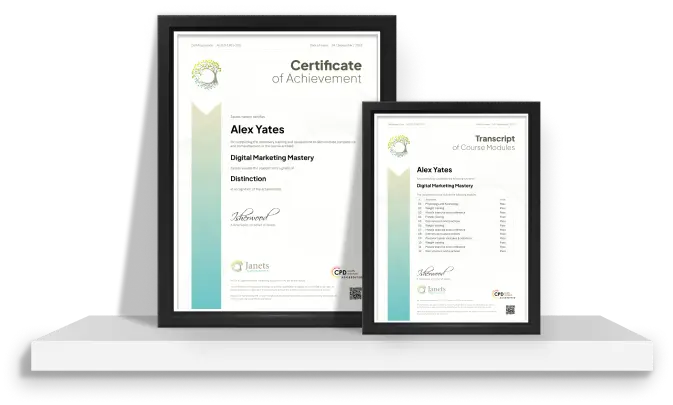
Yes, upon successfully completing the course, you will receive a certificate of completion. This certificate can be a valuable addition to your professional portfolio and can be shared on your various social networks.
We want you to have a positive learning experience. If you're not satisfied with the course, you can request a course transfer or refund within 14 days of the initial purchase.
Our platform provides tracking tools and progress indicators for each course. You can monitor your progress, completed lessons, and assessments through your learner dashboard for the course.
If you encounter technical issues or content-related difficulties with the course, our support team is available to assist you. You can reach out to them for prompt resolution.