


Course Library View the full range of courses
-
Accounting (145 courses)
- Xero Accounting and Bookkeeping Online
- Sage 50 Accounting & Payroll
- Project Finance
- Financial Modelling Training
- Tax Accounting
- Introduction to VAT
- Accounting and Finance Course for Managers
- Internal Compliance Auditor
- Financial Statement Analysis
- Payroll Administrator Level 3 Diploma
- View all Accounting courses
-
Language (67 courses)
- British Sign Language (BSL) Level 1 & 2
- Speech and Language Therapy Diploma
- TEFL (TESOL) Course
- English Spelling, Punctuation, and Grammar
- Child & Adult Speech & Language Disorders Training
- Teaching English as Foreign Language (TEFL) Certificate
- Mastering Spanish Language
- French Course for Beginners
- German Course for Beginners
- Body Language and Gesture Training
- View all Language courses
-
Teaching & Education (37 courses)
- Teaching Assistant Complete Course (TA, SEN, Autism, ADHD & Dyslexia) – CPD Certified
- EYFS Teaching Assistant Training Course
- Advanced Diploma in Coaching and Mentoring
- Level 3 Diploma in Teaching and Classroom Management
- Remote Teaching
- SENCO – Special Educational Needs Coordination
- Teaching English as Foreign Language (TEFL)
- Life Coaching
- Phonics Teaching Diploma
- View all Teaching & Education courses
-
Health and Social Care (138 courses)
- Health and Social Care Management
- Paediatric Nursing Assistant
- Mental Health Awareness Training
- Emergency Medicine – Paramedicine
- Level 3 Diploma in Adult Care
- Paediatric First Aid Training
- Safeguarding Children Level 3
- Level 3 Diploma in Anatomy and Physiology of Human Body
- Play Therapy
- The Care Certificate Preparation – Standards (1 to 15)
- View all Health and Social Care courses
-
Management (539 courses)
- Office Admin, Secretarial and PA Diploma
- Estate Agent and Property Management Training
- Diploma in Data Analysis Fundamentals
- Advanced Diploma in Stress & Anxiety Management
- Good Manufacturing Practice (GMP)
- Property Development and Management Course
- Diploma in Hotel Management
- Supply Chain Management
- Quality Assurance (QA) Manager
- Compliance and Risk Management
- View all Management courses
-
IT & Software (124 courses)
- Coding with Python 3
- Search Engine Optimisation (SEO) Training
- Cyber Security
- Motion Graphics with After Effects
- CompTIA A+ Core 1 (220-1101) Course
- Machine Learning for Aspiring Data Scientists
- Next.js Web Dev: Master this Powerful React Framework
- Learn 2D Animation with Adobe Animate
- GDPR Challenges in Education
- View all IT & Software courses
-
Employability (1043 courses)
- Office Administrator Skills
- Presentation Skills
- Legal Secretary and Office Skills
- Hospitality Management
- Estate Agent Diploma
- Hairdressing and Barbering
- Diploma in UK Employment Law
- Diploma in Data Analysis Fundamentals
- Building Surveyor Training
- Emotional Intelligence Training
- View all Employability courses
-
Personal Development (1439 courses)
- Productivity Habits
- Minute Taking Course
- Presentation Skills
- Excel: Top 50 Microsoft Excel Formulas in 50 Minutes!
- Critical Thinking and Problem Solving Skills
- Time Management
- Self Esteem and Confidence Building Course
- Essential IT Skills
- Legal Secretary and Office Skills
- Personality Development
- View all Personal Development courses


First Aid Training
156 Students (12 Reviews)
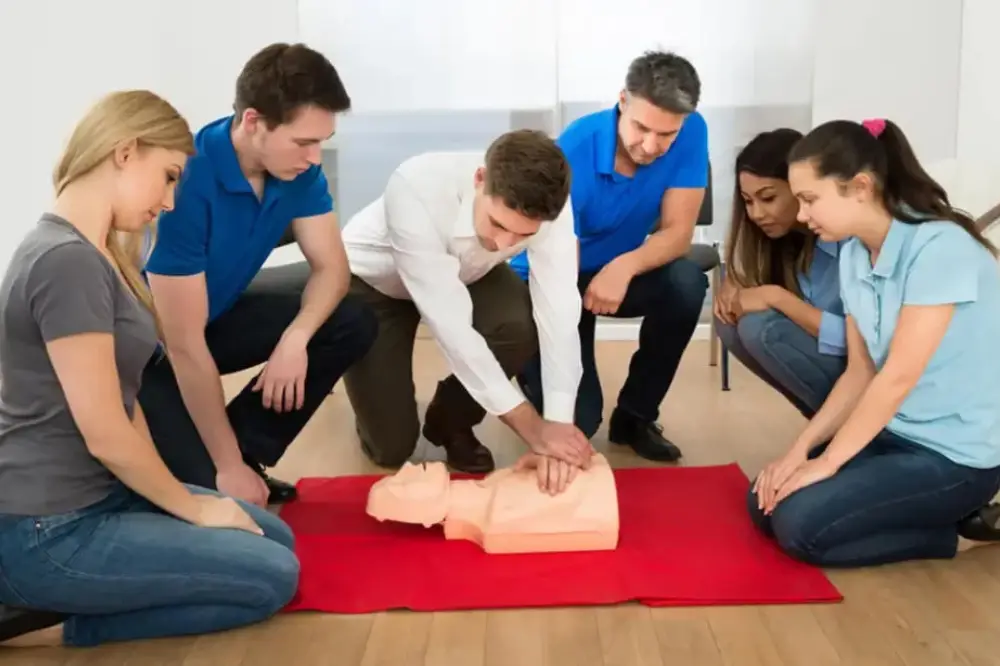
Be prepared to act in an emergency! This First Aid Training course teaches CPR, choking interventions, bleeding control, and more. Gain the confidence to help others until medical assistance arrives.
Course Curriculum
| Workplace First Aid | |||
| Introduction and Primary Assessment | 00:30:00 | ||
| Emergency, First Aid and Safety Procedures | 00:30:00 | ||
| Cardiopulmonary Resuscitation (CPR) | 00:25:00 | ||
| Injuries, Illness and Treatments: I | 00:30:00 | ||
| Injuries, Illness and Treatments: II | 00:15:00 | ||
| Injuries, Illness and Treatments: III | 00:30:00 | ||
| Injuries, Illness and Treatments: IV | 00:30:00 | ||
| Injuries, Illness and Treatments: V | 00:30:00 | ||
| Order your Certificates & Transcripts | |||
| Order your Certificates & Transcripts | 00:00:00 | ||

Original price was: £319.£25Current price is: £25. ex Vat
SAVE 92% - OFFER ENDS IN

 14-Day Money-Back Guarantee
- Personal
- Team
Quantity:
Total:
50% discount for orders of 10+ courses
60% discount for orders of 50+ courses
70% discount for orders of 100+ courses
For more personalised package, contact us


Frequently asked questions
Can’t find the anwser you’re looking for ? Reach out to customer support team.
The five rules of first aid are: (1) Assess the situation for danger to yourself and others; (2) Call for professional help immediately if needed; (3) Provide care to the injured person(s); (4) Stay calm and reassure the injured person(s); (5) Follow the ABCs of first aid: Airway, Breathing, and Circulation.
The five key steps of first aid are: (1) Assess the scene and ensure it is safe; (2) Call for emergency medical help if necessary; (3) Check the injured person's responsiveness; (4) Provide appropriate first aid treatment based on the condition; (5) Monitor the injured person's condition until professional help arrives.
First aid training typically includes basic life support techniques, CPR (Cardiopulmonary Resuscitation), wound care, treatment for burns and fractures, managing shock, and handling medical emergencies such as choking, heart attacks, and strokes. It also covers the use of automated external defibrillators (AEDs).
Standard first aid training provides comprehensive coverage of basic first aid principles, including how to assess and manage injuries and illnesses, perform CPR, and use an AED. It is designed to equip individuals with the skills needed to respond effectively in emergency situations.
CPR (Cardiopulmonary Resuscitation) is a specific technique used to maintain circulation and breathing in a person who has experienced cardiac arrest. Standard first aid includes a broader range of emergency care skills, including CPR, wound care, and treatment for various injuries and illnesses.
To perform first aid, first ensure the scene is safe. Then assess the injured person's condition by checking their responsiveness, breathing, and circulation. Provide appropriate care based on the injury or illness, such as stopping bleeding, performing CPR, or treating burns. Always seek professional medical help when necessary.
Basic first aid includes skills such as CPR, treating minor cuts and wounds, managing burns, handling fractures and sprains, controlling bleeding, assisting with choking, and monitoring the injured person's vital signs.
The ABCs of first aid stand for Airway, Breathing, and Circulation. These are the primary steps to check and maintain in a person requiring first aid to ensure they receive adequate oxygen and blood flow.
First aid training teaches individuals how to provide immediate care in emergency situations. It includes assessing the situation, performing life-saving techniques like CPR, treating wounds and injuries, managing shock, and ensuring the safety and stability of the injured person until professional help arrives.
The 10 basic first aid procedures include: Performing CPR. Treating burns. Controlling bleeding. Managing fractures and sprains. Treating shock. Assisting with choking. Treating heat exhaustion and heatstroke. Managing hypothermia. Treating allergic reactions. Using an AED
The 3 C's of first aid are: Check (the scene and the injured person), Call (for emergency help), and Care (for the injured person until professional help arrives).
The five finger rule in first aid is a mnemonic that helps remember the key steps in providing first aid: Check (the scene), Call (for help), Care (for the injured person), Calm (the person), and Continue (to monitor and provide care).
The golden rule in first aid is to do no harm. This means providing care that does not worsen the condition of the injured person and ensuring that any actions taken are beneficial and safe.
A first aider should not perform medical procedures beyond their training, diagnose conditions, administer medication without proper authorization, or leave the injured person unattended unless it is to seek help.
The 4 A's of first aid are: Assess (the situation), Alert (emergency services), Attend (to the injured person), and Aftercare (provide ongoing care and support).