


Course Library View the full range of courses
-
Accounting (145 courses)
- Xero Accounting and Bookkeeping Online
- Sage 50 Accounting & Payroll
- Project Finance
- Financial Modelling Training
- Tax Accounting
- Introduction to VAT
- Accounting and Finance Course for Managers
- Internal Compliance Auditor
- Financial Statement Analysis
- Payroll Administrator Level 3 Diploma
- View all Accounting courses
-
Language (67 courses)
- British Sign Language (BSL) Level 1 & 2
- Speech and Language Therapy Diploma
- TEFL (TESOL) Course
- English Spelling, Punctuation, and Grammar
- Child & Adult Speech & Language Disorders Training
- Teaching English as Foreign Language (TEFL) Certificate
- Mastering Spanish Language
- French Course for Beginners
- German Course for Beginners
- Body Language and Gesture Training
- View all Language courses
-
Teaching & Education (37 courses)
- Teaching Assistant Complete Course (TA, SEN, Autism, ADHD & Dyslexia) – CPD Certified
- EYFS Teaching Assistant Training Course
- Advanced Diploma in Coaching and Mentoring
- Level 3 Diploma in Teaching and Classroom Management
- Remote Teaching
- SENCO – Special Educational Needs Coordination
- Teaching English as Foreign Language (TEFL)
- Life Coaching
- Phonics Teaching Diploma
- View all Teaching & Education courses
-
Health and Social Care (138 courses)
- Health and Social Care Management
- Paediatric Nursing Assistant
- Mental Health Awareness Training
- Emergency Medicine – Paramedicine
- Level 3 Diploma in Adult Care
- Paediatric First Aid Training
- Safeguarding Children Level 3
- Level 3 Diploma in Anatomy and Physiology of Human Body
- Play Therapy
- The Care Certificate Preparation – Standards (1 to 15)
- View all Health and Social Care courses
-
Management (539 courses)
- Office Admin, Secretarial and PA Diploma
- Estate Agent and Property Management Training
- Diploma in Data Analysis Fundamentals
- Advanced Diploma in Stress & Anxiety Management
- Good Manufacturing Practice (GMP)
- Property Development and Management Course
- Diploma in Hotel Management
- Supply Chain Management
- Quality Assurance (QA) Manager
- Compliance and Risk Management
- View all Management courses
-
IT & Software (127 courses)
- Coding with Python 3
- Search Engine Optimisation (SEO) Training
- Cyber Security
- Motion Graphics with After Effects
- CompTIA A+ Core 1 (220-1101) Course
- Machine Learning for Aspiring Data Scientists
- Next.js Web Dev: Master this Powerful React Framework
- Learn 2D Animation with Adobe Animate
- GDPR Challenges in Education
- View all IT & Software courses
-
Employability (1043 courses)
- Office Administrator Skills
- Presentation Skills
- Legal Secretary and Office Skills
- Hospitality Management
- Estate Agent Diploma
- Hairdressing and Barbering
- Diploma in UK Employment Law
- Diploma in Data Analysis Fundamentals
- Building Surveyor Training
- Emotional Intelligence Training
- View all Employability courses
-
Personal Development (1439 courses)
- Productivity Habits
- Minute Taking Course
- Presentation Skills
- Excel: Top 50 Microsoft Excel Formulas in 50 Minutes!
- Critical Thinking and Problem Solving Skills
- Time Management
- Self Esteem and Confidence Building Course
- Essential IT Skills
- Legal Secretary and Office Skills
- Personality Development
- View all Personal Development courses


Psychodynamic Psychotherapy Diploma
152 Students (9 Reviews)
Unravel the depths of the human mind! The Psychodynamic Psychotherapy Diploma equips you with the knowledge and skills to provide effective therapy. Explore unconscious processes, analyze behaviors, and guide individuals towards emotional well-being and self-discovery. Launch your career in psychotherapy and make a positive impact on lives.

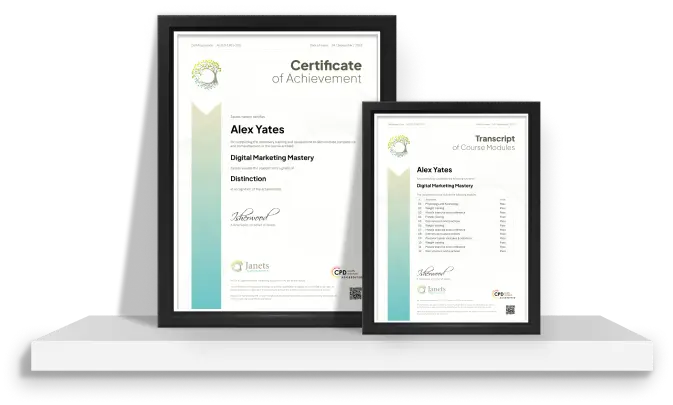
Course Curriculum
| Introduction | |||
| About the Tutor | 00:02:00 | ||
| About the Course | 00:04:00 | ||
| What is Psychodynamic Psychotherapy? | 00:10:00 | ||
| What is Psychoanalytic Psychotherapy & Psychoanalysis? | 00:14:00 | ||
| How does Psychodynamic Psychotherapy work? | 00:08:00 | ||
| Core Principles of Psychodynamic Psychotherapy | 00:11:00 | ||
| The Purpose & the Goals | 00:06:00 | ||
| What is Psychodynamic Psychotherapy used for? (substance use, depression, PTSD) | 00:12:00 | ||
| Levels of Awareness | |||
| Consciousness and the Unconscious | 00:10:00 | ||
| Psychodynamic Psychotherapy and the Unconscious | 00:07:00 | ||
| Defence Mechanisms / Psychological Defences | |||
| Denial | 00:10:00 | ||
| Repression | 00:10:00 | ||
| Rationalisation | 00:06:00 | ||
| Reaction Formation | 00:09:00 | ||
| Projection | 00:08:00 | ||
| Displacement | 00:05:00 | ||
| Regression | 00:08:00 | ||
| Sublimation | 00:06:00 | ||
| Conducting a Psychotherapy Session | |||
| The Importance of a Therapeutic Relationship | 00:06:00 | ||
| Creating a Safe Place | 00:09:00 | ||
| Informed Consent (Beginning of the Treatment) | 00:07:00 | ||
| Setting Frame & Boundaries | 00:10:00 | ||
| Conducting an Assessment | 00:11:00 | ||
| Goal Setting with the Client | 00:08:00 | ||
| Therapist and the Client in Psychodynamic Psychotherapy | |||
| Listening in Psychodynamic Therapy (Empathic Listening) | 00:08:00 | ||
| Transference | 00:10:00 | ||
| Countertransference | 00:07:00 | ||
| Techniques in Psychodynamic Therapy | |||
| Free Association | 00:07:00 | ||
| Symbolism & Interpretation | 00:05:00 | ||
| Dream Interpretation – part 1 | 00:05:00 | ||
| Dream Interpretation – part 2 | 00:11:00 | ||
| What Else You Need to Know | |||
| Sessions – how long, how often, how many? | 00:08:00 | ||
| Short-Term / Brief Psychodynamic Therapy | 00:10:00 | ||
| When do we ‘end’ Psychotherapy? | 00:12:00 | ||
| Medication and Therapy | 00:07:00 | ||
| Thank You & Good Bye! | 00:03:00 | ||
| Bonus Section | |||
| Additional Techniques in Psychotherapy | 00:12:00 | ||
| Stress- & Anger Management in Psychotherapy | 00:12:00 | ||
| Acceptance & Commitment Therapy (ACT) | 00:17:00 | ||
| Order your Certificates & Transcripts | |||
| Order your Certificates & Transcripts | 00:00:00 | ||

Original price was: £319.£25Current price is: £25. ex Vat
SAVE 92% - OFFER ENDS IN

 14-Day Money-Back Guarantee
- Personal
- Team
Quantity:
Total:
50% discount for orders of 10+ courses
60% discount for orders of 50+ courses
70% discount for orders of 100+ courses
For more personalised package, contact us


Frequently asked questions
Can’t find the anwser you’re looking for ? Reach out to customer support team.
Obtain a Bachelor’s Degree: Typically in psychology, sociology, or a related field. Pursue a Master’s Degree: In clinical psychology, counseling, or social work with a focus on psychodynamic therapy. Complete Specialized Training: Enroll in a psychodynamic therapy training program accredited by a relevant professional body. Gain Clinical Experience: Complete supervised clinical hours during your training to gain practical experience. Obtain Licensure: Meet the licensing requirements in your country or state, which usually involves passing an exam and fulfilling supervised practice hours. Continued Professional Development: Engage in ongoing education and training to stay updated with advancements in the field.
Psychodynamic Counselling: Generally shorter-term and focuses on addressing specific issues. It uses psychodynamic principles to help clients understand and resolve immediate problems. Psychodynamic Psychotherapy: Usually longer-term and more in-depth, exploring underlying unconscious processes and past experiences that influence current behavior and feelings.
Psychodynamic therapy is controversial due to: Lack of Empirical Evidence: Some critics argue it lacks robust scientific evidence compared to other therapies like CBT. Subjectivity: It relies heavily on interpretation, which can be seen as subjective and non-scientific. Long-Term Commitment: It often requires a long-term commitment, which can be costly and time-consuming.
No, psychodynamic therapy and Cognitive Behavioral Therapy (CBT) are different approaches: Psychodynamic Therapy: Focuses on unconscious processes and past experiences influencing current behavior. CBT: Focuses on identifying and changing negative thought patterns and behaviors. It is usually more structured and short-term.
It depends on the individual and the specific issues being addressed: CBT: Effective for specific issues like anxiety, depression, and PTSD. It is short-term and evidence-based. Psychodynamic Therapy: More suitable for individuals seeking to understand underlying emotional and psychological issues. It can provide deeper, long-lasting insights.
Time-Consuming: It often requires a long-term commitment. Cost: The extended duration can make it expensive. Lack of Structure: May not provide the immediate, structured approach some clients need. Subjectivity: The interpretative nature can lead to varied outcomes.
Individuals Seeking Immediate Results: Those needing quick, structured solutions might find it less effective. Severe Mental Health Issues: Those with acute conditions like severe psychosis might require more immediate, intensive interventions. Low Motivation: Clients who are not willing to engage in deep self-exploration may struggle with this approach.
No, psychodynamic therapy is not outdated. While some aspects are debated, it remains a valuable therapeutic approach, particularly for understanding deep-seated emotional issues and long-term personality changes.
The opposite of psychodynamic therapy could be considered Cognitive Behavioral Therapy (CBT), which focuses on present thoughts and behaviors rather than past experiences and unconscious processes.
Individuals with Long-Standing Issues: Those dealing with chronic emotional problems. People Seeking Deep Understanding: Those who want to explore underlying causes of their behaviors and emotions. Those with Relational Issues: Individuals facing interpersonal relationship problems.
Neither is inherently better; it depends on the client’s needs: Counsellor: Often focuses on specific issues and short-term solutions. Psychotherapist: Provides more in-depth, long-term therapy.
Deep Understanding: Offers profound insights into human behavior and emotional processes. Versatility: Can be applied to a wide range of psychological issues. Long-Term Impact: Aims for lasting psychological change.
Most psychotherapists have a master's degree in psychology, counseling, social work, or a related field. Many also pursue doctoral degrees (Ph.D. or Psy.D.) for advanced practice and specialization.
Freudian (Classical Psychoanalysis): Focuses on unconscious motives and conflicts. Jungian Analysis: Emphasizes collective unconscious and archetypes. Object Relations Theory: Focuses on interpersonal relationships and their impact on personality. Ego Psychology: Emphasizes the role of the ego in development and behavior.
The success rate of psychodynamic therapy varies and is difficult to quantify precisely. Studies have shown it to be effective, particularly for long-term personality changes and deep-seated emotional issues. It is often as effective as other forms of therapy, like CBT, for certain conditions, but results can be subjective and individualized.