


Course Library View the full range of courses
-
Accounting (145 courses)
- Xero Accounting and Bookkeeping Online
- Sage 50 Accounting & Payroll
- Project Finance
- Financial Modelling Training
- Tax Accounting
- Introduction to VAT
- Accounting and Finance Course for Managers
- Internal Compliance Auditor
- Financial Statement Analysis
- Payroll Administrator Level 3 Diploma
- View all Accounting courses
-
Language (67 courses)
- British Sign Language (BSL) Level 1 & 2
- Speech and Language Therapy Diploma
- TEFL (TESOL) Course
- English Spelling, Punctuation, and Grammar
- Child & Adult Speech & Language Disorders Training
- Teaching English as Foreign Language (TEFL) Certificate
- Mastering Spanish Language
- French Course for Beginners
- German Course for Beginners
- Body Language and Gesture Training
- View all Language courses
-
Teaching & Education (37 courses)
- Teaching Assistant Complete Course (TA, SEN, Autism, ADHD & Dyslexia) – CPD Certified
- EYFS Teaching Assistant Training Course
- Advanced Diploma in Coaching and Mentoring
- Level 3 Diploma in Teaching and Classroom Management
- Remote Teaching
- SENCO – Special Educational Needs Coordination
- Teaching English as Foreign Language (TEFL)
- Life Coaching
- Phonics Teaching Diploma
- View all Teaching & Education courses
-
Health and Social Care (138 courses)
- Health and Social Care Management
- Paediatric Nursing Assistant
- Mental Health Awareness Training
- Emergency Medicine – Paramedicine
- Level 3 Diploma in Adult Care
- Paediatric First Aid Training
- Safeguarding Children Level 3
- Level 3 Diploma in Anatomy and Physiology of Human Body
- Play Therapy
- The Care Certificate Preparation – Standards (1 to 15)
- View all Health and Social Care courses
-
Management (539 courses)
- Office Admin, Secretarial and PA Diploma
- Estate Agent and Property Management Training
- Diploma in Data Analysis Fundamentals
- Advanced Diploma in Stress & Anxiety Management
- Good Manufacturing Practice (GMP)
- Property Development and Management Course
- Diploma in Hotel Management
- Supply Chain Management
- Quality Assurance (QA) Manager
- Compliance and Risk Management
- View all Management courses
-
IT & Software (127 courses)
- Coding with Python 3
- Search Engine Optimisation (SEO) Training
- Cyber Security
- Motion Graphics with After Effects
- CompTIA A+ Core 1 (220-1101) Course
- Machine Learning for Aspiring Data Scientists
- Next.js Web Dev: Master this Powerful React Framework
- Learn 2D Animation with Adobe Animate
- GDPR Challenges in Education
- View all IT & Software courses
-
Employability (1043 courses)
- Office Administrator Skills
- Presentation Skills
- Legal Secretary and Office Skills
- Hospitality Management
- Estate Agent Diploma
- Hairdressing and Barbering
- Diploma in UK Employment Law
- Diploma in Data Analysis Fundamentals
- Building Surveyor Training
- Emotional Intelligence Training
- View all Employability courses
-
Personal Development (1439 courses)
- Productivity Habits
- Minute Taking Course
- Presentation Skills
- Excel: Top 50 Microsoft Excel Formulas in 50 Minutes!
- Critical Thinking and Problem Solving Skills
- Time Management
- Self Esteem and Confidence Building Course
- Essential IT Skills
- Legal Secretary and Office Skills
- Personality Development
- View all Personal Development courses


Sports Massage Course
503 Students (7 Reviews)
Boost athletic performance and recovery! Our Sports Massage Course equips you with targeted techniques to address muscle imbalances, improve flexibility, and optimise athletic performance through the power of massage therapy.

Course Curriculum
| Sports Massage Course | |||
| Introduction to Sports Massage | 01:00:00 | ||
| Working as Sports Massage | 00:30:00 | ||
| Understanding Anatomy | 00:30:00 | ||
| Phases of Injury | 00:30:00 | ||
| Athlete History | 01:00:00 | ||
| Treatment Modification | 01:00:00 | ||
| Specific Treatments | 00:15:00 | ||
| Further Education | 00:15:00 | ||
| Mock Exam | |||
| Mock Exam- Sports Massage Course | 00:20:00 | ||
| Final Exam | |||
| Final Exam- Sports Massage Course | 00:20:00 | ||
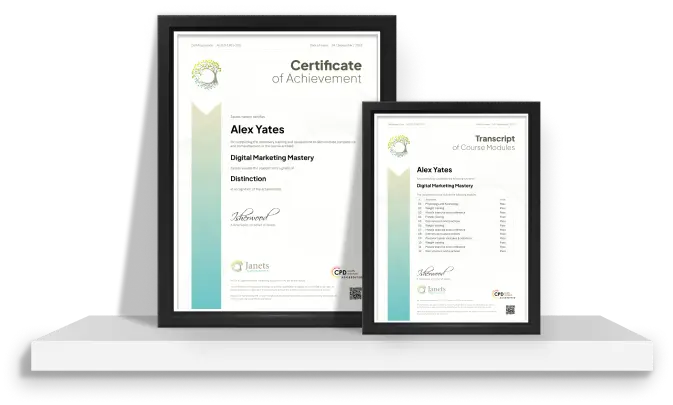
| Order your Certificates & Transcripts | |||
| Order your Certificates & Transcripts | 00:00:00 | ||

Original price was: £319.£25Current price is: £25. ex Vat
SAVE 92% - OFFER ENDS IN

 14-Day Money-Back Guarantee
- Personal
- Team
Quantity:
Total:
50% discount for orders of 10+ courses
60% discount for orders of 50+ courses
70% discount for orders of 100+ courses
For more personalised package, contact us


Frequently asked questions
Can’t find the anwser you’re looking for ? Reach out to customer support team.
The highest qualification for sports massage typically includes a Level 4 or Level 5 Diploma in Sports Massage Therapy, depending on the country's educational framework. These advanced diplomas provide in-depth knowledge and skills required for effective sports massage therapy.
Sports massage qualifications are often categorized into levels. Commonly, you will find Level 3 (entry-level), Level 4 (advanced skills and techniques), and Level 5 (highest level, involving specialized techniques and advanced practice).
The highest-paid massage therapists often specialize in niche areas such as sports massage, medical massage, or work in high-end spas and wellness centers. Therapists working with professional athletes, sports teams, or in medical settings tend to earn more due to the specialized nature of their work.
A full-body massage is typically a relaxation massage that covers the entire body and aims to relieve general stress and tension. A sports massage, on the other hand, is targeted and involves techniques designed to prevent and treat sports injuries, enhance athletic performance, and improve flexibility.
Whether a sports massage is better than a medical massage depends on the individual's needs. Sports massage focuses on athletes and active individuals to prevent and treat injuries, while medical massage addresses specific medical conditions and is often part of a broader treatment plan prescribed by a healthcare provider.
No, sports massage and physiotherapy are not the same. Sports massage involves manual techniques to improve muscle function and recovery. Physiotherapy, however, is a broader field that includes diagnosis, treatment, and prevention of injuries and conditions using various methods, including exercise, manual therapy, and education.
Countries known for their massage therapy practices include Thailand (Thai massage), Sweden (Swedish massage), and the United States (broad range of techniques and high standards of professional practice). Each country has its strengths depending on the type of massage.
The most in-demand massage varies by region, but generally, Swedish massage, deep tissue massage, and sports massage are highly sought after due to their effectiveness in relieving stress, muscle tension, and treating injuries.
The highest degree in massage therapy is typically a Master's degree in a related field, such as a Master's in Sports Therapy or a Master's in Rehabilitation Sciences, which includes advanced study and practice in manual therapy techniques.
Most people can have a sports massage, but it is essential to consult with a healthcare provider if you have certain medical conditions or injuries. Some conditions may require modified techniques or be contraindications for sports massage.
The pressure of a sports massage should be tailored to the individual's tolerance and the specific needs of the muscle tissues. It can range from moderate to deep pressure. Communication between the therapist and client is crucial to ensure the massage is effective and not overly painful.
There are several types of sports massage, including pre-event massage (to prepare muscles for activity), post-event massage (to aid recovery), maintenance massage (to prevent injuries and maintain flexibility), and rehabilitation massage (to treat injuries and aid in recovery).
Someone who performs sports massage is typically called a Sports Massage Therapist or simply a Sports Therapist.
The number of sports massage sessions needed varies depending on the individual's goals and needs. Athletes might have regular sessions weekly or bi-weekly for maintenance, while someone recovering from an injury might need a series of sessions over several weeks.
In massage terminology, L2 typically refers to a Level 2 qualification, which is an entry-level certification providing foundational skills and knowledge for a career in massage therapy.